







Definition & Meaning
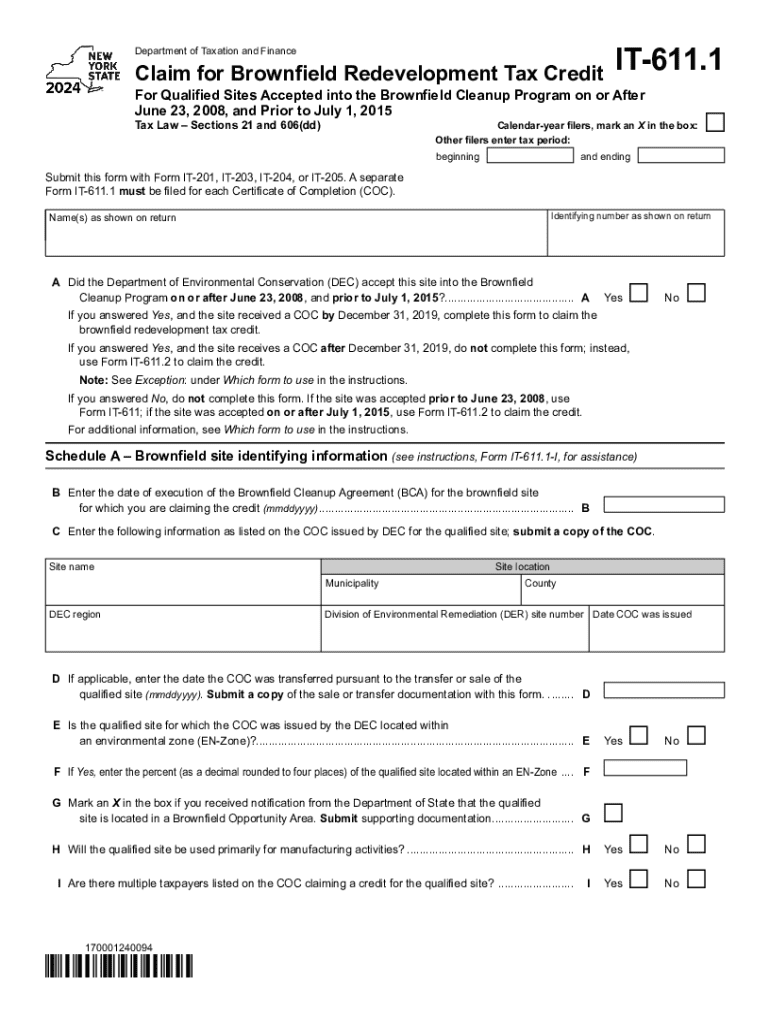
The Form IT-611.1 Claim for Brownfield Redevelopment Tax Credit is a tax form used to claim tax credits for expenses related to the cleanup and redevelopment of qualified brownfield sites. Brownfields are properties that are difficult to expand upon, redevelop, or reuse due to the presence of hazardous substances, pollutants, or contaminants. The form is applicable to sites that have been accepted into the Brownfield Cleanup Program in the United States between June 23, 2008, and July 1, 2015. The tax credit aims to encourage the remediation of these sites by offsetting some of the associated costs through tax relief.
How to Use the Form IT-611.1
To use Form IT-611.1, first ensure that your project site qualifies under the Brownfield Cleanup Program. This qualification is crucial as the tax credit is only applicable to expenses incurred on eligible sites. Once confirmed, collect all necessary information regarding the site's identification details, components of the credit related to site preparation, and groundwater remediation costs. Fill out the required sections of the form accurately, ensuring all numbers and calculations align with your financial statements. Attach this form to your tax return submission alongside other necessary documentation to claim the available credits.
Key Steps in Utilization
- Verify site eligibility based on Brownfield Cleanup Program criteria.
- Gather expense documentation related to cleanup and remediation.
- Complete relevant sections accurately to reflect your financial standings.
Steps to Complete the Form IT-611.1
-
Site Identification: Begin by filling in the site's basic identification details, including location and specific project information.
-
Credit Calculation for Site Preparation: Enter information on costs related to preparing the site for redevelopment, including any required groundwork, stabilization, removed debris, or extensive landscaping.
-
Groundwater Remediation: Document expenses tied to treating or removing pollutants affecting groundwater.
-
Submit with Tax Return: Ensure all sections are correctly filled before attaching the form to your annual tax return.
Considerations
- Cross-verify figures with financial records to avoid errors.
- Seek professional assistance if complexities arise in calculations or documentation.
Important Terms
Several terms are critical when completing Form IT-611.1:
- Brownfields: These are properties with potential environmental hurdles due to previous industrial activities.
- Remediation: Refers to the process of cleaning up pollutants from a brownfield site to prepare it for safe redevelopment.
- Tax Credit: A reduction in tax liability granted for undertaking eligible cleanup activities on the brownfield site.
Eligibility Criteria
The eligibility for the Form IT-611.1 includes:
- Sites accepted into the Brownfield Cleanup Program within specified dates.
- Costs associated with environmental remediation and redevelopment activities are covered.
- Compliance with federal and state environmental standards during cleanup processes.


Eligibility Verification
- Confirm acceptance in the cleanup program through official documentation.
- Ensure documented expenses align with credit guidelines.
Filing Deadlines / Important Dates
The Form IT-611.1 should be filed in conjunction with your annual tax return. It's essential to keep track of IRS filing deadlines, which typically fall on April 15th each year. Missing the deadline may result in the non-acceptance of your claim, leading to the potential loss of tax credits for that tax year.
Required Documents
When submitting Form IT-611.1, include the following documents:
- Certificates of Completion for the remediation work performed.
- Financial documents supporting claimed expenses.
- Any official communications confirming site eligibility under the cleanup program.
Who Issues the Form
The New York State Department of Taxation and Finance issues the IT-611.1 form. It's essential for individuals or entities undertaking redevelopment projects on qualified brownfield sites in the U.S. to contact them directly for the official forms and any clarifications regarding the tax credit process.




