
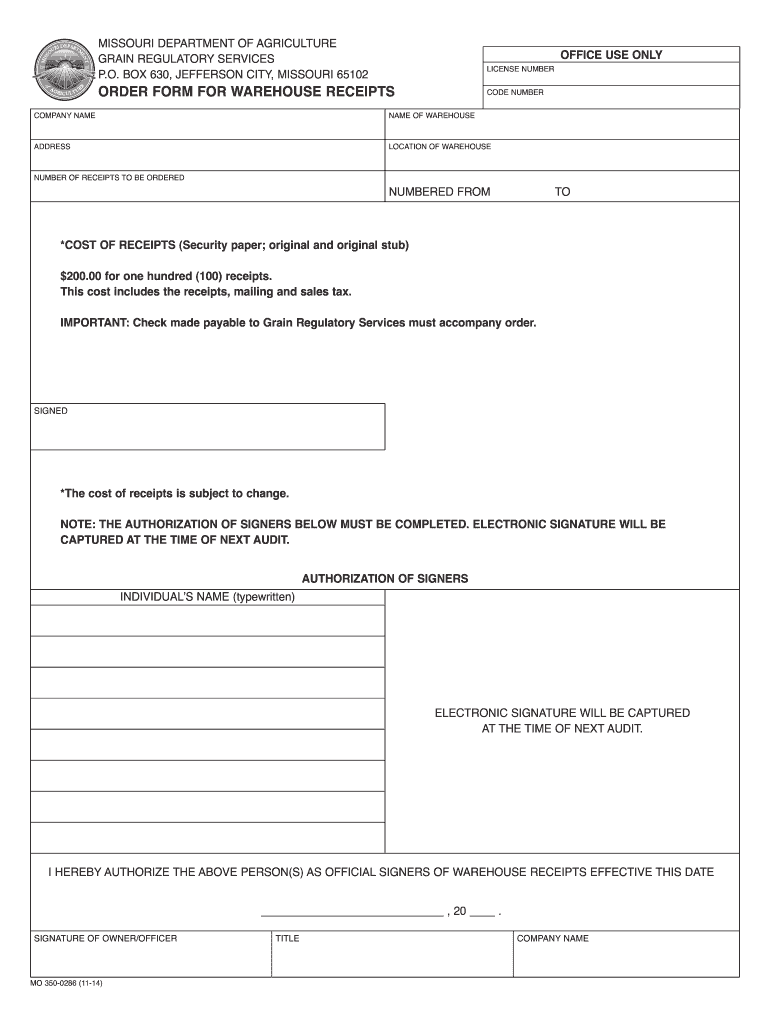







Definition and Significance of a Warehouse Receipt
A warehouse receipt is a vital document utilized in the storage and handling of goods. It serves as a record of the receipt of specified goods by a warehouse operator and provides proof of ownership for the goods stored. The warehouse receipt template standardizes this process, ensuring that all necessary information is captured clearly and efficiently.
- Ownership Evidence: The receipt functions as legal evidence that the holder possesses ownership of the goods stored in the warehouse.
- Transferable Document: It can be transferred or endorsed, which allows the holder to assign or sell the rights to the goods without physically moving them.
- Financial Instrument: Warehouse receipts can be used as collateral for loans, providing businesses with liquidity without needing to liquidate their inventory.
This document plays an essential role across multiple sectors, including agriculture, manufacturing, and logistics, ensuring that goods are tracked and managed effectively.
Key Elements of a Warehouse Receipt Template
Understanding the crucial components of a warehouse receipt template enhances the accuracy and functionality of the document. Essential elements typically found in a warehouse receipt include:
- Warehouse Information: The name and address of the warehouse where the goods are stored, which provides context and location.
- Depositor Details: Information about the person or entity who owns the goods, including contact details.
- Description of Goods: A detailed list of items stored, including quantities, types, and any identifying characteristics (like serial numbers).
- Terms and Conditions: Specific rules regarding the handling of the goods, including storage fees, liability, and duration of storage.
- Signatures: Signatures from both the warehouse operator and depositor, confirming the accuracy of the content and agreement to terms.
This structure not only provides clarity but also ensures legal robustness, protecting both parties involved in the storage agreement.
Steps to Complete a Warehouse Receipt Template
Filling out a warehouse receipt template effectively is crucial for clarity and legal compliance. The process can generally be outlined in the following steps:
-
Gather Necessary Information:
- Collect details about the warehouse, depositor, and the goods stored.
- Ensure that descriptions are specific and include necessary identifiers.
-
Complete the Template:
- Fill in the basic information, including warehouse name, address, and contact details.
- Input depositor information accurately to maintain clear ownership records.
-
Describe the Goods:
- Provide detailed descriptions of the goods, including item type, quantity, and any unique identifiers.
- Indicate the condition of the goods at the time of storage.
-
Outline Terms and Conditions:
- Specify any fees associated with the storage and the liability of the warehouse.
- Include any applicable insurance information if coverage is provided.
-
Sign and Distribute:
- Ensure that both the warehouse operator and the depositor sign the document.
- Provide copies to all relevant parties to ensure everyone has proof of the agreement.
Following these steps ensures that the warehouse receipt serves its purpose effectively and that both parties maintain a clear understanding of their rights and responsibilities.
Common Users of Warehouse Receipt Templates
Numerous individuals and entities utilize warehouse receipt templates, each with specific needs and circumstances:
- Manufacturers: Often use warehouse receipts to track raw materials and finished goods stored off-site, maintaining inventory control.
- Distributors: Rely on them to manage goods being held by warehouse operators before reaching retailers, ensuring smooth supply chain operations.
- Retail Businesses: Utilize warehouse receipts to keep records of stock that is not immediately on their premises, aiding in inventory management and liquidity.
- Logistics Companies: Use warehouse receipts to coordinate shipments and transfers between various points efficiently.
The widespread use of these receipts underscores their importance in modern warehousing and logistics operations, promoting efficiency and legal compliance.


Examples of Warehouse Receipt Templates
Practical examples of warehouse receipt templates can enhance understanding of their structure and application. Below are common formats encountered:
-
Standard Warehouse Receipt: Includes sections for warehouse details, depositor information, a list of stored goods, and signatures, widely used across businesses for straightforward tracking.
-
Electronic Warehouse Receipt: Digital versions that facilitate easier sharing and tracking via email or cloud storage, allowing for quick access and verification.
-
Industry-Specific Receipts: Custom templates designed for specific sectors, like agriculture or pharmaceuticals, with additional fields to meet regulatory compliance and industry requirements.
These examples demonstrate the flexibility and adaptability of warehouse receipt templates, catering to diverse operational needs and environments.




