







Definition and Meaning
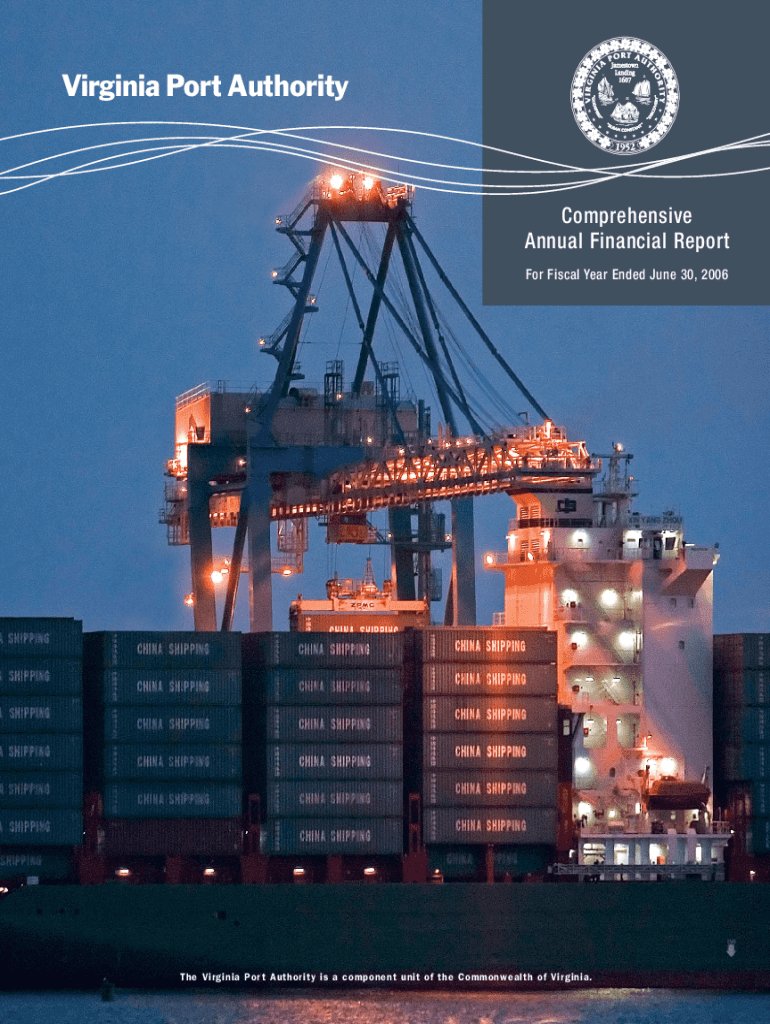
The Virginia Port Authority Annual Financial Report for the year ended is a critical document that outlines the financial performance and position of the Virginia Port Authority for a specific fiscal year. The report provides stakeholders with a comprehensive overview of the Authority's financial operations, including income, expenditures, assets, and liabilities. This information is essential for evaluating the financial health and operational efficiency of the ports managed by the Authority.
How to Use the Virginia Port Authority Annual Financial Report
To effectively use the Virginia Port Authority Annual Financial Report, individuals and entities should start by identifying key financial statements within the report, such as the income statement, balance sheet, and cash flow statement. These sections provide insights into the revenue streams, financial obligations, and overall financial status of the Authority. Analysts, investors, and stakeholders can compare these figures to previous years' data to assess trends, measure performance, and make informed decisions regarding investments or policy-making related to port operations.
How to Obtain the Virginia Port Authority Annual Financial Report
The Virginia Port Authority Annual Financial Report can typically be obtained from the official website of the Virginia Port Authority or through a direct request to the Authority’s finance or public relations department. It may also be available in public records databases or through government transparency portals. Accessing the report electronically ensures that stakeholders have the most current and complete data available.
Key Elements of the Virginia Port Authority Annual Financial Report
The annual financial report is composed of several key elements:
- Executive Summary: Provides a high-level overview of the year’s financial outcomes.
- Income Statement: Details the revenue, expenses, and profit or loss over the fiscal year.
- Balance Sheet: Lists the assets, liabilities, and net assets as of the year-end.
- Cash Flow Statement: Shows the inflowing and outflowing cash activities, highlighting how funds were used.
Each of these sections is critical for providing a full picture of the financial activities and status of the Virginia Port Authority during the period in question.
Who Typically Uses the Virginia Port Authority Annual Financial Report
The primary users of the Virginia Port Authority Annual Financial Report include:
- Investors and Analysts: For assessing the investment viability and financial stability of the Authority.
- Government Officials and Policymakers: To guide decisions on funding, development, and regulation.
- Port Management and Staff: To review performance metrics and plan future operations.
These groups leverage the report to make informed decisions that influence the management, funding, and strategic direction of the port operations in Virginia.


Legal Use of the Virginia Port Authority Annual Financial Report
The financial report must adhere to legal and regulatory standards, ensuring transparency and accuracy. Compliance with accounting principles such as GAAP (Generally Accepted Accounting Principles) or IFRS (International Financial Reporting Standards) is crucial. Breaches or misrepresentations in the report could lead to legal consequences, impacting both reputation and financial standings of the Authority.
Important Terms Related to the Report
Several key terms are commonly found within the Virginia Port Authority Annual Financial Report:
- Revenue Bonds: Debt securities issued by the port to finance its infrastructure projects.
- Net Assets: The total assets minus the total liabilities, indicating the entity’s equity.
- Intermodal Facility: A transportation hub where cargo is transferred between different modes of transport.
Understanding these terms is crucial for accurately interpreting the financial data presented.
Examples of Using the Virginia Port Authority Annual Financial Report
Real-world applications of the report include:
- Financial Analysis: Investors conduct ratio analyses to gauge financial health.
- Performance Evaluation: Comparing year-over-year data to evaluate operational efficiency and profitability.
- Strategic Planning: Port managers use trend data to develop long-term growth strategies.
These examples highlight how the report serves as an essential tool for various strategic and analytical purposes.
Filing Deadlines and Important Dates
The Virginia Port Authority follows a set fiscal year timeline, necessitating timely preparation and submission of its financial report. Typically, reports are finalized and published within several months after the fiscal year end. It is crucial for users to be aware of this timeline to access the most current information for analysis or regulatory purposes.
State-Specific Rules for the Virginia Port Authority Annual Financial Report
Virginia may have unique regulations pertaining to financial reporting for public authorities. These can include specific disclosure requirements, auditing procedures, and submission timelines. Understanding these state-specific rules ensures the report's compliance and transparency, which is necessary for regulatory adherence and stakeholder trust.




