
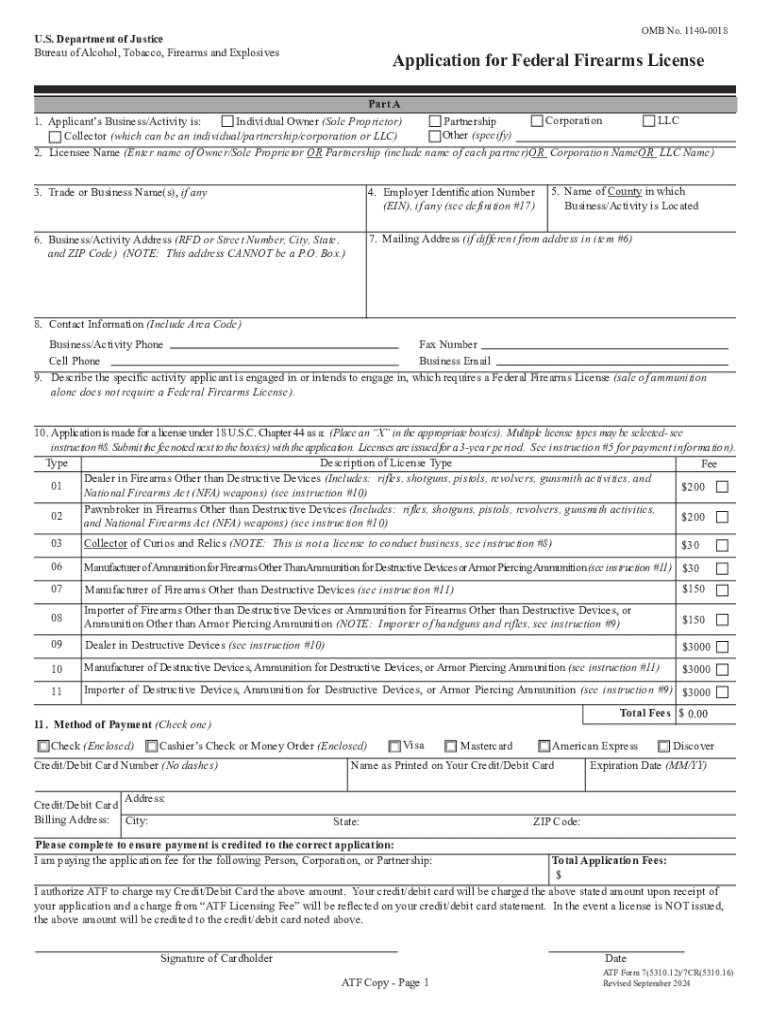







Definition and Purpose of the Federal Firearms License
The Federal Firearms License (FFL) is a permit that allows individuals and businesses in the United States to engage in activities related to firearms and ammunition. This includes manufacturing, importing, and dealing. The license is administered by the Bureau of Alcohol, Tobacco, Firearms and Explosives (ATF). An FFL is essential for those who want to start a firearm-related business, and it ensures that the holder complies with federal laws designed to regulate the firearms industry.
Overview of License Types
- Dealer License: This allows for the buying and selling of firearms.
- Manufacturer License: For businesses involved in the production of firearms and ammunition.
- Importer License: Required for those who wish to import firearms and ammunition into the U.S.
Steps to Complete the Application for Federal Firearms License
Filling out the application for an FFL requires attention to detail and an understanding of the process to ensure compliance with federal regulations. Here are the general steps:
- Obtain the Form: Request the FFL application form from the ATF; it can be downloaded online or received by mail.
- Fill in Business Details: Include the name, address, and type of business entity.
- Select License Type: Identify which specific type of license you are applying for based on your business activities.
- Provide Personal Information: Enter details about all responsible persons within the business, including background information and personal identifiers.
- State and Local Compliance: Ensure compliance with state and local laws and obtain any necessary permits.
- Fingerprinting and Photos: Submit fingerprint cards and passport-style photographs for each responsible person.
- Fee Payment: Pay the appropriate application fee as required for your license type.
- Submission: Mail the completed application to the specified ATF address for processing.
Required Documents and Information
Completing the FFL application involves assembling various documents and information to confirm eligibility and compliance.
- Business Entity Documents: Articles of incorporation, partnership agreements, or other official documents proving the business's legal status.
- Personal History: Disclosure of any criminal record or legal impediments related to firearms handling.
- Zoning Approval: Evidence of compliance with local zoning regulations, especially if the business operates from a home.
- Financial Records: Proof of financial stability and capability to manage a firearms-related business responsibly.
Legal Use and Importance of Obtaining an FFL
Rights and Responsibilities
- Legal Transactions: Conduct lawful transactions, including selling, manufacturing, and importing firearms and ammunition.
- Record Keeping: Maintain accurate records of all transactions as required by federal law.
- Compliance with Regulations: Adhere to federal, state, and local laws governing the firearms trade.
Importance of FFL
- Business Legitimacy: An FFL provides legitimacy to businesses, allowing legal operations under federal oversight.
- Market Access: Opens opportunities to interact with other licensed businesses and consumers in the firearms industry.
Eligibility Criteria for the Federal Firearms License


Basic Eligibility Requirements
- Age: Applicants must be at least 21 years old.
- Background Check: No disqualifying criminal history, such as felony convictions or domestic violence offenses.
- Lawful Presence: Legal residency in the U.S. is required.
Additional Considerations
- Business Premises: Must have a permanent business location where records are kept and available for inspection.
- Zoning Regulations: Property must be compliant with zoning requirements for firearms businesses.
Application Process and Approval Time
The application process for an FFL involves the following steps:
- Application Review: The ATF reviews the submitted documents and conducts background checks on all responsible persons.
- Interview and Inspection: The ATF schedules interviews and possible site inspections to verify compliance.
- Approval Notification: Once approved, the ATF issues the license. The entire process typically takes 60 to 90 days from submission to approval.
State-Specific Rules and Considerations
While the FFL is a federal license, state-specific laws can impact its application. Some states have additional requirements or restrictions governing the sale and use of firearms.
- Licensing Fees: In addition to federal fees, states may impose their own fees.
- Sales Restrictions: Certain states have restrictions on the types or quantities of firearms that can be sold.
Who Issues the Federal Firearms License
The Bureau of Alcohol, Tobacco, Firearms and Explosives (ATF) is responsible for issuing FFLs. The ATF oversees the regulatory framework that governs firearm commerce in the U.S.
- Contact Information: For assistance, the ATF provides resources and support for applicants navigating the licensing process.
Penalties for Non-Compliance
Operating a firearms business without an FFL or violating its terms can lead to severe penalties.
- Fines and Imprisonment: Unauthorized dealing can result in hefty fines and up to five years in prison.
- License Revocation: Misconduct may lead to suspension or revocation of the FFL.
Examples of Using an FFL in Business
Case Study: Local Gun Shop
A local gun shop owner utilized an FFL to legally purchase, sell, and repair firearms. Through compliance with federal and state laws, the business expanded to offer training and safety courses.
Scenario: Firearms Manufacturer
A new firearms manufacturer obtained a manufacturer's FFL, enabling them to produce firearms with unique designs, complying with federal patent and trademark registrations to protect their innovations.




