Definition and Purpose of PA Schedule RK-1
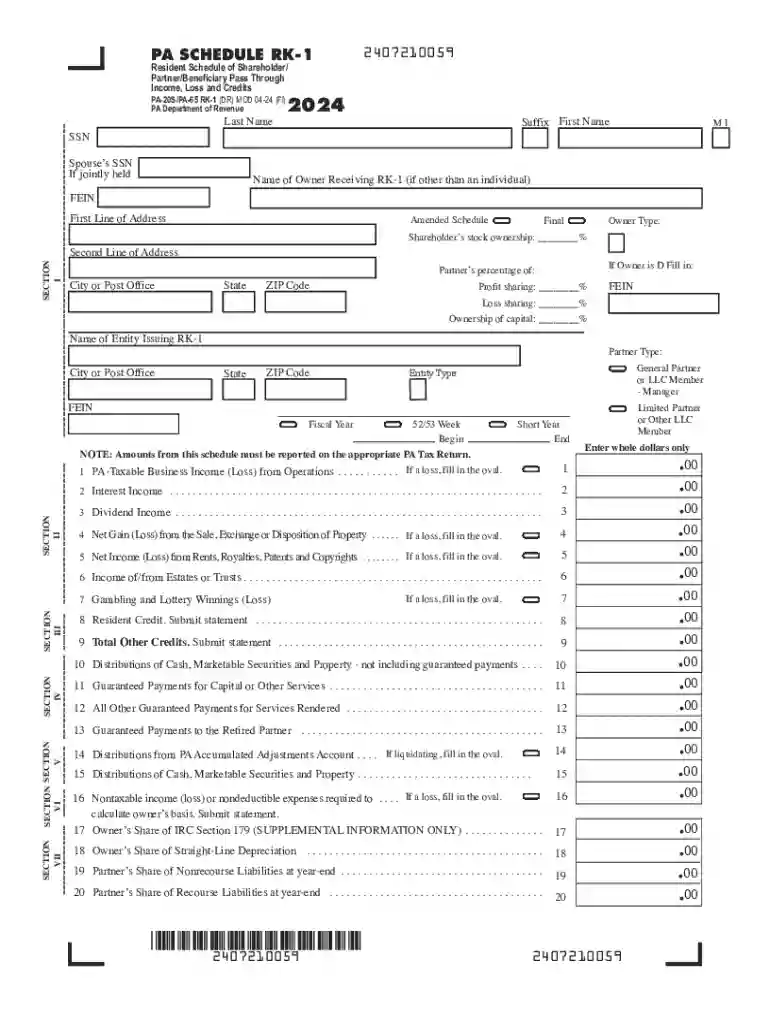
The 2024 PA Schedule RK-1 is a critical document for Pennsylvania residents who are shareholders, partners, or beneficiaries of pass-through entities such as partnerships and S corporations. It serves to report income, losses, and credits received from these entities. The primary goal is to ensure accurate tax reporting at the individual level, aligning the income reported by the entity with the income received by the resident taxpayer.
Key Elements of the Schedule
- Income Reporting: Includes distributive shares of income, dividends, and capital gains.
- Losses: Report any losses transferred from the pass-through entity to individual owners.
- Credits: Includes any tax credits applicable to the shareholder, partner, or beneficiary.
- Entity Information: Details of the pass-through entity, including name, address, and identification number.
Important Terms Related to PA Schedule RK-1
Familiarity with specific terms is essential for accurately completing the schedule.
Essential Terminology
- Pass-Through Entity: A business structure (like a partnership or S corporation) where income, losses, deductions, and credits pass through to the owners for tax purposes.
- Distributive Share: The portion of income or loss from a pass-through entity allocated to a partner or shareholder.
- Resident Taxpayer: Individuals who reside in Pennsylvania for tax purposes and are subject to Pennsylvania state taxation.
Steps to Complete PA Schedule RK-1
Completing the PA Schedule RK-1 involves several detailed steps to ensure compliance and accuracy.
Step-by-Step Instructions
- Gather Necessary Information: Collect all relevant data from the pass-through entity, including income statements and financial records.
- Report Income and Losses: Enter the income, losses, and credits from the pass-through entity as indicated in the received K-1 form.
- Identify Adjustments: Make any Pennsylvania-specific adjustments for out-of-state income or disallowable deductions.
- Complete Individual Sections: Carefully fill out each section, ensuring all information matches the documentation provided by the entity.
- Review and Verify: Double-check all entries for accuracy and completeness before submission.
Who Uses the PA Schedule RK-1?
Individuals who hold ownership stakes in pass-through entities use this schedule to report their share of the entity's financial activities.
Typical Users
- Shareholders of S Corporations: Residents who own shares in S corporations that operate in Pennsylvania.
- Partners in Partnerships: Individuals involved in partnerships that have business operations or income distributed to Pennsylvania residents.
- Beneficiaries of Estates or Trusts: Those receiving income through trusts or estates reflected in the pass-through income.
Legal Use and Compliance
The legal framework surrounding the PA Schedule RK-1 ensures taxpayer compliance with state tax laws.
Compliance Requirements
- Accurate Reporting: Accurate reflection of all pass-through income, credits, and deductions is mandatory.
- Timely Filing: Compliance with Pennsylvania filing deadlines is crucial to avoid penalties.
- Record Keeping: Maintain copies of all supporting documentation, as it may be required for audits or verification processes.
State-Specific Rules and Regulations
Pennsylvania has unique rules that affect how the PA Schedule RK-1 is completed and filed.
State Considerations
- Adjustment for Non-Pennsylvania Income: An adjustment is necessary for income sourced from outside Pennsylvania.
- Local Taxes: Consideration must be given to municipal taxes applicable to the taxpayer's place of residence.
- Pennsylvania Credits: Credits offered by the state must be accurately reported and claimed as allowed.
Penalties for Non-Compliance
Failure to comply with the regulations regarding the PA Schedule RK-1 can result in various penalties.
Types of Penalties
- Late Filing Penalties: Charged if the form is submitted past the designated deadline without a valid extension.
- Underreporting: Fines may apply for underreporting income or misuse of deductions and credits.
- Interest on Unpaid Taxes: Accrued daily until the full tax amount is paid, when taxes are underpaid due to incomplete or incorrect filings.
Filing Deadlines and Important Dates
It’s crucial to adhere to the specific timelines established by Pennsylvania tax authorities.
Key Dates
- Tax Year Due Date: Typically aligned with the federal tax deadline, unless an extension is filed.
- Extension Deadlines: Extensions must be submitted by the regular deadline and are usually prolonged by six months.
- Estimated Payments: Particular attention is required for any quarterly estimated tax payments related to pass-through income.
Understanding and accurately completing the PA Schedule RK-1 is essential for Pennsylvania residents involved in pass-through entities to ensure tax compliance and avoid potential penalties.