






Definition and Meaning
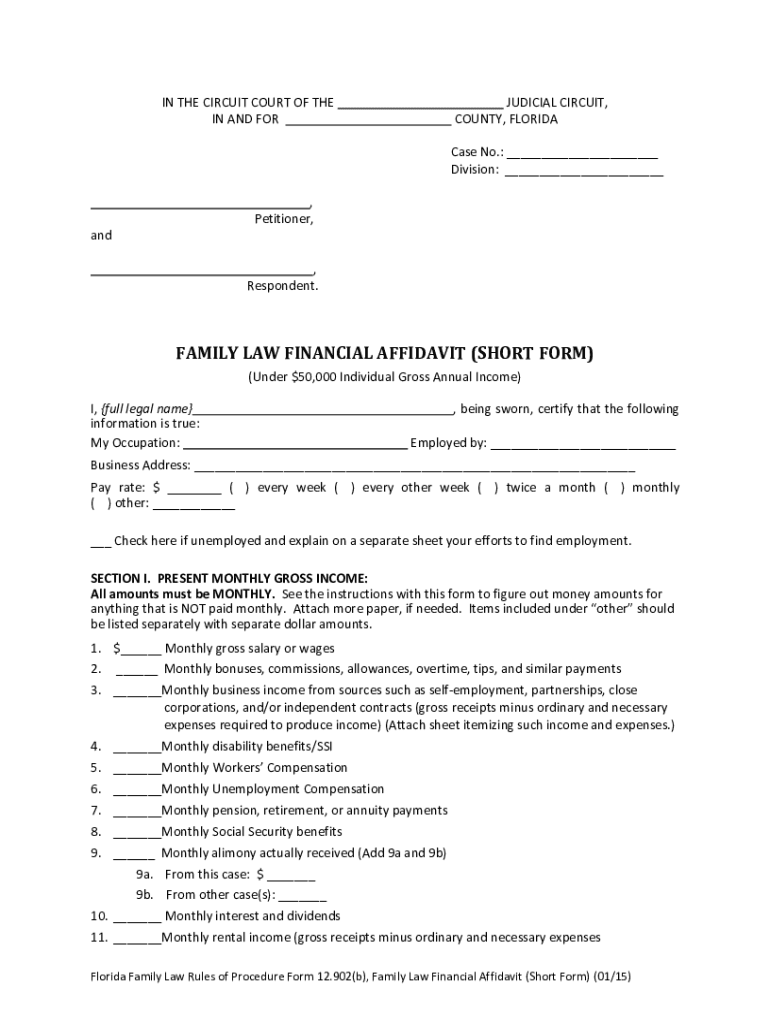
The Florida Family Law Financial Affidavit is a legal document used in family law cases within Florida, designed to provide a comprehensive financial overview of an individual's circumstances. This affidavit is crucial during divorce or child support proceedings, helping the court to determine equitable distribution of assets, income, expenses, liabilities, and support obligations. Unlike general financial statements, this form captures detailed financial data in a structured manner, enabling fair and informed judicial decisions.
Importance in Legal Proceedings
- Essential for divorce and child support cases.
- Forms the basis for calculating child support and alimony.
- Details assets and liabilities, providing transparency.
- Used to establish a party’s financial position under oath.
Who Needs to Complete This Form?
Generally, both parties involved in a family law case must complete the financial affidavit. This requirement ensures that both spouses provide a full account of their finances, which includes income, debts, and expenses.
How to Obtain the Florida Family Law Financial Affidavit
To secure a Florida Family Law Financial Affidavit, individuals can find the document on the Florida State Courts website or through family law clerk offices. It's often supplied during legal consultations or upon filing relevant court proceedings, ensuring parties have easy access when needed.
Accessibility and Formats
- Available in PDF format for download.
- Obtainable via law offices or legal aid services.
- Can be filled out electronically or printed for manual completion.
Use of Online Platforms
Platforms like DocHub offer tools to edit and fill out the affidavit online, streamlining the completion process. Users can upload the PDF form, fill in the necessary fields using the editor tools, and save or send the final version securely.
Steps to Complete the Florida Family Law Financial Affidavit
Filling out this form involves several detailed steps to ensure accuracy and comprehensiveness. It requires precise entry of financial information under penalty of perjury to prevent misrepresentation.
Detailed Instructions
-
Income Declaration:
- Report gross monthly income, including salary, wages, bonuses, commissions, and any extras like rental income.
- Provide annual income data for a broader financial snapshot.
-
Expenses Overview:
- List monthly household expenses, including utilities, mortgage payments, and insurance.
- Include any child-related expenses to reflect a complete financial burden.
-
Assets Disclosure:
- Detail all owned assets, from bank accounts and investments to real estate and personal property.
- Specify asset values for accurate contribution toward property division.
-
Liabilities:
- Document all current debts, such as loans, credit card balances, and mortgages.
- Confirm outstanding amounts, creditor details, and repayment terms.
Need for Accuracy
Each section requires thorough completion to ensure the court has a full understanding of each party's financial condition. Misstatements can lead to legal penalties and affect court rulings negatively.
Key Elements of the Florida Family Law Financial Affidavit
Each affidavit consists of critical components that capture an individual’s complete financial picture, supporting fair judicial decisions based on accurate data.
Components Covered
- Income Sources: All forms and sources of income, offering a complete income structure.
- Monthly Expenses: Comprehensive breakdown of all expenses, from necessities to discretionary spending.
- Assets and Investments: Establishing all personal and joint holdings to evaluate financial wealth.
- Liabilities and Debts: Clarifies financial obligations affecting net worth and payment capabilities.
Importance of These Elements
The cohesive presentation of these elements in the affidavit ensures transparency and equitable determination of obligations and rights. For example, equal division of debts and assets becomes feasible only with complete disclosure.
State-Specific Rules for the Florida Family Law Financial Affidavit
Florida mandates particular guidelines for completing the financial affidavit, highlighting compliance requirements specific to the state’s judicial system.
Requirements and Variations
- Florida-Specific Categories: Includes factors unique to Florida's economic settings, such as state taxes implications or specific child support guidelines.
- Legal Compliance: Ensures alignment with Florida statutes, safeguarding against inaccuracies that could impact legal outcomes.
Consequences of Non-Compliance
Non-compliance or inaccuracies can lead to financial sanctions, extended court proceedings, or unfavorable judgments. Complete honesty is critical for fair legal resolution.
Important Terms Related to Florida Family Law Financial Affidavit
Understanding the terminology used within the affidavit helps individuals accurately fill out the form and comprehend the legal responsibilities.
Common Terms Explained
- Gross Income: Pre-tax earnings before deductions.
- Net Worth: Total assets minus total liabilities to reflect financial position.
- Alimony: Court-mandated payments to a dependent spouse post-divorce.
- Child Support: Financial support for a child's living expenses post-separation.
Benefits of Comprehension
Clear understanding of these terms aids in precise form completion, reducing errors and legal misunderstandings or disputes.
Legal Use of the Florida Family Law Financial Affidavit
This form serves as a critical component in legal proceedings, assisting in asset division and determining fair support arrangements.
Application in Court Processes
- Used to assess eligibility for child support and alimony.
- Basis for negotiating settlement agreements or mediations.
- Integral part of court evidence in family law disputes.
Admitted as Evidence
A completed affidavit becomes a part of court records, offering verified factual data for trial use and legal argument support, ensuring that judicial decisions rely on accurate financial information.