
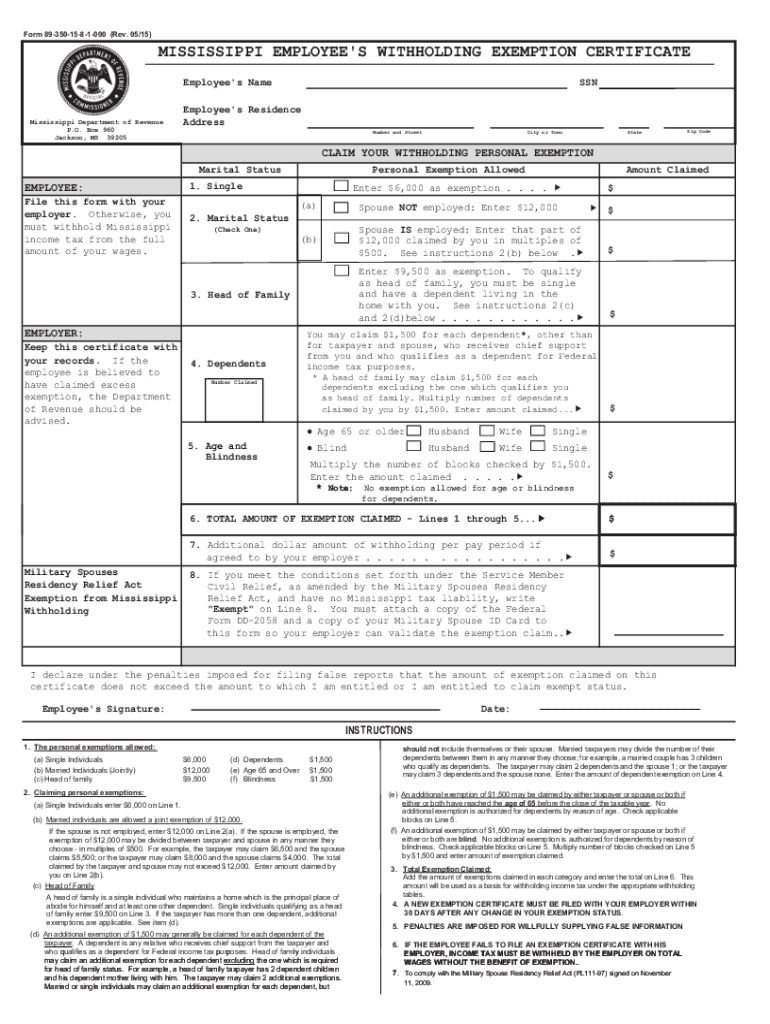







Definition and Meaning of the Mississippi State Tax Form
The Mississippi State Tax Form is a document used by residents and certain non-residents to report income and calculate the amount of tax owed to the state of Mississippi. This form is necessary for fulfilling state tax obligations and ensuring compliance with Mississippi’s tax regulations. It covers both personal income tax details and various deductions and credits available under the state's laws.
Key Features
- Taxpayers can report wages, salaries, and other income.
- The form includes sections for calculating state exemptions based on factors like dependents, age, and filing status.
- Mississippi provides specific guidelines for exemptions, particularly for military spouses.
Practical Example
Consider a single individual working in Mississippi. They need to fill out their income sources, calculate their exemptions, and determine their state tax liability. This form is critical for ensuring that they accurately report and pay taxes to the state.
How to Use the Mississippi State Tax Form
Using the Mississippi State Tax Form involves collecting detailed financial information and reporting it correctly. Preparation is crucial for accurate completion, including understanding how income and deductions affect taxation.
Steps for Completing the Form
- Gather personal information, such as full name, address, and Social Security Number.
- Report all income received during the tax year, including wages, self-employment earnings, and other taxable income.
- Calculate state-specific exemptions based on personal circumstances, including dependents and filing status.
- Deduct eligible expenses and credits to minimize taxable income.
- Determine the amount of state tax owed and compare it against taxes already paid through withholding.
Example Scenario
A married couple with two children must calculate exemptions for family dependents and apply relevant credits. Their combined income and deductions determine their tax liability for Mississippi.
Steps to Complete the Mississippi State Tax Form
Completing the Mississippi State Tax Form requires ensuring all necessary information is accurately captured to avoid errors and potential penalties.
Detailed Process
-
Start with Personal Information:
- Enter your full name, Social Security Number, and current address.
- Choose your filing status: single, married filing jointly, or separately.
-
Report Income:
- Include wages, salaries, tips, and any other income sources.
- Use official documentation like W-2s for accuracy.
-
Calculate Exemptions:
- List dependents and determine exemption amounts based on Mississippi guidelines.
- Check eligibility for any state-specific exemptions, like those for military spouses.
-
Apply Deductions and Credits:
- Calculate eligible deductions, such as charitable donations or education expenses.
- Apply any qualified tax credits to reduce your tax liability further.
-
Final Calculations and Payment:
- Subtract deductions and credits from total income to find taxable income.
- Calculate the tax owed and compare it to taxes already paid via withholding.
- Arrange for payment if additional taxes are due.
Edge Case: Military Personnel
Military personnel stationed outside Mississippi but maintaining Mississippi residency can utilize specific exemptions under the Servicemembers Civil Relief Act, which should be documented appropriately on the form.
How to Obtain the Mississippi State Tax Form
Obtaining the right version of the Mississippi State Tax Form is the first step in meeting tax obligations. Taxpayers need access to the correct and most recent form to ensure compliance.
Methods for Accessing the Form
- Online: The Mississippi Department of Revenue’s website offers downloadable forms and instructions.
- Physical Locations: Some public libraries and government offices provide tax form copies.
- Tax Preparation Software: Programs like TurboTax or QuickBooks can guide through the process and ensure the most recent form version is used.
Example Scenario
A taxpayer who prefers using a physical form might visit a local library. Alternatively, someone more tech-savvy could utilize online resources to download and print the form directly.
Important Terms Related to the Mississippi State Tax Form
Understanding key terms associated with the Mississippi State Tax Form can assist taxpayers in accurately completing and submitting their forms.
Common Terms and Definitions
- Exemptions: Specific deductions that reduce taxable income.
- Filing Status: Classification based on marital and family situation affecting tax rates.
- Withholding: Income tax subtracted from a paycheck and sent directly to the government.
- Non-Resident: Individuals who earned income in Mississippi but reside out of state.
Practical Example
A taxpayer should know the difference between exemptions and deductions to maximize their potential tax savings when filling out the form.
Filing Deadlines and Important Dates
Keeping track of crucial filing dates ensures compliance with Mississippi tax laws and prevents penalties.
Key Deadlines
- Income Tax Filing Date: Typically due April 15th each year unless it falls on a weekend or holiday, in which case the deadline extends to the next business day.
- Extension Requests: Can be submitted if additional time is needed, usually pushing the deadline to October.
Consequences of Missing Deadlines
Failing to file or pay taxes by the deadline can result in fines, penalties, and interest charges. Therefore, it is crucial for taxpayers to adhere to these dates for both state and federal tax obligations.
Penalties for Non-Compliance
Non-compliance with Mississippi tax filing can lead to significant financial penalties and legal ramifications.
Types of Penalties
- Failure-to-File Penalty: Charged when tax filings are late.
- Failure-to-Pay Penalty: Imposed for late tax payments or underpayment.
- Interest Charges: Accumulate on any unpaid tax from the original due date.
Preventative Measures
Taxpayers should maintain accurate records, utilize tax software, and consult with a tax professional to avoid compliance issues. Timely filing and payment can help prevent these penalties and ensure smooth tax processing.
Digital vs. Paper Version of the Mississippi State Tax Form
Deciding between digital and paper filing methods can impact the speed and convenience of tax submission.
Digital Filing Advantages
- Faster Processing: Electronic submissions are often processed quicker.
- Immediate Confirmation: Instant verification of receipt.
- Error Checking: Most software tools will check for common errors before submission.
Paper Filing Considerations
- Traditional Method: Some taxpayers prefer the familiarity of paper forms.
- Record Keeping: Physical copies can be easier to file and store for some individuals.
Example in Practice
A small business owner might choose digital filing for quick processing and use software to manage complex income streams, whereas an individual taxpayer with straightforward income might prefer paper forms for simplicity.




