







Definition & Meaning
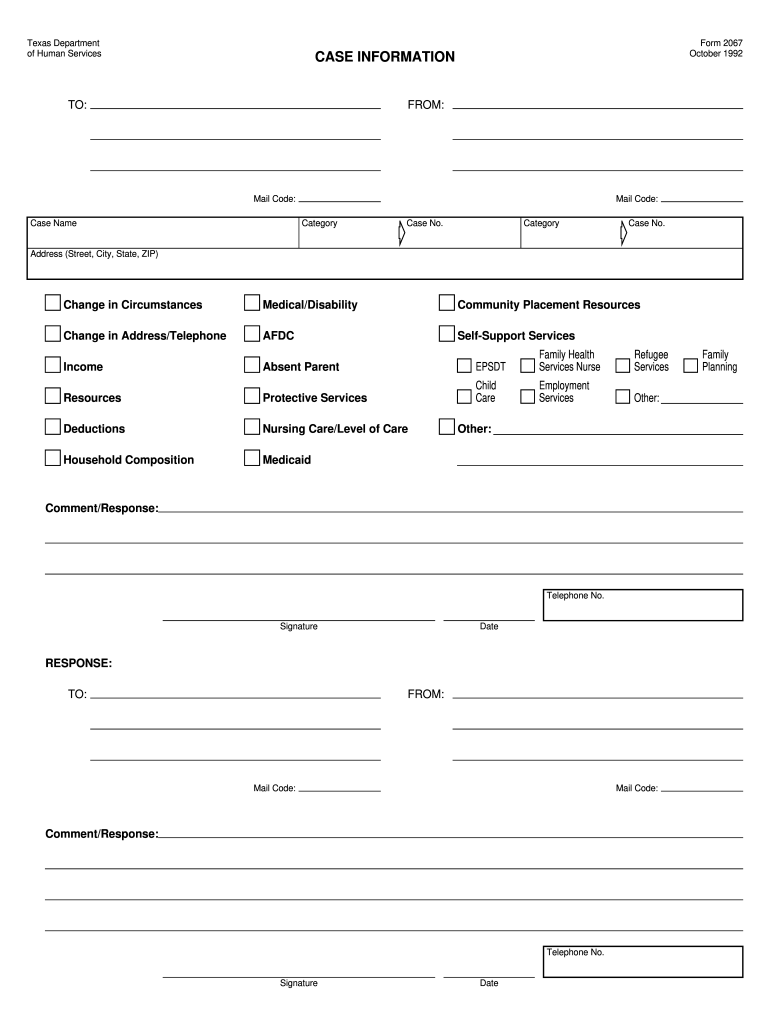
The 2067 form, released by the Texas Department of Human Services, is a document utilized to collect information related to changes in an individual's circumstances impacting various services, such as medical aid, disability claims, income adjustments, and family planning needs. This form serves as a formal record for updating case details, allowing the department to align services with current applicant scenarios.
- Case Information: This includes all pertinent details about the individual's current situation, which may affect their eligibility for specific services.
- Comment and Response Sections: Additional space is provided for clarifications or responses related to the changes reported.
Understanding the purpose of the 2067 form is crucial for applicants, enabling them to ensure that the information they provide aligns with the services they seek to update.
How to Obtain the 2067 Form
Acquiring the 2067 form is a straightforward process, with a few options available depending on your preferences.
- Online Access: The easiest way to obtain the form is by visiting the Texas Department of Human Services website, where it can be downloaded directly.
- In-Person Request: You can also visit a local office of the Texas Department of Human Services to pick up the form.
- Mail Request: Some may prefer to request a paper version by mail by contacting the department and specifying their need for the 2067 form.
Each method ensures you receive an official copy that can be completed and submitted according to your needs.
Steps to Complete the 2067 Form
Completing the 2067 form requires careful attention to detail to ensure accuracy and completeness.
- Personal Details: Begin by filling in your personal information, including your full name, address, and contact number.
- Details of Change in Circumstances: Clearly indicate the nature of the changes, such as income variation, medical condition updates, or changes in household structure.
- Service Impacted: Specify the service(s) impacted by these changes, ensuring all relevant information is provided.
- Comments and Responses: Utilize these sections to further explain the changes, providing context or addressing potential questions.
- Signature: Ensure that the form is signed to validate the information provided.
Completing the form correctly reduces processing time and helps in the prompt realization of adjustments.
Key Elements of the 2067 Form
The 2067 form comprises several critical sections designed to capture comprehensive data about the applicant’s circumstances.
- Case Number: Essential for tracking and identifying each individual case.
- Change Details: Specifics of the changes in circumstances.
- Service Types: Medical, income, disability, or family planning services impacted by the updates.
- Contact Information: To facilitate communication between the applicant and the department.
These elements ensure the form captures a detailed account of any changes, maintaining the integrity and accuracy of the information provided.
Who Typically Uses the 2067 Form
The 2067 form is primarily used by individuals who are recipients of services from the Texas Department of Human Services.
- Medical Assistance Recipients: Those who need to report changes affecting their health-related benefits.
- Disability Beneficiaries: Individuals whose status or income changes could affect their disability claims.
- Individuals in Family Planning Programs: Reporting any changes in household circumstances that could influence their participation in planning services.
These typical users find the form invaluable for ensuring their service records are up-to-date and reflective of their current situations.


Important Terms Related to the 2067 Form
Understanding the terminology used in the 2067 form is crucial for proper completion and accuracy.
- Case Management: The process by which cases are handled, including updates and changes to personal circumstances.
- Eligibility Criteria: Conditions that must be met to receive specific services or benefits from the department.
- Verification Documents: Supplemental documents required to support the changes reported in the form.
These terms help in comprehending the form’s structure and requirements, allowing for precise and effective form completion.
Legal Use of the 2067 Form
The 2067 form is not only procedural but also holds legal significance when it comes to service provision.
- Legal Record: Once submitted, the form serves as an official document representing the changes in the applicant's circumstances.
- Confidentiality Assurance: The information provided is protected under confidentiality laws, ensuring applicant privacy.
- Compliant Submission: To ensure legal compliance, the form must be submitted in full, with accurate and truthful information. Incorrect or misleading information may have legal repercussions.
Legal awareness assures that both the department and the applicant are safeguarded through proper usage of the document.
Examples of Using the 2067 Form
To better understand how the 2067 form functions, consider these practical scenarios:
- Job Changes: An individual gains employment, resulting in modified income; this must be reflected in the form to adjust benefits accordingly.
- Dependent Changes: A child ages out of eligibility or is no longer residing at home; updating this information can prevent overpayment of benefits.
- Health Updates: Changes in medical status that require additional support or alter previously received assistance.
These examples illustrate the necessity of the 2067 form in maintaining service integrity and alignment with actual needs.


