Definition and Meaning of Miscellaneous Sales Event
A Miscellaneous Sales Event refers to a specific type of sales activity where items are sold outside of regular business operations. These events typically occur in special circumstances and can include yard sales, one-time product showcases, charitable sales, or temporary pop-up shops. The key aspect of a Miscellaneous Sales Event is its occasional and non-recurring nature, distinguishing it from traditional retail transactions.
Characteristics and Features
- Infrequent Occurrence: Unlike standard sales operations, Miscellaneous Sales Events happen sporadically and are not part of ongoing business activities.
- Varied Venues: These events can take place in various locations, including private homes, community centers, or temporary rented spaces.
- Diverse Items: Items sold at these events are often diverse, ranging from personal belongings to crafts, and can sometimes include products not usually sold by the host.
- Flexible Participation: Participation can be open to individuals, community groups, or businesses looking to clear excess stock or present unique offerings.
Historical Context and Evolution
Over the years, Miscellaneous Sales Events have evolved from casual yard sales to include more sophisticated pop-up stores and online platforms, allowing for greater reach and more structured transactions. The concept remains rooted in providing a flexible, low-barrier way to sell goods without the complexities of a permanent business setup.
Steps to Complete a Miscellaneous Sales Event Form
Filing a Miscellaneous Sales Event form involves several key steps to ensure all legal and tax obligations are met. This form is crucial for reporting sales activities to relevant authorities.
Detailed Process Overview
- Collect Necessary Information: Gather details about the items you plan to sell, the event's location, and the anticipated duration.
- Identify Applicable Taxes: Determine if sales tax applies based on your state’s regulations and the nature of items being sold. Sales tax may vary for new vs. used goods.
- Complete Seller Information: Fill out sections regarding your personal or business details, including contact information and any relevant identification numbers.
- Detail Event Information: Provide specifics such as the date, time, and venue of the event, ensuring accuracy to avoid discrepancies.
- Calculate and Record Transactions: Use estimated pricing to project potential income and calculate the necessary tax obligations.
- Submit the Form: Choose a submission method—online, mail, or in-person—based on your convenience and the local authority's requirements.
Considerations and Best Practices
- Check local regulations to ensure compliance, as these can differ significantly depending on jurisdiction.
- Consider using accounting software to track sales and tax computations accurately.
State-Specific Rules for Miscellaneous Sales Events
Legal requirements for organizing a Miscellaneous Sales Event can vary widely from state to state in the United States. Understanding these differences is crucial for compliance and avoiding penalties.
Overview of Variations
- Permit Requirements: Some states require a permit to host such sales events, especially if they involve advertising or are held frequently at the same location.
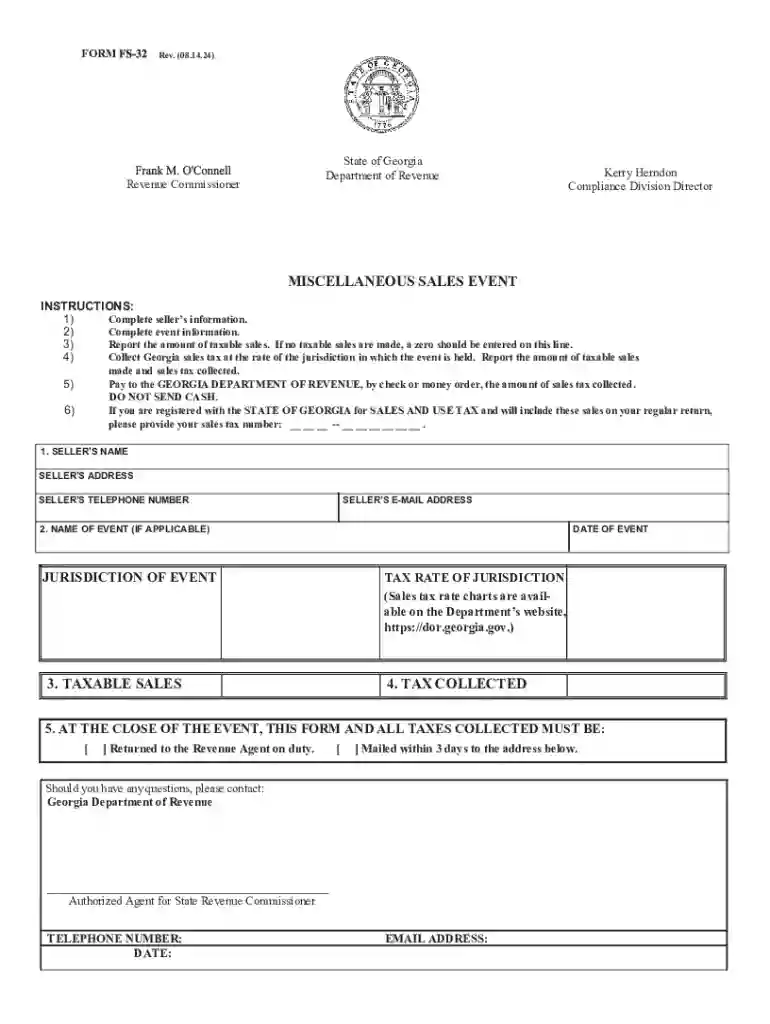
- Sales Tax Collection: The obligation to collect sales tax may change depending on the type of goods sold and the event's scale. States like Georgia require sellers to report taxable sales and tax collected.
- Duration Restrictions: There may be limitations on how long a Miscellaneous Sales Event can last without it being classified as a regular business operation.
Practical Example: Georgia
In Georgia, hosting a Miscellaneous Sales Event requires you to report taxable sales and collect sales tax, subsequently submitting payments to the Georgia Department of Revenue. Ensuring accurate documentation and prompt payment helps maintain compliance and avoid any legal issues.
Examples of Using a Miscellaneous Sales Event
Miscellaneous Sales Events can be utilized for various purposes across different contexts. Here are some common scenarios where these events are beneficial:
Real-World Applications
- Community Yard Sales: Often organized by neighborhoods to sell personal items, these events foster community engagement and provide a way for individuals to clear out excess goods.
- Charity Fundraisers: Organizations might host sales events to raise funds, where donated items are sold, and proceeds support charitable causes.
- Pop-Up Shops: Businesses occasionally use Miscellaneous Sales Events to test new products or expand reach without committing to a permanent storefront.
Case Studies
- Pop-Up Art Galleries: Artists might organize temporary exhibitions to sell original works, providing them a platform without long-term financial commitments of leasing gallery space.
- Seasonal Markets: A holistic medicine provider might sell seasonal herbal products at a holiday market, capitalizing on increased consumer interest during specific times of the year.
Required Documents for Miscellaneous Sales Events
Preparation is crucial when planning a Miscellaneous Sales Event. Key documents ensure smooth operations and compliance with local regulations.
Essential Documentation
- Seller Identification: Proof of identity and business registration (if applicable) ensures you're recognized as the organizer.
- Tax Registration: Documentation evidencing your tax account with the state, helping facilitate proper tax collection.
- Event Permit: Some states require a temporary sales permit, obtained from local municipalities or the state’s commerce department.
Organizational Tips
- Create a checklist to track all necessary paperwork before the event.
- Have access to extra documentation, such as receipts or invoices, especially if selling high-value items. This can avoid misunderstandings with customers or authorities.
Filing Deadlines and Important Dates
Maintaining an awareness of specific filing deadlines and key dates related to Miscellaneous Sales Events is vital for compliance and financial management.
Important Timelines
- Event Report Submission: In most states, you must file a report of your sales event within a set timeframe, often monthly or quarterly, depending on your tax obligations.
- Tax Payment Dates: Ensure timely payment of any sales taxes collected to avoid penalties.
- Permit Acquisition: Apply for necessary permits well in advance to ensure they are approved before the event starts.
Penalties for Non-Compliance
Failure to adhere to the rules and regulations governing Miscellaneous Sales Events can lead to penalties that hinder financial stability and business reputation.
Consequences of Non-Compliance
- Fines and Penalties: Late submissions of sales reports or tax payments can incur significant fines.
- Event Shut Down: Authorities may terminate unauthorized events, impacting potential income.
- Legal Repercussions: Continuous disregard for compliance could result in legal action or restrictions on future event permits.
Being informed and prepared minimizes risks and ensures that your Miscellaneous Sales Event runs smoothly and profitably.