
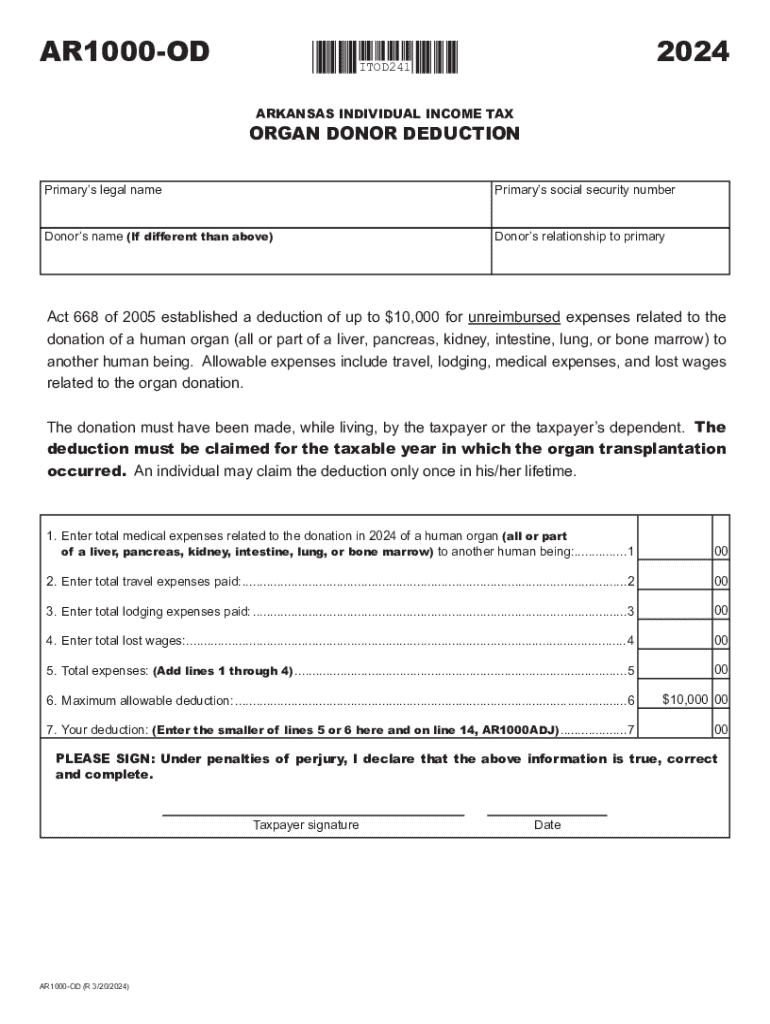







Definition of the 2024 AR1000-OD BC
The 2024 AR1000-OD BC form is associated with the Arkansas Individual Income Tax Organ Donor Deduction. This tax form provides taxpayers in Arkansas with a unique opportunity to claim a deduction for unreimbursed expenses related to organ donation while living. It is based on the provisions of Act 668 of 2005, allowing for a maximum deduction of $10,000. Eligible expenses include medical costs, travel, lodging, and lost wages.
Eligible Expenses
- Medical Costs: Includes hospital bills, post-operative care, and medications associated with the organ donation.
- Travel and Lodging: Costs incurred for transportation and accommodations during the donation process.
- Lost Wages: Earnings forfeited due to time away from work related to the donation.
Claimed Once in a Lifetime
Taxpayers may only claim this deduction once in their lifetime, and it must be within the taxable year of the organ transplantation.
How to Use the 2024 AR1000-OD BC
Using the 2024 AR1000-OD BC form requires understanding its structure and requirements for claiming the deduction. This form is designed to detail the expenses incurred during the organ donation process and ensure they adhere to the specific categories eligible for deduction.
Step-by-Step Usage
- Gather Relevant Documentation: Collect all receipts and proof of expenses related to medical services, travel, lodging, and lost wages.
- Complete Personal Information: Enter your personal details, including your name, taxpayer identification number, and other identifying information.
- Expense Breakdown: Provide a detailed accounting of each category of expenses on the form.
- Total Deductions Calculation: Sum the eligible expenses to ensure they do not exceed the $10,000 maximum deduction limit.
Submission Confirmation
Make sure to double-check all entered information for accuracy before submission. Incorrect or incomplete information could result in processing delays or denial of the deduction.
Steps to Complete the 2024 AR1000-OD BC
Completing the AR1000-OD BC accurately involves a series of steps to ensure that all necessary information is correctly provided. This process helps secure the organ donor deduction without any complications.
Information Gathering
- Personal Details: Start by documenting personal identification details and taxpayer information.
- Expense Receipts: Collect and organize receipts pertaining to each distinct category of eligible expenses.
Detailed Form Completion
- Personal Information Section: Fill out your name, address, and social security number.
- Expense Summary: Itemize all eligible expenses in their respective sections.
- Review and Confirm: Check each entry for accuracy and completeness.
Final Review
- Double-check that the total calculations are precise and fall within the allowable limit.
- Validate that no information is missing before proceeding to submission.
Legal Use of the 2024 AR1000-OD BC
Understanding the legal framework surrounding the 2024 AR1000-OD BC form ensures compliance and maximizes the benefits of the organ donor deduction.
Compliance with Tax Laws
- Single Deduction Per Lifetime: Adhere to the rule permitting only one lifetime claim of the deduction.
- Eligible Expenses Only: Ensure all listed expenses meet the criteria set forth by the Arkansas tax regulations.
Understanding Act 668 of 2005
- Familiarize yourself with the legislative background that established this form to align your deduction claims with the intended purposes defined by law.
Who Typically Uses the 2024 AR1000-OD BC
This form primarily serves individuals within Arkansas who have undergone the organ donation process, offering them a means to mitigate the financial burden associated with donation.


Typical Users
- Living Organ Donors: Individuals who personally underwent organ donation procedures.
- Taxpayers Claiming the Deduction: Arkansas residents looking to alleviate unreimbursed donation-related expenses.
Examples of Users
- An individual who donates a kidney to a relative and incurs significant travel costs.
- Someone who takes an extended unpaid leave from work to recover from a liver donation procedure.
Important Terms Related to 2024 AR1000-OD BC
Several key concepts are vital to grasp for effective use of the 2024 AR1000-OD BC form.
Key Definitions
- Unreimbursed Expenses: Costs that are not covered by insurance or any other external source.
- Tax Deduction: A reduction of taxable income that accounts for certain expenses incurred.
Understanding Form-Specific Language
Acquaintance with the terminology specific to the organ donor deduction can ease the process of completing and filing the form.
IRS Guidelines and Filing Deadlines
Compliance with IRS Standards
The deduction must be filed according to the IRS guidelines to ensure legality and proper handling of the tax benefits.
Submission Timelines
Ensure the form is submitted according to the deadlines for the tax year in which the organ donation occurred. Late submissions might not be eligible for the deduction. Comply with all state and federal deadlines to avoid penalties or loss of potential deductions.
Eligibility Criteria for the 2024 AR1000-OD BC
Before pursuing the organ donor deduction through the AR1000-OD BC form, it is crucial to confirm eligibility.

Criteria for Claiming the Deduction
- State Residency: Must be a resident of Arkansas.
- Donation Type: The donation must be a qualified, living organ donation.
- Timing of Expenses: Expenses must have been incurred in the same tax year as the donation.
Documentation Requirements
- Maintain all records of expenses, with receipts, for verification purposes.
- Be ready to demonstrate the connection between the expenses and the donation process.
By addressing these critical areas, you can better understand the application and benefit of the 2024 AR1000-OD BC form and its associated organ donor deduction.




