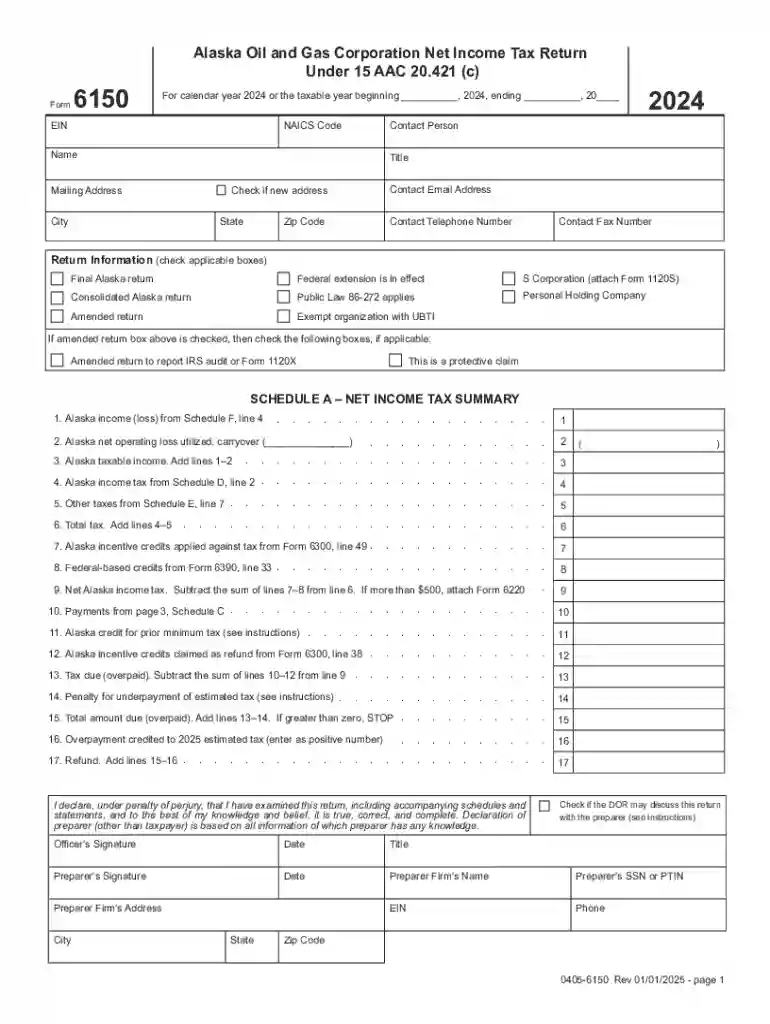
Personal Holding Company 2026

Get Form
Personal Holding Company Preview on Page 1

Here's how it works

01. Edit your form online
Type text, add images, blackout confidential details, add comments, highlights and more.

02. Sign it in a few clicks
Draw your signature, type it, upload its image, or use your mobile device as a signature pad.

03. Share your form with others
Send it via email, link, or fax. You can also download it, export it or print it out.

Definition & Meaning

A Personal Holding Company (PHC) is a type of corporation in the United States that primarily meets specific ownership and income criteria. Typically, a PHC is owned by a small group of individuals, often family members, and derives the majority of its income from passive sources like dividends, interest, and royalties. The IRS imposes strict regulations on these entities to ensure they don’t evade higher corporate taxes. A PHC is subjected to additional tax rates to discourage the accumulation of income at the corporate level.

Criteria for Classification

  • Ownership Requirement: To qualify as a PHC, more than 50% of the actual control or stock value must be directly or indirectly owned by five or fewer individuals during the last six months of the tax year.
  • Passive Income Requirement: At least 60% of the corporation's adjusted ordinary gross income for the tax year must be derived from passive sources like dividends, interest, and certain rents or royalties.

Key Elements of the Personal Holding Company

The design and operation of a Personal Holding Company cover several distinct elements that comply with IRS regulations. Understanding these elements is crucial for both formation and compliance.

Components

  • Income Composition: More than 60% passive income is a primary indicator. Companies failing this test might evade the PHC tax.
  • Ownership Structure: The PHC is often closely held by family members or related individuals, making it vital to keep accurate records of ownership.
  • Tax Obligations: PHCs must pay additional taxes on undistributed income to mitigate tax shelter benefits that may arise from accumulating passive income at lower corporate rates.

Legal Use of the Personal Holding Company

The Personal Holding Company structure is legally utilized for specific financial and strategic purposes. It allows small groups to maintain income within the corporation for reinvestment while deferring personal income.

Legal Framework

  • Reinvestment Flexibility: PHCs can reinvest income into business expansion or investments without immediate personal tax liabilities.
  • Income Accumulation: Despite the additional tax, some businesses choose to operate as PHCs to accumulate earnings for planned future expenses or investments.

Steps to Complete the Personal Holding Company Form

Completely and accurately filling out the PHC form is crucial to ensure compliance with IRS regulations and avoid penalties.

Sequential Process

  1. Collect Financial Data: Gather detailed records of all income and sources, focusing on the passive income threshold.
  2. Ownership Documentation: Prepare statements ensuring ownership does not exceed five individuals for more than 50% of the stock value.
  3. Complete the IRS Form 1120: The form should report income, deductions, and tax credits, specifically addressing PHC income components.
  4. Calculate Additional Taxes: Use the required PHC tax form (Schedule PH) to compute the additional tax on undistributed income.
  5. Review and Submission: Double-check for accuracy before submitting, either electronically or via mail before the IRS deadline.

IRS Guidelines

The IRS provides specific guidelines to manage taxation and filing requirements for Personal Holding Companies, avoiding fiscal discrepancies.

Essential Guidance

  • Annual Filing Obligation: PHCs must file Form 1120 and attach the Schedule PH annually to declare their status.
  • Avoidance Techniques: The IRS identifies actions such as rapid profit distribution to shareholders before the year's end to escape higher taxes.

Penalties for Non-Compliance

Failure to comply with PHC regulations and taxation requirements can lead to severe IRS-imposed penalties.

Consequences

  • Financial Penalties: Unpaid PHC taxes can lead to significant financial penalties, including back taxes, interest, and additional fines.
  • Legal Repercussions: Ongoing non-compliance may invite legal scrutiny or investigations from the IRS, potentially resulting in audits or legal actions.

Business Entity Types Related to Personal Holding Company

Certain business structures are more aligned with forming a PHC due to their size, ownership, or revenue streams.

Suitable Structures

  • C Corporations: Most PHCs are structured as C corporations to benefit from certain tax deferral opportunities.
  • Family-Owned Enterprises: Smaller, closely held businesses often establish PHCs to manage family investments and income streams efficiently.

Examples of Using the Personal Holding Company

Illustrative examples provide clarity on how PHCs function in real-world scenarios and the strategic benefits they offer.

Practical Uses

  • A family-owned business in the jewelry industry establishes a PHC to manage ownership and income distribution from high-value patents and intellectual property.
  • Investment entities form PHCs to defer income from shared stock in multiple real estate projects, consequently controlling income distribution amidst stakeholders within the family framework.

These headings and extensive paragraphs demonstrate a clear, detailed, and informative approach to the Personal Holding Company form, consistent with DocHub’s professional and supportive tone.

be ready to get more

Complete this form in 5 minutes or less

Get form

Got questions?

We have answers to the most popular questions from our customers. If you can't find an answer to your question, please contact us.
Contact us
A holding company is a parent companyusually a corporation or LLC whose purpose is to buy and control the ownership interests of other companies. The companies that are owned or controlled by a corporation holding company or an LLC holding company are called its subsidiaries.
Yes, a single individual can own a holding company. This arrangement can provide docHub benefits in terms of asset protection and control over multiple companies. When should you start a holding company? Creating a holding company can happen at any time.
A personal holding company (PHC) is known as a C corporation formed for the purpose of owning the stock of other companies; therefore, the holding company doesnt offer products or services but merely owns the shares of other corporations. Personal Holding Company: Tax Rules and Compliance UpCounsel personal-holding-company UpCounsel personal-holding-company
Overview. A personal holding company (PHC) is a C Corporation in which more than 50 percent of the value of its outstanding stock is owned (directly or indirectly) by five or fewer individuals and which receives at least 60 percent of its adjusted ordinary gross income from passive sources.
Holding companies can offer advantages, like letting you own multiple companies through one entity, protecting your personal assets from business debts, and keeping business liabilities separate.

Security and compliance

At DocHub, your data security is our priority. We follow HIPAA, SOC2, GDPR, and other standards, so you can work on your documents with confidence.

Learn more
ccpa2
pci-dss
gdpr-compliance
hipaa
soc-compliance

People also ask

Any LLC can be a holding company. Its not formed differently, but operated differently in that its solely used to hold investments, but not engage in operations. Can A Holding Company Be an LLC? Yes! - Wyoming LLC Attorney Wyoming LLC Attorney Blog Can-A-Holding Wyoming LLC Attorney Blog Can-A-Holding
20% In addition to the 21% corporate income tax, a PHCs undistributed personal holding company income (UPHCI) is subject to a tax of 20% for each tax year. Passive income sources such as dividends, interest, rent, royalties, and annuities are used to calculate the UPHCI. What Is a Personal Holding Company (PHC)? - Fit Small Business Fit Small Business what-is-personal-holding-c Fit Small Business what-is-personal-holding-c

Related links