
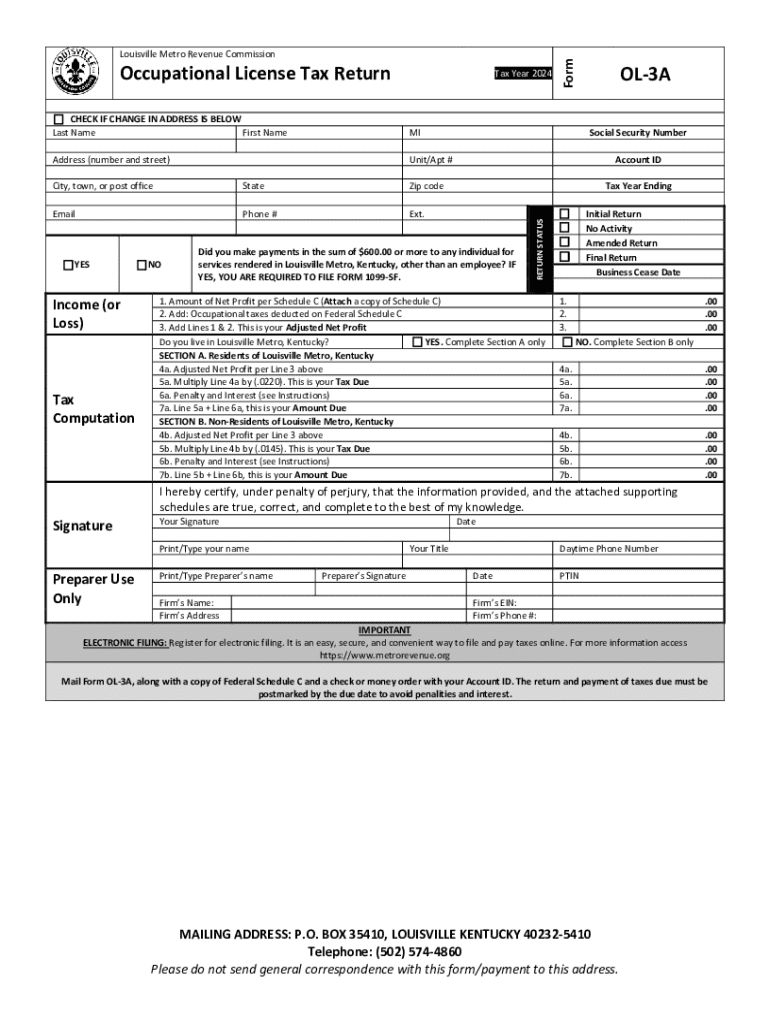







Definition and Meaning
Registering your business with the Revenue Commission is a formal process that entrepreneurs must undertake to legally establish their operations for tax purposes. This process involves notifying the Revenue Commission of your business's existence, providing crucial information about your operations, and ensuring compliance with local tax laws. The registration facilitates the administration of taxes, allowing businesses to remit their obligations efficiently and legally.
Benefits of Compliance
- Legal Recognition: Establishes your business legally, paving the way for obtaining licenses and permits.
- Tax Simplification: Streamlines the process of tax filing and payment.
- Credibility: Builds trust with stakeholders by demonstrating transparency.
Steps to Complete the Registration
Completing the "Register Your Business with the Revenue Commission" form involves several sequential steps, ensuring all necessary information is accurately submitted.
- Gather Required Information: Collect details like business name, address, owner information, and type of business entity.
- Choose the Correct Form Version: Ensure you have the most current form version to comply with the latest regulations.
- Complete the Form: Fill out each section carefully, double-checking for accuracy.
- Submit the Form: Decide on the submission method, either online, by mail, or in person, based on what is most convenient.
- Confirmation and Follow-Up: Obtain confirmation of receipt and follow up if necessary, especially if you do not receive a reply within the expected timeframe.
Avoid Common Mistakes
- Incorrect Information: Avoid errors by reviewing the form multiple times.
- Missing Documents: Ensure all supporting documents are included to prevent delays.
Required Documents
To register your business, several key documents are needed to support the registration process and validate the information provided.
- Business Name Documentation: Proof of your business name, such as a certificate of incorporation.
- Owner Identification: Valid forms of ID for all business owners, including passports or driver’s licenses.
- Proof of Address: Recent utility bills to confirm the business location.
- Entity Type Documentation: Any specific documents required depending on the type of business entity, such as partnership agreements.
Document Tips
- Originals and Copies: Have both original documents and copies as some submissions will require verification.
- Electronic Format: If submitting online, ensure documents are scanned in a clear and accepted format, such as PDF or JPEG.
Who Typically Uses This Form
The "Register Your Business with the Revenue Commission" form caters to a diverse range of entities and individuals looking to establish a business presence.
- Startups and New Entrepreneurs: Those setting up a new business to lay down a legal foundation.
- Existing Businesses: Established businesses expanding into new jurisdictions or restructuring.
- Different Business Structures: Covers a range of entities from sole proprietorships to large corporations.
Situational Examples
- Freelancers: Registering to report business income accurately.
- Home-Based Businesses: Ensuring compliance despite operating from a non-traditional setting.
Legal Use and Compliance
Understanding the legal implications of registering your business is crucial in maintaining compliance and avoiding potential legal issues.
- Regulatory Requirements: Adhering to local and federal registration laws to avoid penalties.
- Ongoing Compliance: Regular updates and renewals as required by the Revenue Commission.
Consequences of Non-Compliance
- Fines and Penalties: Significant financial penalties may be enforced for failures to register.
- Operational Restrictions: Lack of registration can result in restrictions on business operations.
State-Specific Rules
Different states within the U.S. may have unique requirements that impact how businesses register and comply with Revenue Commission regulations.
- Local Jurisdiction Variances: Each state may have specific forms, deadlines, and supplemental requirements.
- Tax Rate Differences: Varying state tax rates can influence the financial obligations of a registered business.
Adjusting to State Requirements
- Research: Conduct detailed research on your specific state's requirements.
- Consult Professionals: Engage with tax professionals who understand state-specific nuances.
Important Terms Related to Registration
Familiarity with critical terms associated with business registration helps in understanding and accurately completing the process.
- Employer Identification Number (EIN): A unique number assigned to businesses for tax purposes.
- Fiscal Year: The annual accounting period your business uses for reporting.
- Franchise Tax: A tax levied on businesses for the right to exist as a legal entity and transact business within a particular jurisdiction.
Clarifications
- EIN vs. SSN: An EIN is different from a Social Security Number; the former is for business tax filing, while the latter is personal.
- Fiscal Year vs. Calendar Year: Businesses can choose to adopt a fiscal year different from the calendar year for reporting purposes.
Penalties for Non-Compliance
Failure to register correctly or adhere to compliance requirements can lead to significant legal and financial repercussions for businesses.
- Monetary Fines: Penalties that range based on the duration and nature of the non-compliance.
- Legal Action: Possible legal proceedings that could affect the business's ability to operate.
- Reputation Damage: Potential harm to business reputation which can deter customer and investor trust.
Effective Compliance Strategies
- Regular Audits: Implement internal checks to ensure ongoing compliance.
- Education: Continuously update knowledge on the latest regulations and compliance requirements.
Providing a comprehensive understanding of the registration process offers significant utility for those involved in establishing and maintaining their business’s legal standing.




