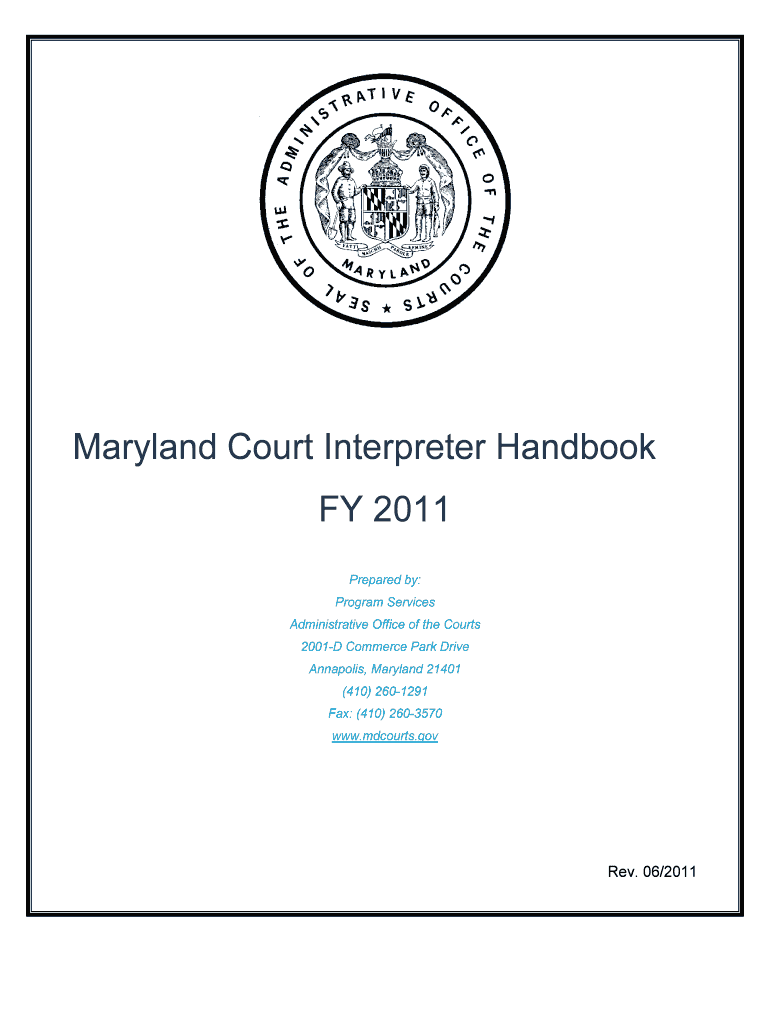







Definition and Meaning
The Maryland Court Interpreter Handbook FY 2011 is a comprehensive guide designed specifically for interpreters working within the legal system of Maryland. It outlines the roles and responsibilities of court interpreters, providing essential guidelines on the skills and knowledge required to perform effectively. This handbook serves as a crucial resource for interpreters, ensuring that they understand the certification process, courtroom protocols, and ethical standards necessary to facilitate accurate and impartial communication for Limited English Proficiency (LEP) individuals.
How to Use the Handbook
Court interpreters utilize the Maryland Court Interpreter Handbook FY 2011 by consulting its detailed sections on interpretation techniques, ethical considerations, and courtroom procedures. The handbook acts as a reference point for interpreters to ensure they comply with the standards of accuracy, confidentiality, and impartiality during legal proceedings. By following the guidelines stipulated in the handbook, interpreters can enhance their professional competence and uphold their role as vital facilitators of justice.
- Techniques: Learn standardized methods for language interpretation in legal contexts.
- Ethics: Understand the code of conduct to maintain objectivity and confidentiality.
- Procedures: Gain familiarity with courtroom practices and interpreter protocols.
Key Elements of the Handbook
The handbook is structured around several key elements that define the expectations and requirements of Maryland court interpreters. These elements include:
- Certification Process: Details the steps to become a certified interpreter, including necessary workshops and examinations.
- Ethical Standards: Emphasizes the importance of adherence to a strict code of ethics to ensure fairness and transparency.
- Role of Interpreters: Highlights interpreters as officers of the court who must perform their duties with accuracy and impartiality.
State-Specific Rules
The handbook underscores state-specific rules that Maryland court interpreters must follow. These rules detail the procedures unique to Maryland's legal system, and adherence to these guidelines is crucial for interpreters operating within this jurisdiction. This includes any state-specific terminology, documentation processes, and procedural nuances that might differ from federal guidelines or other states.
- Terminology: Utilize Maryland-specific legal terms accurately while interpreting.
- Documentation: Follow Maryland's unique terms for filing and submitting interpretation records.
Legal Use of the Handbook
Legally, the Maryland Court Interpreter Handbook FY 2011 serves as an authoritative resource that outlines the responsibilities and protocols court interpreters must adhere to. It provides legal backing to the role of interpreters in the courtroom by detailing the standards required to achieve accurate and fair communication. This ensures that interpreters can defend their actions and decisions by referring to the guidelines stipulated in the handbook.
- Guidelines: Provides legal grounding for interpreter actions.
- Standards: Establish minimum adherence levels for courtroom interpretation.
Important Terms Related to the Handbook
Understanding specific terms is crucial for effective use of the handbook. Some essential terms include:
- Limited English Proficiency (LEP): Refers to individuals who do not speak English as their primary language and have limited ability to read, speak, write, or understand English.
- Certification: The process by which interpreters receive official recognition of their skills and abilities to serve in Maryland courts.
Who Typically Uses the Handbook
The primary users of the Maryland Court Interpreter Handbook FY 2011 are professional interpreters working within Maryland state courts. However, it is also a valuable resource for legal professionals, administrative staff, and judicial officers who interact with interpreters. Understanding this handbook ensures all parties involved in the legal process are aware of the standards interpreters must meet, fostering a more inclusive and efficient judicial environment.


Steps to Complete the Handbook Process
Interpreters looking to adhere to the practices outlined in the handbook should follow a series of steps:
- Obtain a Copy: Acquire the handbook through official Maryland state court resources.
- Review Guidelines: Familiarize oneself with certification procedures, ethical standards, and courtroom protocols.
- Prepare for Certification: Engage in workshops and examinations as outlined in the handbook.
- Apply Guidelines: Implement learned practices and procedures during courtroom assignments.
Examples of Using the Handbook
Several practical scenarios in which the Maryland Court Interpreter Handbook FY 2011 might be used include:
- During Court Sessions: Interpreters use the handbook to ensure accurate real-time translation of legal terminology.
- Training Sessions: New interpreters reference the handbook to understand the expectations and requirements of their role.
- Legal Disputes: The handbook serves as a reference during disputes over interpretation accuracy to evaluate an interpreter's adherence to protocols.
In sum, the Maryland Court Interpreter Handbook FY 2011 is an essential resource for ensuring the effective and fair administration of justice through qualified and standardized interpretation services.