






Definition & Meaning
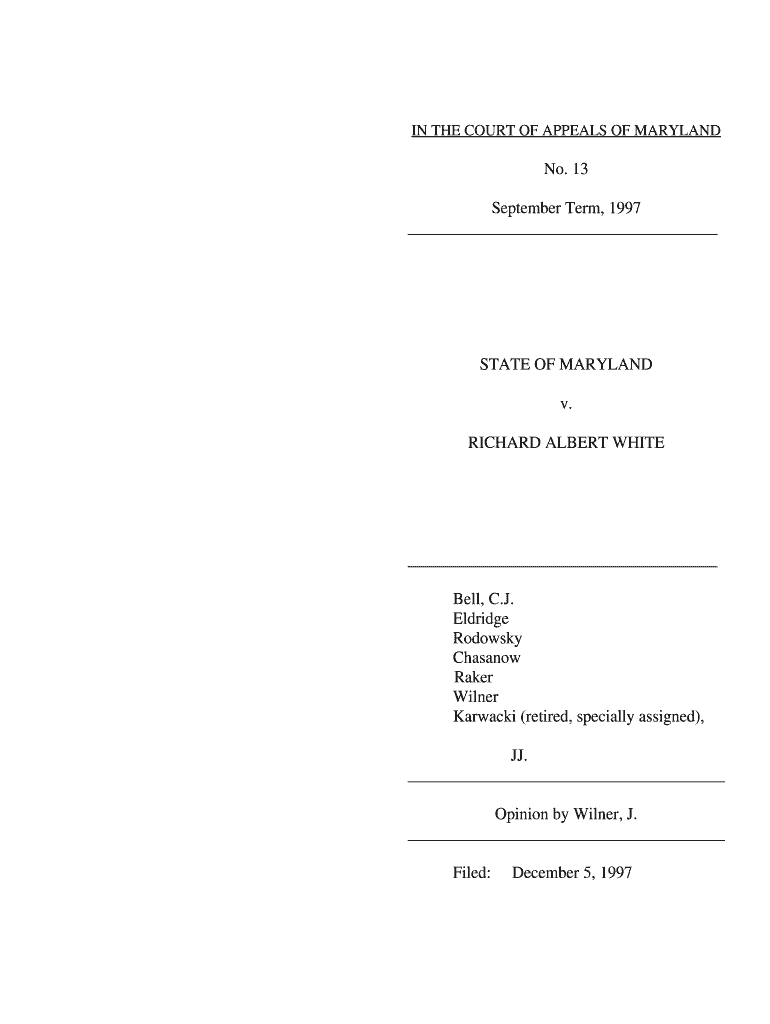
In the case of "State of Maryland v Richard Albert," the primary focus lies on the interpretation and application of the single larceny doctrine under the Consolidated Theft Statute. This legal case involves Richard Albert White, who was charged with theft involving multiple items owned by different individuals. The definitive aspect of this case is the reiteration by the Court of Appeals of Maryland that stealing several items from distinct owners simultaneously is considered a single offense. This decision is rooted in historical case law and the principles of common law, particularly referencing past rulings such as State v. Warren.
Key Elements of the STATE OF MARYLAND v RICHARD ALBERT
Key elements of this legal case include:
- Single Larceny Doctrine: A fundamental legal concept where multiple thefts committed in a single transaction are aggregated into one offense.
- Consolidated Theft Statute: Maryland's specific legislative framework governing theft-related offenses, allowing for value aggregation in determining whether the charge is a felony or misdemeanor.
- Historical Precedents: The court's decision is heavily influenced by historical precedents and common law principles, emphasizing consistency with past rulings.
How to Use the STATE OF MARYLAND v RICHARD ALBERT
Understanding the usage of the "State of Maryland v Richard Albert" case is critical for legal professionals and individuals involved in similar legal situations. Here's how you could use this legal precedent:
- Legal Arguments: Lawyers can cite this case when defending clients charged with theft involving multiple owners or multiple items.
- Case Studies: Academics and students can study this case to gain insights into Maryland's legal system and theft-related statutes.
- Reference for Legal Frameworks: It serves as a critical reference for understanding how the single larceny doctrine is applied in Maryland law.
Steps to Complete or Reference the Case
Utilizing or referencing "State of Maryland v Richard Albert" within legal documentation or arguments involves the following steps:
- Research the Case Details: Access the full court opinion to understand the nuances and factual background.
- Identify Relevant Aspects: Focus on the application of the single larceny doctrine and Consolidated Theft Statute.
- Draft Legal Documents: Use the case references in legal briefs or motions, outlining how it supports your legal argument.
- Discuss Historical Context: Explain the significance of historical references and how they influence modern legal interpretations.
Legal Use of the STATE OF MARYLAND v RICHARD ALBERT
The legal utilization of this case revolves around its demonstration of principles and doctrines specific to Maryland law:
- Precedent for Theft Cases: Establishes clear guidelines for treating multiple theft offenses as a single crime.
- Aggregation of Value: Critical in determining the severity of charges (misdemeanor vs. felony) by allowing aggregation of values from stolen items.
- Judicial Consistency: Offers a reference point for maintaining judicial consistency in theft-related cases across Maryland.
Important Terms Related to the Case
Understanding certain terms is essential for grasping the full impact and applications of this case:
- Single Larceny Doctrine: Legal principle permitting the treatment of multiple thefts as one offense when committed in a single transaction or series of events.
- Consolidated Theft Statute: Maryland's codified rules governing theft that consolidate various theft-related offenses under one statute.
- Aggregation: The process of combining the value of stolen items to determine charge severity.
Examples of Using the Case
Using the case "State of Maryland v Richard Albert" effectively involves practical scenarios:
- Legal Defense: A defense lawyer might use the case to argue that charges should be reduced or aggregated under the single larceny doctrine.
- Courtroom Application: Prosecutors and judges may refer to this case to ensure charges are appropriately aligned with existing legal interpretations.
- Educational Settings: Law schools may use it as a teaching case for students to understand application and interpretation of theft-related laws.
Who Typically Uses the Case
Several parties potentially utilize "State of Maryland v Richard Albert" in their work or studies:
- Legal Practitioners: Attorneys and judges for reference in legal proceedings involving theft.
- Law Students and Educators: As a case study for learning about Maryland law and theft statutes.
- Policy Makers: To understand existing legal frameworks that might influence legislative amendments.


State-Specific Rules for "State of Maryland v Richard Albert"
Maryland-specific rules underpinning this case include:
- Theft Statutes: Maryland's consolidation of theft laws provides a framework for handling multiple thefts as single offenses.
- Court Decision Precedents: Prior rulings guide the judgments in Maryland's theft-related cases, ensuring consistency and fairness under state law.
Practical Scenarios & Case Studies
Analyzing the case involves exploring:
- Past Precedents: Examining how historically similar cases were handled can shed light on this decision's rationale.
- Subsequent Impact: Understanding how this case shapes current and future theft-related cases in Maryland.
Case Comparisons & Alternatives
When reviewing "State of Maryland v Richard Albert," it helps to compare it with:
- State v. Warren: Provides foundational principles that informed this decision.
- Other Jurisdictions: Explore how similar cases might be handled in different states or judicial contexts for comparative analysis.
This comprehensive exploration of "State of Maryland v Richard Albert" caters specifically to legal professionals, educators, and individuals interested in Maryland law concerning theft offenses.