







Definition & Meaning
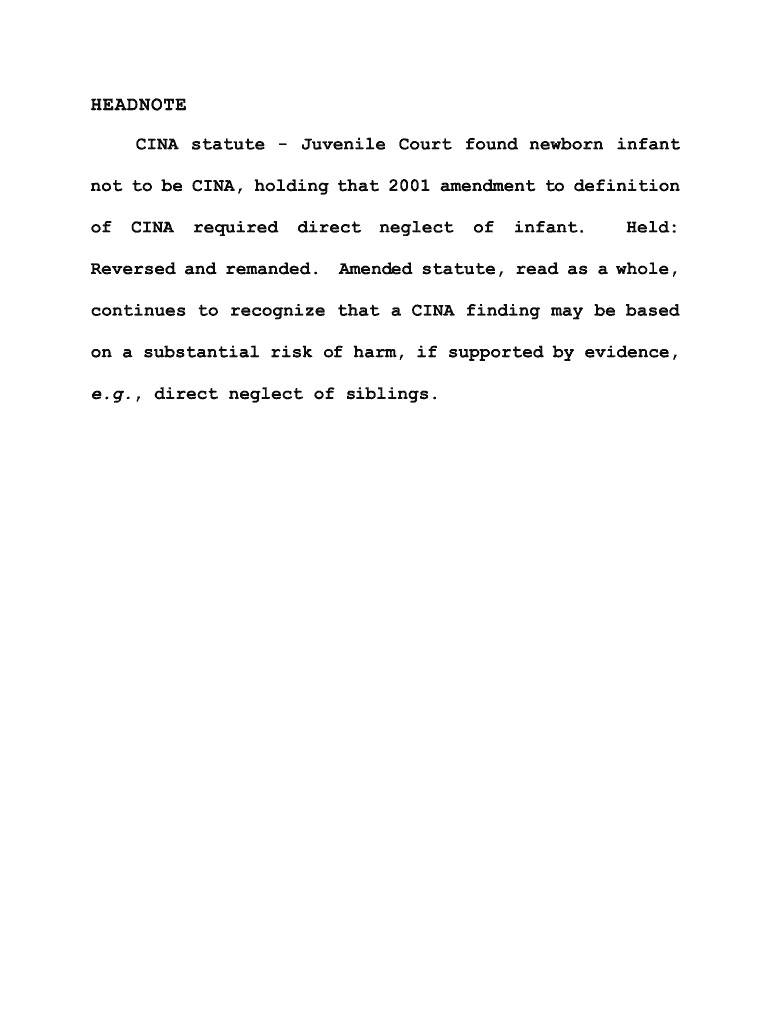
The term "HEADNOTE CINA statute" refers to a key aspect of juvenile law in the U.S., specifically under the Child In Need of Assistance (CINA) statute. This legal framework determines when a child is considered to be in need of court-ordered assistance due to neglect or abuse. The headnote provides a summary of essential judicial interpretations, often referencing significant amendments, such as those made in 2001. This statute is crucial in understanding how courts interpret evidence of potential harm to a child, including risks inferred from the treatment of siblings.
How to Use the HEADNOTE CINA Statute
Primarily used by legal professionals, the HEADNOTE CINA statute provides a concise overview of pivotal case law that informs decisions about whether a child is in need of assistance. Lawyers and judges utilize these headnotes to derive precedential authority in ongoing cases, ensuring a consistent application of the law. Social workers and child advocates can also refer to this statute to align their assessments with legal criteria, particularly when presenting cases to a juvenile court.
Key Elements of the HEADNOTE CINA Statute
Key elements of this statute include the criteria for determining a CINA, which involves evaluating evidence of neglect or abuse. The 2001 amendment highlighted in the headnote impacts how courts interpret these criteria, emphasizing a substantial risk of harm rather than requiring direct evidence. This shift allows for broader protection of children by considering a history of neglect towards siblings as sufficient for intervention.
Legal Use of the HEADNOTE CINA Statute
Legally, the HEADNOTE CINA statute is employed in family courts to decide whether a child needs state intervention. Attorneys leverage the headnote to argue cases where children might be in protective environments or face removal from harmful situations. These legal tools help shape judicial reasoning, offering insights into how amendments alter the legislative landscape and influence child custody decisions.
State-Specific Rules for the HEADNOTE CINA Statute
While the statute provides a federal framework, each state interprets and applies it differently. For instance, Maryland has specific precedents influencing how evidence is evaluated. States may have varying requirements regarding what constitutes neglect or risk. Practitioners must understand local rules and previous cases, which can significantly affect how the statute is implemented across different jurisdictions.
Steps to Complete CINA-Related Proceedings
-
Assessment: Social services evaluate the risk to the child, potentially based on sibling treatment.
-
Filing a Petition: If a child is believed to be in need of assistance, a petition is filed in juvenile court.
-
Court Hearing: Evidence is presented, including any inferred risks and past neglect cases, to determine CINA status.
-
Court Ruling: The court issues a ruling based on the presented evidence, historical context, and statutory amendments.
-
Intervention Plan: If deemed a CINA, the court orders protective measures, which could involve foster care or supervised custody.
Important Terms Related to HEADNOTE CINA Statute
- Neglect: Failure to provide necessary care, leading to potential harm.
- Substantial Risk: A legal threshold used to infer potential threats from existing conditions or past actions.
- Siblings: Their treatment is often considered in CINA cases for broader evidence of neglect.
Who Typically Uses the HEADNOTE CINA Statute
Primarily, this statute is utilized by juvenile court judges, family lawyers, child protection agencies, social workers, and legal researchers. Each group relies on the statute for clear guidelines on addressing suspected child neglect or abuse cases, ensuring protective actions align with legal standards and amendments.


Examples of Using the HEADNOTE CINA Statute
Consider a case where an infant's sibling has repeatedly been found in unsafe conditions. Lawyers may cite the HEADNOTE CINA statute, referencing the 2001 amendment, to argue that the infant also faces substantial risk. Courts will evaluate this precedent to decide if state intervention is warranted, demonstrating practical application of the headnote in safeguarding children’s welfare.




