Definition & Meaning
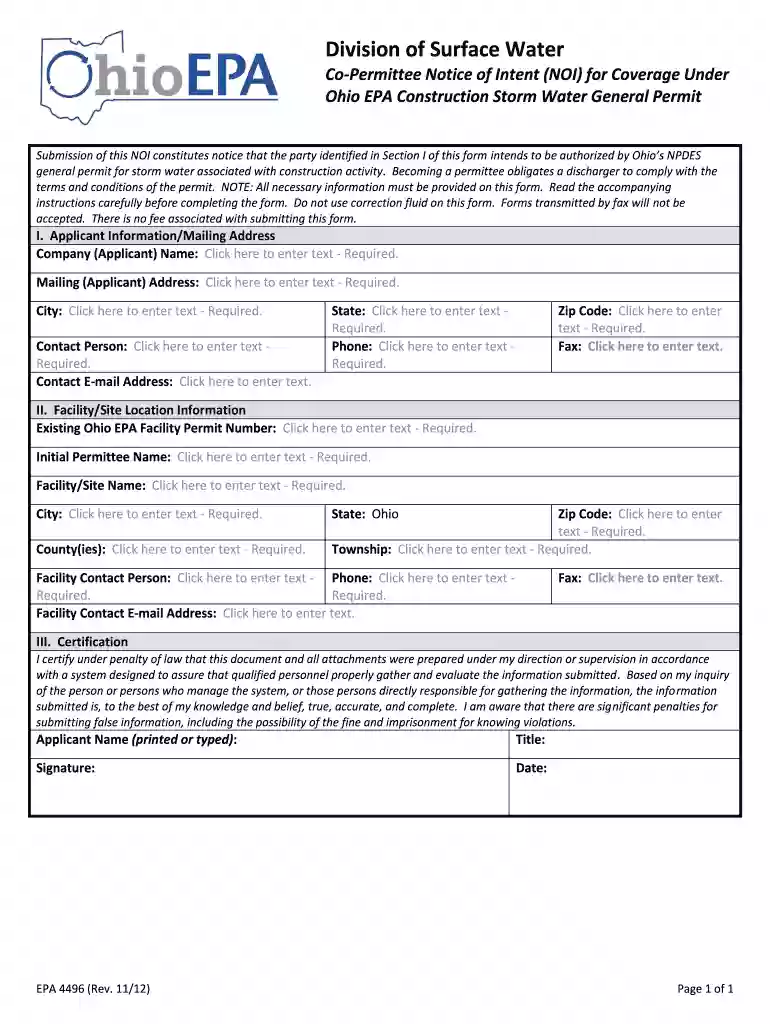
The Co-Permittee Notice of Intent (NOI) for Coverage Under the Ohio EPA Construction Storm Water General Permit is a critical document that signifies a co-permittee's intent to be covered by the NPDES general permit for stormwater discharges related to construction activities. This form serves as a formal notification to state and environmental authorities, signaling adherence to regulatory standards concerning stormwater management during construction.
Key Functions
- Authorization of Coverage: By submitting this NOI, applicants request coverage under the Ohio EPA Construction Storm Water permit, allowing for lawful discharge of stormwater.
- Compliance Assurance: The form confirms that the applicant intends to comply with specific environmental regulations and guidelines related to stormwater runoff.
Common Terminology
- NPDES: National Pollutant Discharge Elimination System, a critical regulatory framework for managing water pollution.
- EPA: Environmental Protection Agency, responsible for protecting human health and the environment.
Steps to Complete the Co-Permittee Notice of Intent (NOI)
- Gather Required Information: Collect all necessary details about the construction project, including site location, responsible officials, and contact information.
- Complete Applicant Details: Fill out the section pertaining to the applicant and any co-permittees involved in the project.
- Certify Accuracy: Ensure all information is accurate and truthful, as false submissions can incur penalties.
- Submit the Form: Depending on the state guidelines, submit the form through the prescribed method, whether online, by mail, or in person.
Essential Sections
- Contact Information: For both the applicant and any co-permittees.
- Project Description: Details of the construction project, including size, location, and scope.
- Certification Statement: A mandatory declaration by the applicant affirming the correctness of the form data.
Legal Use of the Co-Permittee Notice of Intent (NOI)
The NOI form adheres to legal frameworks established by environmental laws in the United States. Its completion is required for regulatory compliance and the avoidance of potential litigation concerning environmental violations.
Compliance Obligations
- Adherence to Permit Conditions: All activities conducted under the NOI must comply with the conditions outlined in the permit.
- Monitoring and Reporting: Regular monitoring of stormwater discharges and submission of reports as required by the permit.
Important Terms Related to the Co-Permittee NOI
Understanding the specific terms associated with the Co-Permittee NOI is crucial for accurate completion and submission.
Terms and Their Implications
- Permittee: An entity or individual authorized by the permit to discharge stormwater related to construction activities.
- Stormwater Runoff: Water from precipitation that flows over land surfaces, potentially collecting pollutants and necessitating regulation.
State-Specific Rules for the Co-Permittee NOI
Certain state-specific rules can affect the requirements and processes related to the NOI for coverage under stormwater permits.
Ohio-Specific Requirements
- Site-Specific Management Plans: Ohio may require customized stormwater pollution prevention plans that cater to specific project conditions.
- State-Specific Deadlines: Ohio has its timeline for the submission and renewal of NOIs.
Penalties for Non-Compliance
Failure to comply with the requirements of the Co-Permittee NOI can result in significant penalties, reinforcing the necessity for diligence in the process.
Types of Penalties
- Fines: Monetary fines imposed for unauthorized discharge or incomplete documentation.
- Legal Action: Potential for legal proceedings, resulting in further financial and operational repercussions.
Who Typically Uses the Co-Permittee NOI
This form is primarily used by construction contractors, developers, and other entities engaged in construction activities that may impact stormwater quality.

Typical Users
- Large Construction Firms: Companies managing extensive construction projects that require structured stormwater management plans.
- Subcontractors: Entities working on parts of larger projects who need to align with overall environmental strategies.
Required Documents
Completing the NOI involves gathering various supplementary documents that support the accuracy and comprehensiveness of the submission.
Supplementary Documents
- Site Plans: Detailed layout and environmental impact analysis of the construction site.
- Identification Documentation: Proof of identity or incorporation for the submitting entity.
Form Submission Methods
There are multiple pathways to submit the Co-Permittee NOI, each carrying distinct advantages and requirements for processing.
Available Methods
- Online Submission: Preferred for ease of access and tracking.
- Mail Submission: Traditional method requiring physical delivery, often supplemented by receipt confirmation.
- In-Person Submission: Direct submission at specified regulatory offices for immediate processing and verification.
Digital vs. Paper Version
Choosing between digital and paper versions of the NOI can depend on the resources available to the applicant and the state's submission guidelines.
Pros and Cons
- Digital Submission: Faster processing and easier amendments but requires reliable internet access and technological proficiency.
- Paper Submission: More tangible record but slower processing and can be prone to manual errors.