




01. Edit your rent increase request housing online
Type text, add images, blackout confidential details, add comments, highlights and more.

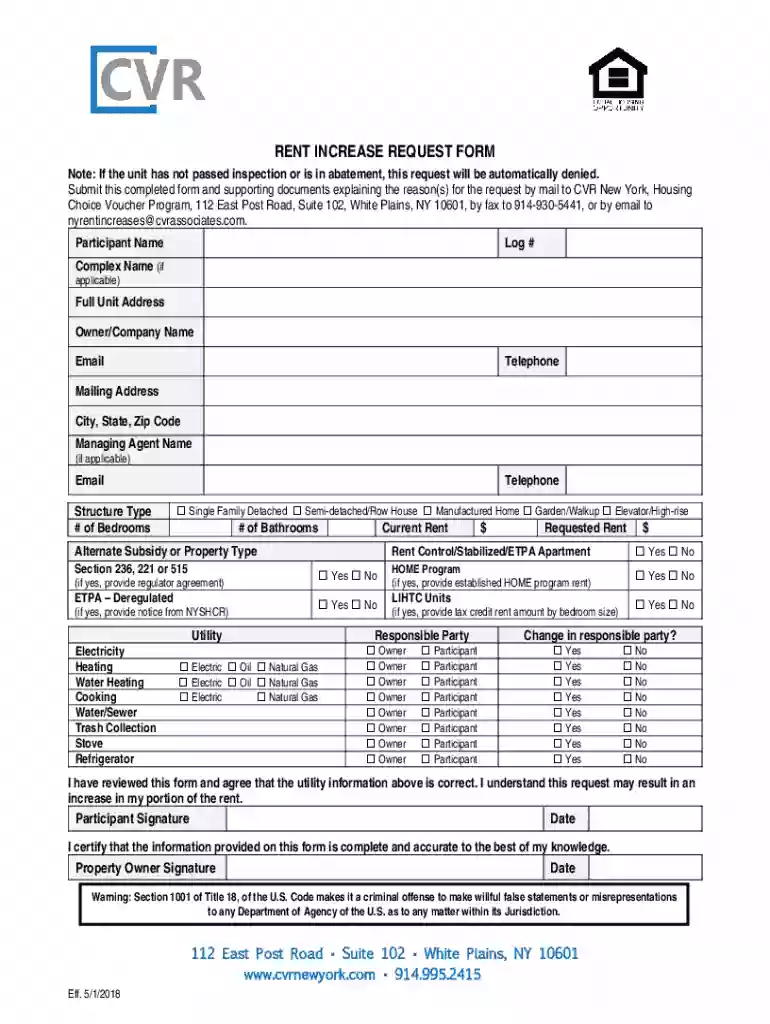
Type text, add images, blackout confidential details, add comments, highlights and more.

Draw your signature, type it, upload its image, or use your mobile device as a signature pad.

Send it via email, link, or fax. You can also download it, export it or print it out.
The MF Rent Increase Request is a formal document used by property owners or managers to propose a change in the rental amount for a housing unit. This request is a part of the Housing Choice Voucher Program, which assists in managing housing costs for eligible participants. The form serves as both a notice to the tenant and a request for consent to adjust the rent, ensuring transparency and mutual agreement between parties.
The MF Rent Increase Request must comply with local and federal laws concerning rent adjustments. It is essential to respect tenant rights, adhere to lease agreements, and follow proper notice periods established by state and federal regulations. Unauthorized changes or failure to obtain necessary approvals can lead to legal disputes or penalties.
Each state may have its own set of rules and timelines affecting rent increase requests. For example, some states mandate a minimum notice period of 30 days, while others might require 60 days for any rental adjustment notification. Landlords should review local statutes to ensure alignment with state-mandated procedures.
By understanding these comprehensive details and following outlined processes, property owners and tenants can navigate rent adjustments with clarity and compliance, ensuring transparent communication and legally sound practices.
We've got more versions of the rent increase request housing form. Select the right rent increase request housing version from the list and start editing it straight away!
At DocHub, your data security is our priority. We follow HIPAA, SOC2, GDPR, and other standards, so you can work on your documents with confidence.



We systematically evaluated over 30 commercial mold removal products, selecting 24 leading brands as key competitors.
Landlords of regulated properties may apply for rent increases above the rent increase allowance or for an exemption through the following processes.Read more


