Definition and Purpose of Form 720
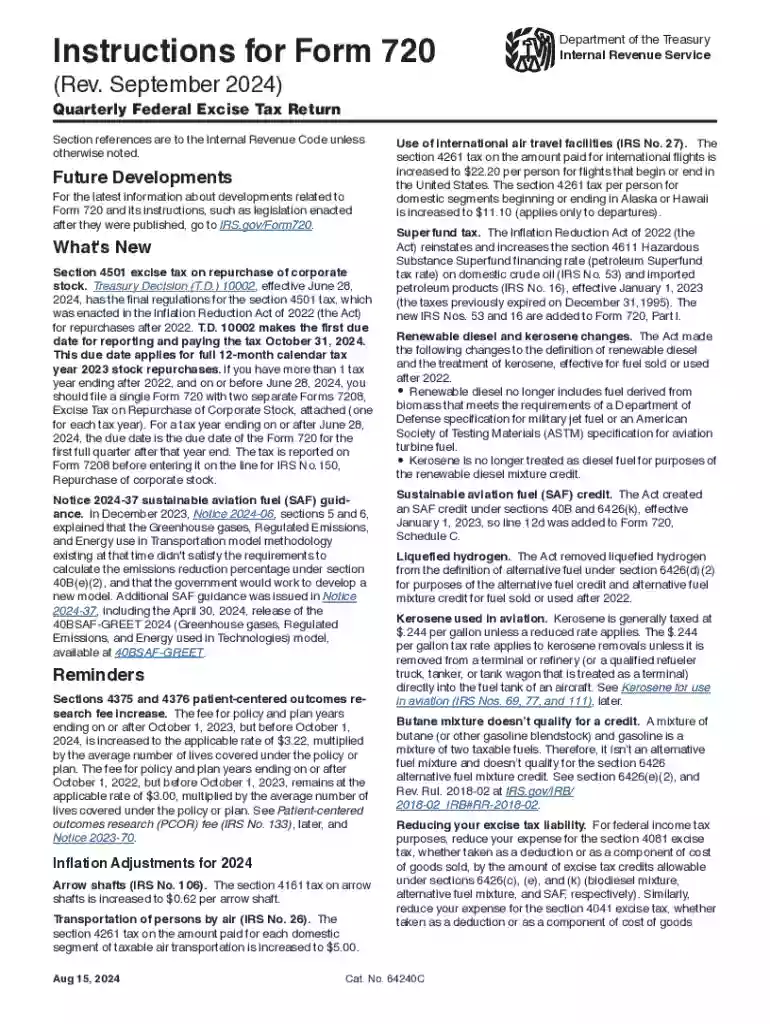
Form 720, also known as the Quarterly Federal Excise Tax Return, is used by businesses in the United States to report and pay excise taxes. Excise taxes are imposed on specific goods, activities, or services, including motor fuel, air transportation, and certain luxury items. The form helps the Internal Revenue Service (IRS) collect these taxes, which contribute to funding various federal programs.
- Excise taxes covered: Form 720 includes taxes on transportation, communication, environmental taxes, fuel taxes, and manufacturers' taxes.
- Frequency of filing: This form must be filed quarterly, aligning with corporations’ typical financial schedules, to ensure timely tax collection.
Instructions for Completing Form 720
To fill out Form 720 accurately, taxpayers should follow these steps:
- Identify applicable excise taxes: Review the list of taxable goods and services in the instructions to determine which apply to your business.
- Gather necessary information: Collect relevant financial data, such as sales records, receipts, and other documentation to support tax entries.
- Calculate tax liabilities: Use the specified rates in the instructions to determine the total tax due for each excise tax category.
- Complete the form sections: Fill in the required details in each section of Form 720, ensuring all calculations and entries are correct.
- Review and proofread: Double-check all entries for accuracy and completeness before submission.
Key Elements of Form 720
The form consists of several sections that cover different types of excise taxes. Here are the main components:
- Part I: IRS No. and Tax: Lists various IRS numbers associated with specific excise taxes, which must be completed based on the taxpayer’s applicable excise taxes.
- Part II: IRS No. and Tax continuation: For additional excise categories not covered in Part I.
- Schedule A and T: Describes tax on communications services, air transportation, and fuel, detailing how to calculate and report these taxes.
IRS Guidelines for Form 720
The IRS provides detailed guidelines on:
- Determining liability: Clarifies who must file based on the goods or services sold.
- Recordkeeping: Emphasizes maintaining thorough records to justify tax entries and facilitate potential audits.
- Compliance expectations: Outlines the legal obligations for accurate reporting and payment, highlighting any recent updates in tax law.
Filing Deadlines and Important Dates
Filing deadlines for Form 720 are crucial for complying with federal tax regulations:
- Quarterly deadlines: The form is due by the last day of the month following the end of each calendar quarter. For example, the deadline for the first quarter is April 30.
- Extensions: Taxpayers must seek special consideration for filing extensions if required, as the IRS generally expects timely submissions.
Penalties for Non-Compliance
Failure to file Form 720 accurately or on time can result in penalties:
- Late filing penalties: The IRS imposes a penalty on returns that are filed after the due date without prior approval.
- Failure to pay penalties: Interest and additional charges accrue on excise taxes that are not paid by the due date.
- Accuracy-related penalties: Incorrect submissions may invite penalties if inaccuracies do not meet IRS standards for reasonable cause.
Business Types Using Form 720
Form 720 is pertinent to various business entities that deal in taxed goods or services:
- Corporations and LLCs: Especially those in industries like fuel, air travel, and communications subject to excise taxes.
- Partnerships: Those engaging in taxable manufacturing or sales activities.
- Industry-specific operations: Businesses in sectors leveraged by environmental or luxury taxes.
Digital vs. Paper Filing
Form 720 can be filed either electronically or on paper:
- Electronic filing benefits: Faster processing and confirmation of receipt, with reduced risk of errors.
- Paper filing requirements: Ensures filing is complete and accurate by the deadline; suitable for smaller entities less familiar with e-filing.
Required Documentation for Form Submission
When filing Form 720, the following documentation is often necessary:
- Sales receipts and invoices: To support the calculations of taxable amounts.
- Financial records: Bank statements, ledgers, or accounting reports to corroborate entries.
- Proof of prior payments: Documentation of past excise tax payments, especially if claiming credits or exemptions.
By understanding and implementing the detailed instructions for Form 720, businesses can ensure compliance with federal requirements, accurately report their excise tax liabilities, and minimize the risk of penalties.