




01. Edit your certificate of organization iowa example online
Type text, add images, blackout confidential details, add comments, highlights and more.

Type text, add images, blackout confidential details, add comments, highlights and more.

Draw your signature, type it, upload its image, or use your mobile device as a signature pad.

Send certificate of organization iowa template via email, link, or fax. You can also download it, export it or print it out.
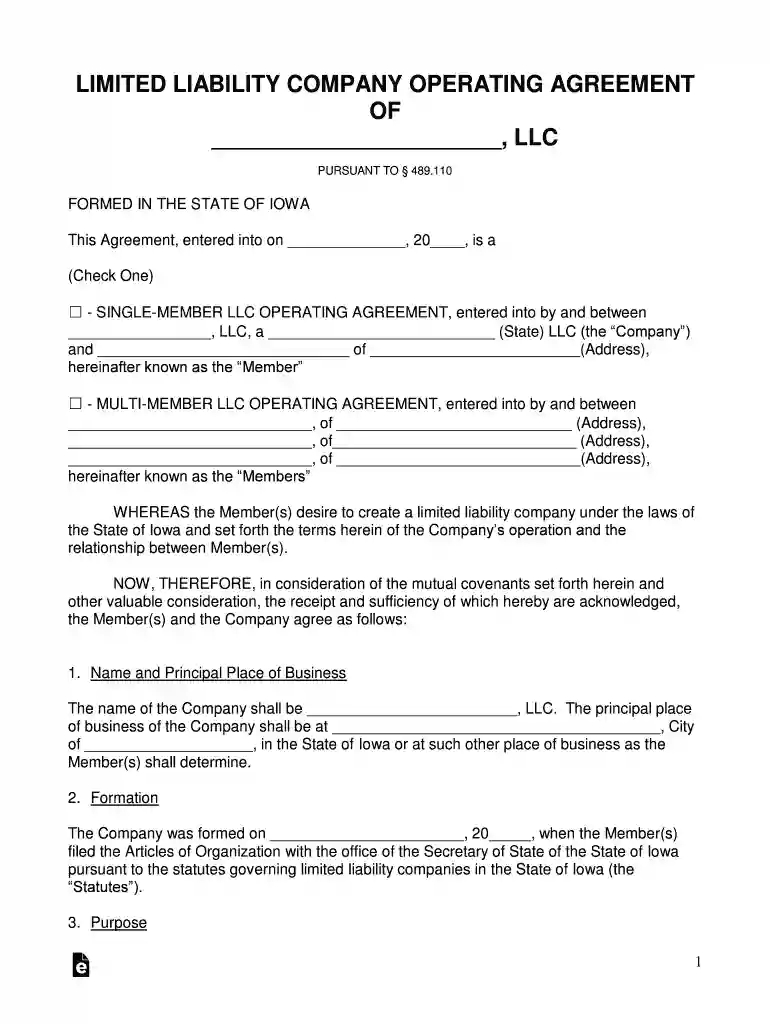
An Iowa LLC operating agreement is a crucial document that outlines the internal workings of a Limited Liability Company (LLC) formed in Iowa. It serves as a foundational element for the governance of the LLC, detailing the relationships among members, their respective rights and responsibilities, and the operational procedures of the business. This document is not mandatory in Iowa; however, having one is highly recommended to protect members from personal liability and to clarify business operations in case of disputes.
Key features of an operating agreement typically include:
A well-crafted operating agreement can help prevent misunderstandings among members and provide a roadmap for resolving internal conflicts.
A comprehensive Iowa LLC operating agreement includes various key components that outline the operational framework of the LLC:
While Iowa law does not mandate the creation of an operating agreement, it is legally advisable to have one to clarify member relations and establish a clear operational framework. This legal backing can prove invaluable in several situations, particularly if conflicts arise among the members.
It is generally considered best practice for all members to sign the operating agreement to formalize their consent to the terms within it. This signature not only indicates acceptance but also strengthens the legal standing of the document should any disputes occur.
An operating agreement in Iowa does not need to be notarized to be considered valid; however, notarization can enhance the document's credibility, especially in situations involving external parties or during potential legal disputes.
When considering the formation of an Iowa LLC and the accompanying operating agreement, several common questions often arise:
While it is not a legal requirement to have an operating agreement for an LLC in Iowa, its absence may lead to unintended legal implications or disputes among members about their roles and responsibilities.
Yes, operating agreements can and should be reviewed periodically. Amendments should be documented properly to reflect any changes in membership, management, or operational practices, ensuring all existing and new members are informed.
If an LLC does not have an operating agreement, Iowa's default laws regarding LLCs will govern the company operations, which may not align with the members' intentions, potentially leading to conflicts or misunderstandings about various aspects of business management.
Concrete examples can help to illustrate how an Iowa LLC operating agreement is structured. A well-prepared operating agreement may include specific clauses, such as:
These examples emphasize clarity and provide practical mechanisms for enforcing the agreement's terms.
When drafting an Iowa LLC operating agreement, it is advisable to consult legal and financial professionals familiar with Iowa business laws. Their expertise can mitigate risks, ensure compliance with state regulations, and tailor the agreement to the specific needs of the business and its members.
Additionally, they can help navigate the complexities of terms that might arise during the formation process, ensuring the agreement is comprehensive and adequately protects all parties involved.
We've got more versions of the certificate of organization iowa example form. Select the right certificate of organization iowa example version from the list and start editing it straight away!
| Versions | Form popularity | Fillable & printable |
|---|---|---|
| 2018 | 4.7 Satisfied (48 Votes) |
At DocHub, your data security is our priority. We follow HIPAA, SOC2, GDPR, and other standards, so you can work on your documents with confidence.
The Company is a limited liability company formed under the Iowa Limited Liability. Company Act. The other parties to this Agreement are the Company and theRead more
Nov 3, 2025 Koch Ag Wever Fertilizer Facility is a chemical plant operating in Wever, Iowa, United States.
Dec 12, 2025 489.105 Operating agreement scope, function, and limitations. 1. Except as otherwise provided in subsections 3 and 4, the operatingRead more


