







Definition and Meaning
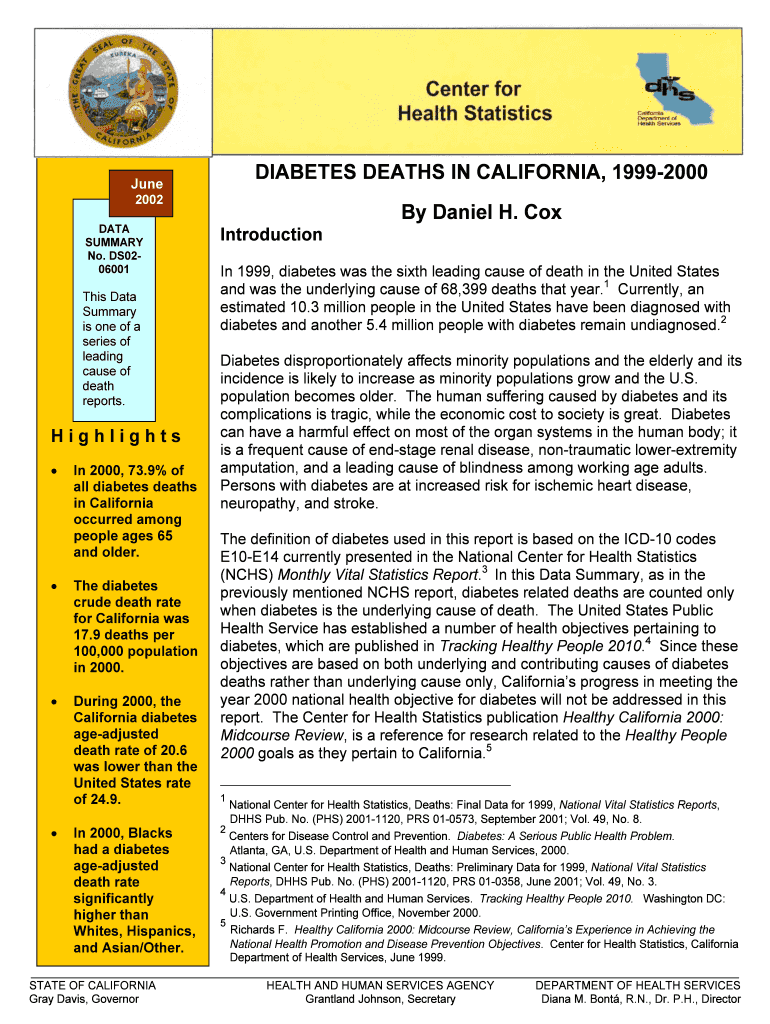
The "Diabetes Deaths in California, " report provides a comprehensive analysis of mortality data related to diabetes in California during these years. It examines trends in death rates, evaluates demographic patterns, and identifies disparities across different racial and ethnic groups. By understanding these data, healthcare professionals and public health officials can develop targeted interventions to reduce diabetes-related deaths and address health inequalities.
Key Elements of the Report
This report encompasses several critical elements that provide insights into diabetes-related mortality. The data highlights age-specific death rates, with a particular focus on individuals aged 65 and older, who account for a significant proportion of the deaths. It also presents a breakdown of mortality rates by race and ethnicity, illustrating disparities particularly among Black populations. Additionally, the report includes geographic data by county, enabling localized public health responses.
Who Typically Uses the Report
The primary users of this report include public health officials, policymakers, researchers, and healthcare providers. These stakeholders leverage the data to monitor and evaluate the impact of diabetes within the state, to inform healthcare practices, and to guide policy decisions. Community organizations may also use this report to advocate for resources and programs aimed at reducing diabetes-related disparities.


Steps to Analyze the Data
- Collect and Compile Data: Obtain the mortality data from reliable sources, ensuring it is up-to-date and accurate.
- Examine Demographic Patterns: Analyze data by age, race/ethnicity, and gender to uncover trends and disparities.
- Compare State and National Averages: Assess how California's age-adjusted death rates compare with national figures.
- Identify Geographic Disparities: Utilize county-level data to highlight areas with the highest death rates and explore potential causes.
- Evaluate Policy Impact: Review the effectiveness of current healthcare policies and interventions in reducing diabetes mortality.
State-Specific Rules and Context
California has specific healthcare regulations and initiatives aimed at reducing diabetes-related mortality. These include state-funded healthcare programs for underserved populations and local health departments tasked with implementing state health initiatives. Understanding how these rules and programs influence the data is crucial for interpreting the report's findings accurately.
Important Terms Related to the Report
- Crude Death Rate: The total number of deaths per 100,000 population.
- Age-Adjusted Death Rate: A mortality rate statistically modified to eliminate the effect of age differences in population demographics.
- Racial/Ethnic Disparities: Differences in health outcomes observed among various racial and ethnic groups.
Legal Use of the Report
This report serves as an authoritative resource for informing public health strategies. Its use in policy discussions is instrumental in driving systemic changes aimed at reducing diabetes incidence and mortality. The report guides legal and health advocacy efforts to ensure equitable access to diabetes care and prevention resources across California.
Examples of Using the Report
- Public Health Interventions: The report can guide targeted interventions in counties with high diabetes-related death rates, such as enhanced screening programs or nutrition education campaigns.
- Policy Formulation: Legislators might use the report's insights to allocate funding for diabetes research or to enhance access to care for minority communities.
- Academic Research: Researchers utilize the data to evaluate the factors contributing to diabetes disparities and to develop evidence-based strategies for reducing mortality.
State-by-State Differences
Diabetes mortality data can vary significantly from state to state due to differences in healthcare infrastructure, population demographics, and socioeconomic factors. Unlike California, other states may have different age-adjusted death rates or racial disparities, highlighting the importance of contextual analysis when using the report for comparative studies or policy development.




