01. Edit your form online
Type text, add images, blackout confidential details, add comments, highlights and more.

Type text, add images, blackout confidential details, add comments, highlights and more.

Draw your signature, type it, upload its image, or use your mobile device as a signature pad.

Send it via email, link, or fax. You can also download it, export it or print it out.
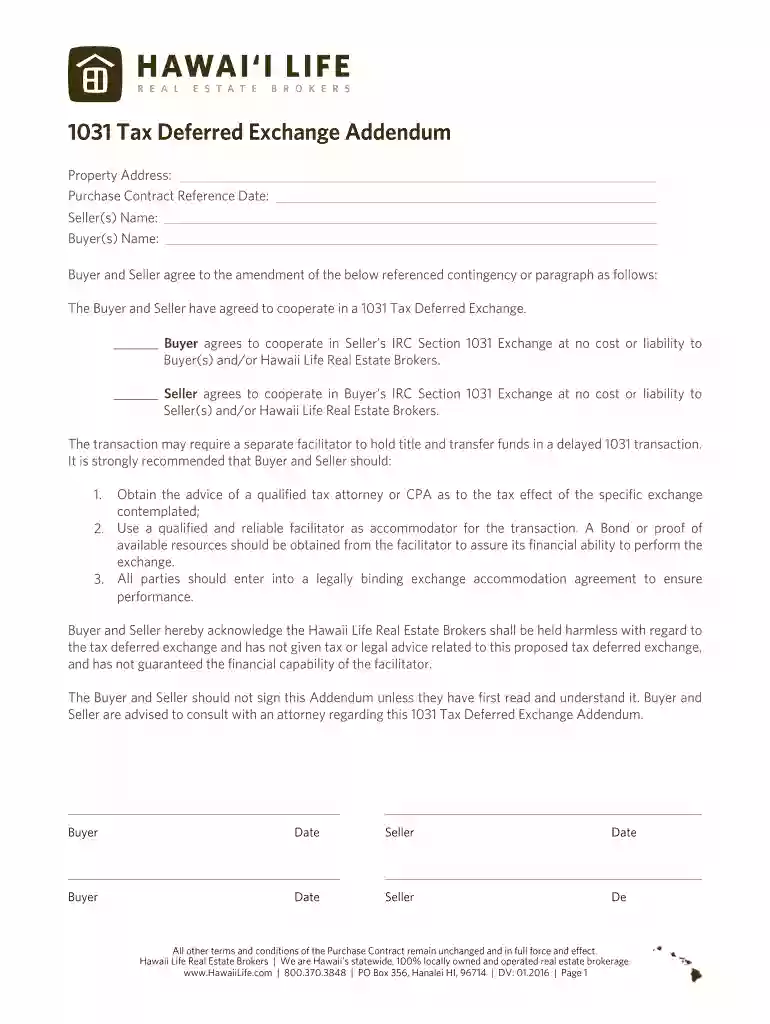
The 1031 Tax Deferred Exchange Addendum is a pivotal document in real estate transactions, particularly for those looking to utilize the tax-deferral benefits outlined in the Internal Revenue Code (IRC) Section 1031. This form facilitates the process for buyers and sellers to agree on participating in a like-kind exchange, allowing them to defer capital gains taxes on eligible property sales. By signing this addendum, both parties agree to collaborate on the tax-deferred exchange, ensuring compliance with pertinent regulations.
This addendum serves as a legally binding agreement, obligating both parties to adhere to the protocol required for a tax-deferred exchange. It is critical to note that while it facilitates tax deferral, the document itself and those executing it should not provide tax advice. Legal and tax professionals should be consulted to ensure compliance with the IRC and to address any transaction-specific complexities.
This form is primarily utilized by real estate investors and property owners looking to defer taxes on the sale of investment properties. It is predominantly relevant to individuals and entities engaged in frequent property trades, including:


The IRS stipulates that for the exchange to qualify under Section 1031:
While Section 1031 is federally regulated, state laws may affect the execution and reporting of exchanges. Property owners must consider:
Property owners must review state-specific regulations or consult with legal professionals to ensure compliance with both federal and state laws during an exchange transaction.
We've got more versions of the 1031 Tax Deferred Exchange Addendum form. Select the right 1031 Tax Deferred Exchange Addendum version from the list and start editing it straight away!
At DocHub, your data security is our priority. We follow HIPAA, SOC2, GDPR, and other standards, so you can work on your documents with confidence.