Definition and Meaning
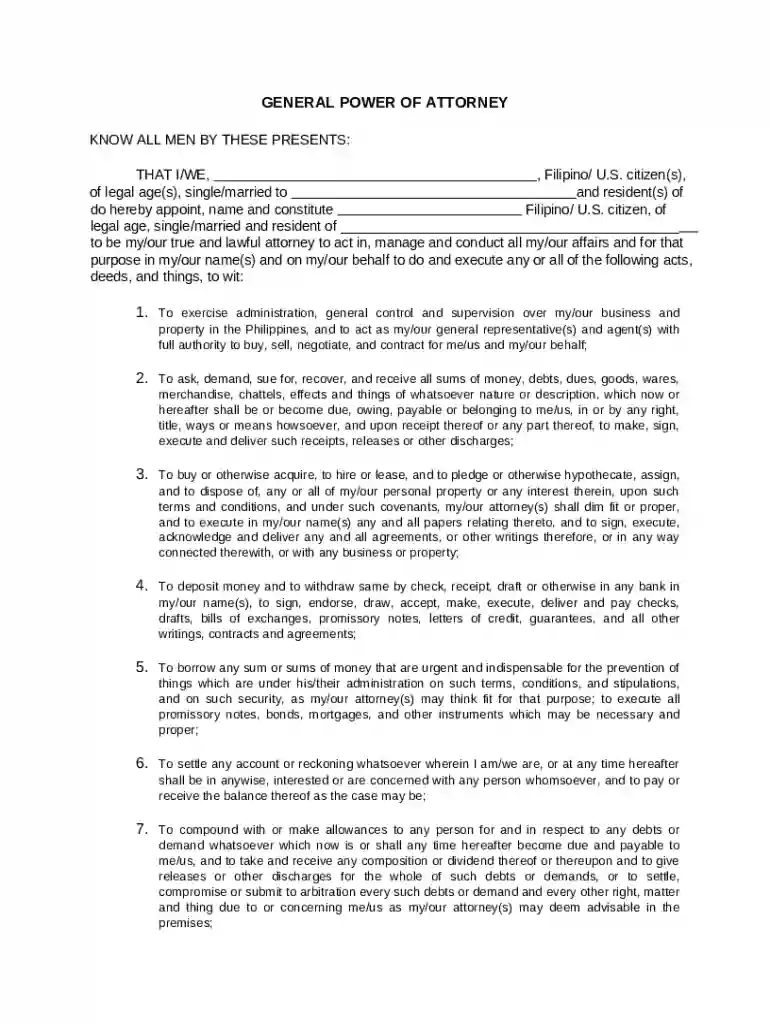
A Special Power of Attorney (SPA) is a legal document that enables an individual, known as the principal, to designate another person, called the attorney-in-fact, to act on their behalf for specific matters. The "Get the Free Philippines Special Power Attorney Sample" provides a template tailored for situations in the Philippines where legal authority is temporarily transferred to handle particular financial, property, or legal matters. Unlike a General Power of Attorney, a SPA is limited in scope, only granting authority over the specific tasks outlined in the document. Understanding this distinction is crucial for ensuring the document is used appropriately.
How to Use the Sample Form
Using a Special Power of Attorney form requires careful consideration of the authority being granted. Once acquired, the principal must review the template to ensure all relevant sections match their specific needs:
- Identifying Parties: Clearly list the full names and details of both the principal and attorney-in-fact.
- Scope of Authority: Detail the specific powers granted, such as managing financial transactions or selling property.
- Timeframe: Specify the duration for which the authority is valid, which can prevent misuse and provides a clear end date.
- Legal Compliance: Consult with a legal professional to ensure the completed form adheres to Philippine and applicable U.S. laws, mitigating the risk of invalidation.
- Execution: Sign in the presence of a notary public or witnesses if required, which adds a layer of legality and acceptance.
Steps to Complete the Form
To successfully complete the "Get the Free Philippines Special Power Attorney Sample," follow these steps:
- Download and Open the Form: Access the free sample from a trusted source and ensure it's compatible with your document editing software.
- Fill in Personal Information: Enter the principal’s and attorney-in-fact’s details, confirming accuracy in names, addresses, and contact numbers.
- Specify Powers and Limitations: Enumerate the acts the attorney-in-fact can perform on behalf of the principal. Be explicit to avoid misunderstandings.
- Set Validity Dates: Mark the start and expiration dates clearly to prevent open-ended use of the powers.
- Legal Review: (Optional but recommended) Have a lawyer review the form to ensure all sections meet legal standards.
- Notarization: Arrange for notarization to ensure legal acknowledgment and enforceability.
- Distribute Copies: Provide copies to all parties involved, keeping a file for personal records and future reference.
Key Elements of the Sample
The form consists of several critical components that must be accurately completed for validity:
- Principal and Attorney-in-Fact Identification: Ensures legal responsibility is ascribed correctly.
- Grant of Authority: Specifies which actions the attorney-in-fact can undertake.
- Effective Date and Duration: Clearly stated to establish the timeline of granted authority.
- Signatures and Notarization: Legalizes the document, confirming the principal’s intent and the authenticity of the transaction.
- Additional Clauses: Might include conditions or limitations pertinent to specific circumstances, increasing document clarity.
State-Specific Rules for Use
While the sample is crafted with Philippine directives in mind, compliance with U.S. principles is often necessary for legal activities within states:
Key Considerations:
- Local Jurisdiction Requirements: Each U.S. state might have distinct requirements for notarization or witness involvement.
- Recognition of Foreign Documents: Ensure local laws accept SPAs created under foreign regulations.
- Registration with Authorities: In some cases, registration with a governmental or legal body might be necessary for the SPA’s powers to be recognized locally.
Legal Use and Recognition
The SPA must be utilized for legally recognized acts to prevent any issues:
- Valid Transactions: Can include managing real estate, handling bank accounts, or executing legal documents.
- Cross-Border Transactions: Ensure international transactions, especially those affecting U.S. assets or properties, adhere to U.S. laws.
Understanding the intricacies of legal recognition ensures the SPA’s actions are honored across jurisdictions.
Important Terms Related to SPAs
A comprehension of terminology is essential for understanding your rights under the SPA:
- Revocation: The principal’s ability to cancel the document's powers.
- Attorney-in-Fact: The designated person acting on the principal’s behalf.
- Principal: The individual granting power to another.
- Limitation Clause: Specifies restricted actions for the attorney-in-fact.
Familiarity with these terms aids in effective conversations with legal representatives and during the drafting process.
Examples of Using the Sample in Real-World Scenarios
- Property Management: A principal may authorize an attorney-in-fact to manage rental properties while abroad.
- Financial Transactions: Allowing the sale of stocks or withdrawal of funds during an extended absence.
- Legal Proceedings: Granting authority to settle legal disputes where the principal cannot appear.
These scenarios demonstrate the SPA’s utility in efficiently handling personal business matters.