
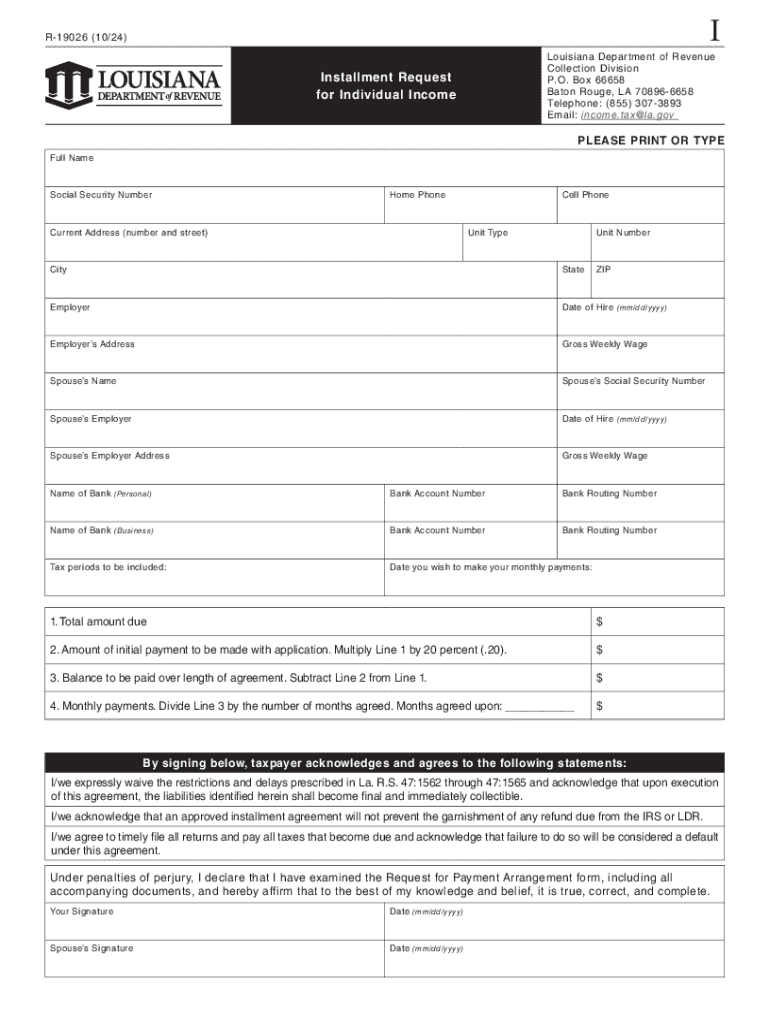







Understanding the Installment Agreement Request - RI Division of Taxation
The "Installment Agreement Request - RI Division of Taxation" is a form used by taxpayers in Rhode Island to request a structured payment arrangement for their state tax liabilities. When individuals or businesses are unable to pay the full tax amount by the deadline, this form allows them to apply for an installment payment plan. This ensures that while they meet their tax obligations, they can manage their financial resources more effectively by spreading the payment over a set period.
Purpose and Importance
- Tax Liability Management: Provides taxpayers with the means to manage outstanding tax debts without facing immediate financial hardship.
- Avoiding Penalties: Applying for an installment agreement helps avoid severe penalties that could result from unpaid taxes.
- Compliance Assurance: Enables taxpayers to remain compliant with state taxation laws by agreeing to a feasible payment schedule.
How to Obtain the Installment Agreement Request Form
Taxpayers can obtain the "Installment Agreement Request - RI Division of Taxation" form through several channels:
- Online Access: The form is available on the official Rhode Island Division of Taxation website, where users can download and print it.
- In-Person Requests: Taxpayers may visit a local Division of Taxation office to pick up a physical copy of the form.
- Mail: Requesting the form via phone or email from the Division may result in receiving a copy by mail.
Completing the Installment Agreement Request Form
Initial Steps
- Gather Required Information: Before filling out the form, collect all necessary details regarding your tax liabilities, income, and other financial commitments.
Detailed Instructions
- Personal and Contact Information: Fill in personal details including name, address, and Social Security number or tax identification number.
- Tax Debt Details: Provide an accurate calculation of the total tax liability and specify the amount you propose to pay monthly.
- Financial Disclosure: Some forms may require additional financial disclosure to assess feasibility of the proposed payment schedule.
Submission Process
- Review and Sign: Carefully review all provided information before signing the document to attest to its accuracy.
- Submission Methods: Submit the completed form either online through the Division’s portal, via mail, or in person at a local office.
Who Typically Uses the Installment Agreement Request


Eligible Taxpayers
- Individual Taxpayers: Individuals with outstanding personal tax debts who cannot pay by the due date.
- Small Business Owners: Businesses facing difficulty in settling state tax debts in a single payment may also utilize this request.
Special Considerations
- Financial Hardship Cases: Taxpayers experiencing temporary financial difficulties that prevent them from paying taxes in full by the due date.
- Consistent Income: Those with a steady monthly income are generally better positioned to maintain regular payments under the agreement.
Key Elements of the Installment Agreement Request
Essential Information
- Payment Terms: Specific monthly payment amounts, total debt, and the terms over which the debt will be paid.
- Duration: The agreement's timeframe, which typically ranges from a few months up to a few years, depending on the total debt and monthly payments.
Conditions and Restrictions
- Mandatory Compliance: Taxpayers must comply with all terms to avoid defaulting on the agreement.
- Ongoing Tax Obligations: While under the installment plan, taxpayers must continue to meet all other state tax obligations in full and on time.
Legal Use and State-Specific Regulations
Rhode Island Taxation Rules
- State Law Compliance: The form and procedure must comply with Rhode Island's specific taxation laws and requirements.
- Interest and Fees: Interest may continue to accrue on unpaid balances, even under an installment agreement.
Enforcement and Renewal
- Penalty Enforcement: Failure to comply with the agreement terms may lead to penalties or revocation of the agreement.
- Renewal and Modification: Changing financial circumstances can lead to renegotiating payment terms, subject to the Division’s approval.
Examples of Using the Installment Agreement in Practice
Taxpayer Scenarios
- Self-Employed Individuals: Handling fluctuating income streams by planning manageable monthly payments.
- Homeowners with Property Taxes: Integrating property tax debts into a manageable payment plan.

Case Studies
- Scenario A: A taxpayer with a $10,000 liability successfully structured a 24-month plan paying approximately $417 monthly.
- Scenario B: A small business owner experiencing a sales downturn negotiated a reduced payment schedule to match current cash flow capabilities.
Filing Deadlines and Important Dates
- Application Deadline: While there is no fixed deadline for applying for an installment agreement, earlier application ensures quicker arrangement and avoidance of additional penalties.
- Monthly Payment Due Dates: Payments are typically due on the same date each month, as agreed upon in the agreement terms.
Penalties for Non-Compliance
- Default Consequences: Missing a payment can lead to immediate cancellation of the installment agreement.
- Additional Fees: Non-compliance may result in added penalties or interest charges, further increasing the total amount owed.
Taxpayers are encouraged to thoroughly understand and adhere to all outlined terms when entering an installment agreement to manage tax liabilities effectively within the boundaries of Rhode Island regulations.




