




01. Edit your form online
Type text, add images, blackout confidential details, add comments, highlights and more.

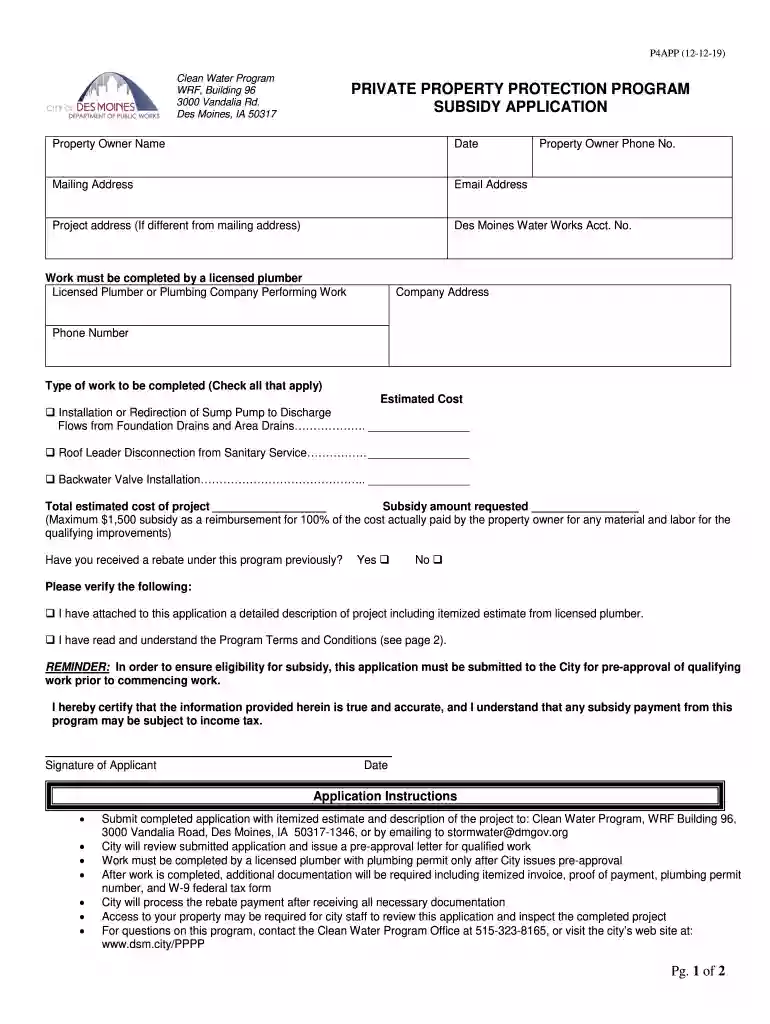
Type text, add images, blackout confidential details, add comments, highlights and more.

Draw your signature, type it, upload its image, or use your mobile device as a signature pad.

Send it via email, link, or fax. You can also download it, export it or print it out.
The Personal Property Protection Program is designed to assist property owners in maintaining and improving their properties. Mainly targeted toward property owners in urban areas, this program often offers financial subsidies for specific improvements, like enhancing the infrastructure to prevent flood damage or improving sewer systems. The program's primary goal is to protect property while helping owners comply with city ordinances.
Examples of improvements under this program include modifications to plumbing systems to prevent infiltration and inflow into city infrastructure or updates to building structures that enhance durability against natural elements.
To take advantage of the Personal Property Protection Program, property owners must first determine the eligibility of their planned projects. Projects typically eligible include those that align with the program's goal of property improvement and safety enhancement. Once eligibility is established, property owners can submit an application that outlines their project plans.
Upon receiving approval, project implementation can commence. It's crucial for participants to maintain detailed records and receipts of their expenses to ensure compliant reimbursement.
Determine Eligibility: Owners should consult the program's criteria to confirm eligibility.
Prepare Required Documentation: Collect necessary documents such as property deeds, project plans, and cost estimates.
Complete the Application: Fill out the application form with accurate and detailed information.
Submit the Application: Depending on the city's requirements, submissions can be completed online, by mail, or in-person.
Await Approval: After submission, applications are reviewed, and eligible applications receive approval letters outlining the terms of participation.
Applicants must provide comprehensive documentation demonstrating their eligibility and project viability. Essential documents include:
Participation in the Personal Property Protection Program requires adherence to legal guidelines established by the city. Projects must meet city codes, pass inspections, and maintain compliance with environmental standards throughout their execution.
Non-compliance can result in penalties, including the revocation of funds and ineligibility for future participation.
While the core framework for the Personal Property Protection Program is often uniform, nuances exist based on state-specific regulations and requirements. For example, climate conditions can influence eligible project types to tailor solutions to regional needs. Prospective applicants should verify with their local city government to understand particular guidelines and adjustments specific to their location.
Applicants should be aware that the Personal Property Protection Program may have evolved with different versions or alternative options designed for various property needs. Checking the most current version of the program ensures compliance with updated requirements and maximizes the benefits available to property owners.
We've got more versions of the PERSONAL PROPERTY PROTECTION PROGRAM - City of form. Select the right PERSONAL PROPERTY PROTECTION PROGRAM - City of version from the list and start editing it straight away!
At DocHub, your data security is our priority. We follow HIPAA, SOC2, GDPR, and other standards, so you can work on your documents with confidence.
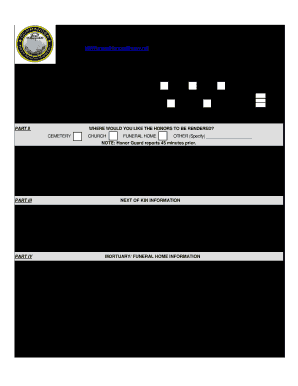

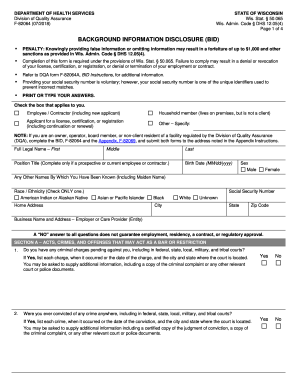
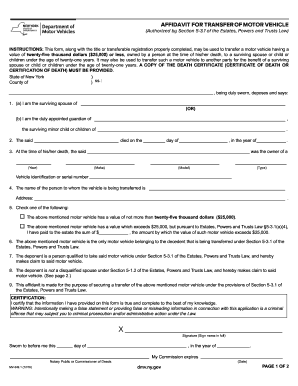

Cohesity gives you both data security and data management. Defend against ransomware with immutable backup, AI-based early threat detection, and rapid data
Urban Property Protection and Reinsur- ance Act of 19683 to assist the states and the insurance industry to make essential property insurance coverage more
Apr 23, 2025 FREE (no-cost) Property Alert System to the residents of Prince William County and the cities of Manassas and Manassas Park.


