







Definition & Meaning
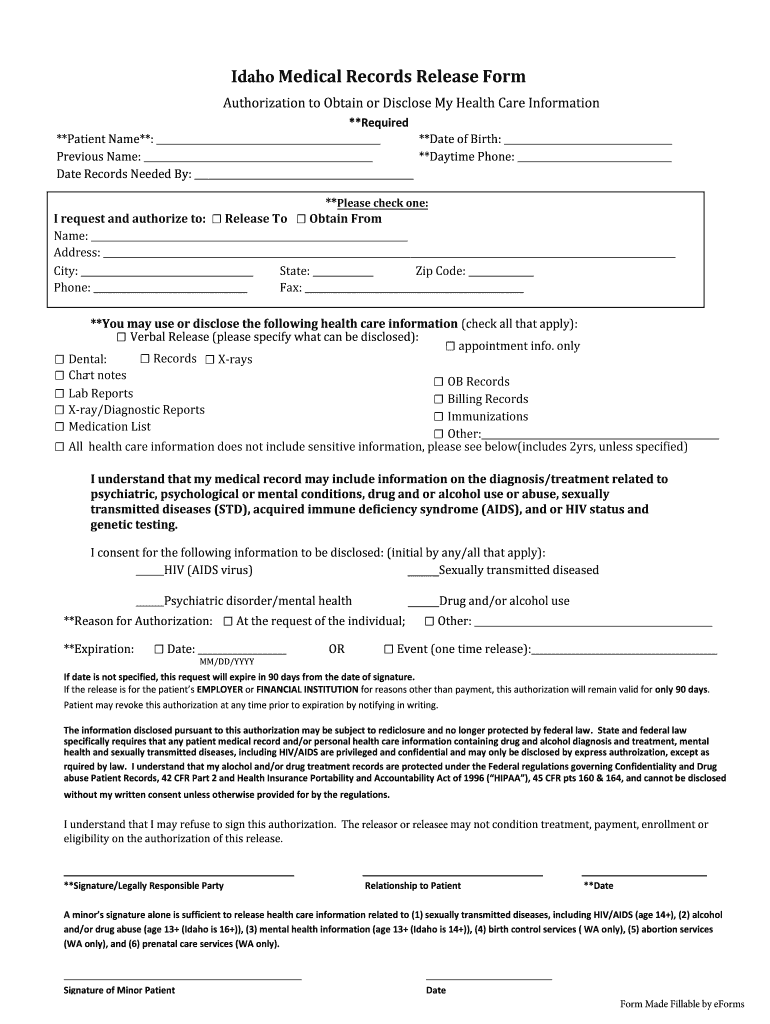
The "authorization to release and disclose patient protected health" form is a legal document that allows healthcare providers to share a patient's medical information with specified parties. This form typically includes the patient's details, the specific information to be disclosed, and the conditions under which the agreement is valid. It plays a vital role in maintaining patient confidentiality while allowing necessary information to be shared for purposes such as treatment, billing, or coordination of care.
Key Elements Explained
- Patient Details: This section includes personal identification information, such as name, birth date, and contact information.
- Authorized Parties: Enumerates individuals or entities that are authorized to receive the medical information.
- Scope of Disclosure: Outlines the specific type of information that can be shared, such as medical history, test results, or treatment plans.
- Expiration Date: States when the authorization ends if not earlier revoked by the patient.
- Revocation Rights: Patients are entitled to revoke the authorization at any time, and the process for revocation must be clearly detailed.
Steps to Complete the Authorization
Completing this form involves several critical steps to ensure all necessary information is accurately captured and the form is legally binding.
- Gather Required Information: Collect all necessary personal details and information of both the patient and the receiving party.
- Specify Information to be Disclosed: Clearly define what medical data will be shared, tailoring this to the needs of the situation.
- Consent and Signatures: Obtain the patient’s consent, ensuring they thoroughly understand the disclosure scope and implications. The patient must then sign the form to validate it.
- Witness or Notarization: Depending on state laws, a witness or notarization might be required for the form to be legally valid.
- Submit the Form: Deliver the completed form to the respective healthcare provider or institution responsible for the information.
Legal Use of the Authorization
The validity of this form hinges on compliance with legal standards, predominantly outlined in federal regulations like the Health Insurance Portability and Accountability Act (HIPAA).
Legal Responsibilities
- Compliance with HIPAA: Ensures that the patient's data is only disclosed with their explicit consent and for specified purposes.
- State Law Considerations: Some states have additional privacy laws that provide further guidelines on how and when patient information can be shared.
State-Specific Rules
Healthcare privacy laws can vary significantly between states, impacting how these forms are used.
Examples of Variations
- Age of Consent: Some states have specific rules regarding minors' authorization to release health information, often requiring parental or guardian consent.
- Specific Conditions: Certain types of health information, like mental health records or substance abuse treatment details, may have additional restrictions depending on the state.
Who Typically Uses the Form
This form is used by a wide array of stakeholders within the healthcare domain to ensure seamless and legal communication of medical information.


Typical Users
- Healthcare Providers: For sharing patient information with other healthcare facilities or insurance companies.
- Patients and Families: To grant access to authorized family members or caregivers.
- Legal Representatives: In cases where medical records are needed for legal proceedings.
Key Elements of the Authorization
Key sections of this form ensure that all parties clearly understand the boundaries and responsibilities involved in the data disclosure process.
Essential Components
- Scope and Duration of Consent: Delivers clarity on what data can be shared and for how long the authorization remains valid.
- Patient Rights: Assures the patient’s right to revoke consent and emphasizes their control over personal health information.
Examples of Using the Authorization
Throughout various real-world scenarios, this form plays a crucial role in efficient healthcare management.
Practical Applications
- Coordination of Care: Enables sharing of treatment plans between specialists.
- Insurance Processing: Provides necessary information for claims processing and coverage verification.
Versions or Alternatives to the Form
While this form is generally standardized, there are variations tailored for specific uses or patient circumstances.
Customizations
- Electronic Health Records (EHR) Versions: Digital platforms may offer built-in authorization features for more streamlined processes.
- Specialized Forms: Certain conditions might require unique authorizations, such as genetic testing results.




