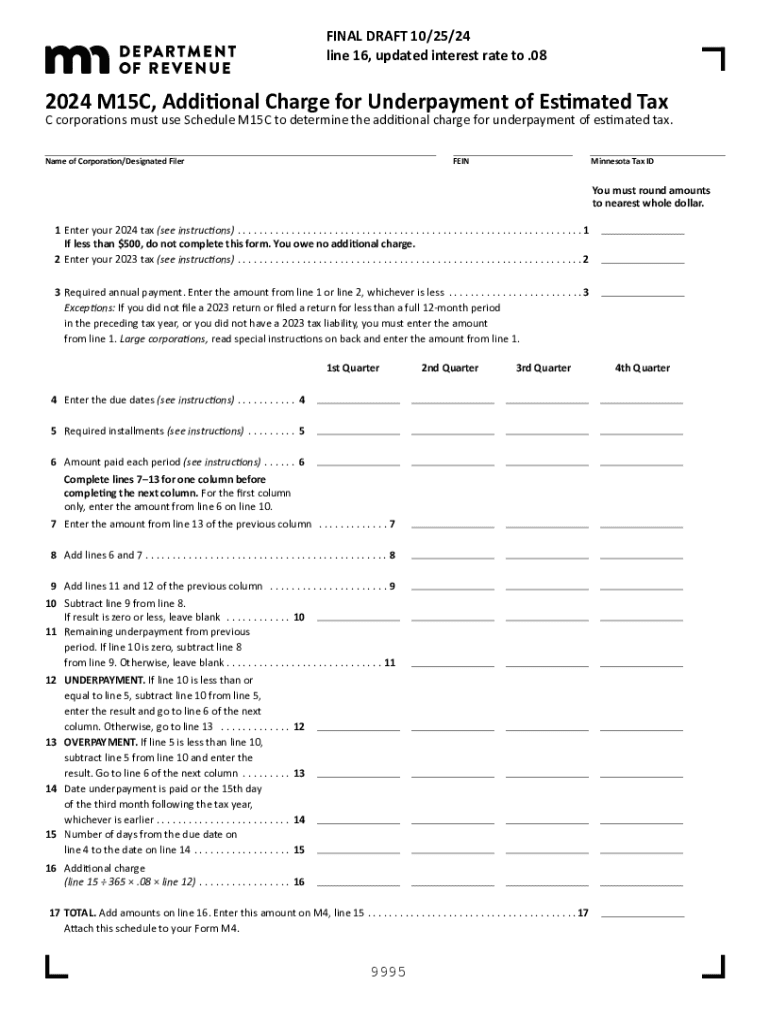







Definition & Meaning
The "2023 - 2024 estimated tax forms" are essential documents used by taxpayers in the United States to report and pay estimated taxes on income that is not subject to withholding. This includes income from self-employment, dividends, interest, rent, and other sources. These forms allow taxpayers to calculate the amount they owe to the IRS in quarterly installments, helping them avoid underpayment penalties. Estimated tax forms ensure compliance with federal tax obligations for both individuals and businesses.
Expanded understanding of these forms is crucial as they accommodate taxpayers with fluctuating or unpredictable income sources. Proper use of these forms allows individuals and businesses to stay on top of their tax liabilities throughout the year.
How to Use the 2023 - 2024 Estimated Tax Forms
To use the estimated tax forms for 2023 - 2024, taxpayers need to determine their expected adjusted gross income, taxable income, taxes, deductions, and credits for the year. Here’s a step-by-step guide:
-
Calculate Expected Income: Determine your expected income from all sources, including wages, self-employment, dividends, and interest.
-
Determine Deductions and Credits: Identify applicable deductions and credits to understand total taxable income.
-
Estimate Taxes: Use the IRS tax tables to estimate the total tax liability.
-
Calculate Quarterly Payments: Divide the total tax liability by four to find the quarterly payments due to the IRS.
-
Submit Payments: Use IRS Form 1040-ES to submit payments. Ensure payments are made by the due dates to avoid penalties.
How to Obtain the 2023 - 2024 Estimated Tax Forms
Estimated tax forms can be obtained through various methods:
- Online: Visit the IRS website to download electronic copies of the forms. The site also provides guides and worksheets.
- By Mail: Request to receive the forms via mail by calling the IRS directly.
- Professional Help: Consult a tax professional who can provide the forms and assist with filing.
- Local IRS Offices: Visit a local IRS office for physical copies.
Always ensure you're using the most updated version of the forms specific to the tax year.
Steps to Complete the 2023 - 2024 Estimated Tax Forms
Completing the forms involves several detailed steps:
-
Gather Financial Documents: Collect documents such as W-2s, 1099s, and any records of income not subject to withholding.
-
Estimate Taxable Income: Input income estimates into the form’s worksheets to compute taxable income.
-
Apply Deductions/Credits: Deduct any eligible amounts to lower overall taxable income.
-
Calculate Tax Liability: Use the tax schedule from IRS instructions to find applicable taxes based on estimated income.
-
Complete Payment Vouchers: Fill out payment vouchers included with Form 1040-ES and make quarterly payments.
These detailed steps ensure that taxpayers accurately report and pay their tax obligations.
Filing Deadlines / Important Dates
Taxpayers must be aware of the quarterly deadlines to avoid penalties. For 2023 - 2024, estimated tax payment deadlines are:
- First Quarter: April 15, 2023
- Second Quarter: June 15, 2023
- Third Quarter: September 15, 2023
- Fourth Quarter: January 15, 2024
Mark these dates on your calendar, and plan payments accordingly to stay compliant with IRS requirements.
IRS Guidelines
The IRS provides specific guidelines on using estimated tax forms:
- Who Must File: Individuals who expect to owe at least $1,000 in taxes for the year after subtracting withholdings and credits.
- Special Rules: Apply to farmers, fishermen, and higher income taxpayers as per the IRS publications.
- Penalty Details: Explained for underpayment due to unfiled or insufficient payments.
Understanding these guidelines ensures the forms are used correctly and efficiently.
Penalties for Non-Compliance
Taxpayers who fail to file or pay on time may face penalties, such as:
- Underpayment Penalty: Imposed if less than 90% of the current year's taxes or 100% of the previous year's taxes are paid.
- Late Filing Penalties: May accrue if payments are not made by due dates.
- Interest Charges: Compounded daily from the original deadline of the tax return until paid in full.
Penalties can be significant, so awareness and timely payments are essential.
Who Typically Uses the 2023 - 2024 Estimated Tax Forms
These forms are commonly used by:
- Self-Employed Individuals: With income from business activities.
- Retirees: With income from savings and investments.
- Investors: Earning dividends or capital gains.
- Contractors and Freelancers: Those without withholding taxes through an employer.
Understanding who needs to use these forms helps taxpayers determine their responsibilities.


Required Documents
When preparing these forms, gather:
- Income Statements: Such as 1099s and W-2s.
- Deductions Records: Proof of deductible expenses for accurate tax calculations.
- Previous Year’s Tax Return: For reference and historical tax data.
Having these documents ready streamlines the form completion process.