
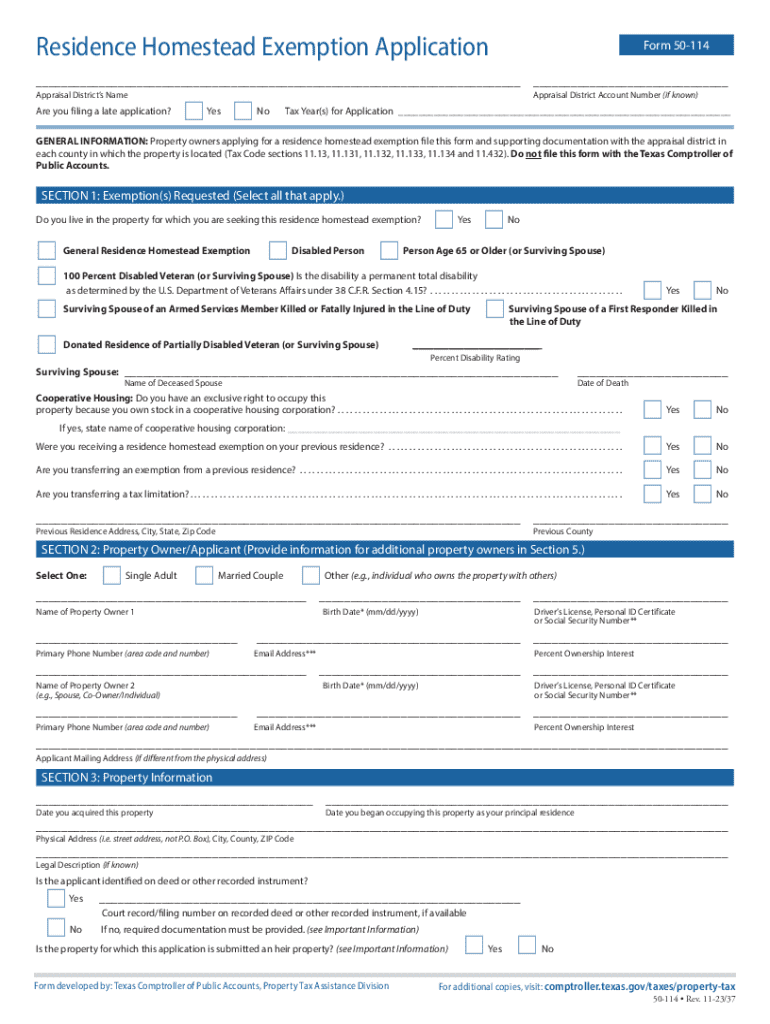







Definition & Meaning of Declaraciones Juradas de Exención Fiscal de la Residencia
The "Declaraciones Juradas de Exención Fiscal de la Residencia" is a form used to declare exemptions from certain tax obligations based on residency status. This form is crucial in establishing the financial and legal standing of individuals concerning tax liabilities in their residing state. It is primarily used by residents who wish to avail themselves of certain tax exemptions afforded by their state due to their residency status. Understanding the nuances of this declaration is essential for accurate tax reporting and compliance with state tax laws.
Steps to Complete the Declaraciones Juradas de Exención Fiscal de la Residencia
-
Gather Necessary Information: Before completing the form, collect all relevant personal and property information, including identification numbers, addresses, and details regarding your residency.
-
Fill Personal Details: Start by entering your full name, address, and social security number. Ensure accuracy to avoid any discrepancies that may delay processing.
-
Specify Residency Details: Clearly state your residency status, including the length of time you have resided in your current location and any previous addresses if applicable.
-
List Exemption Criteria: Identify and document the specific exemptions you are applying for, supported by the appropriate state guidelines. This may include criteria such as primary residence status, disability, or veteran status.
-
Attach Supporting Documentation: Include necessary documents that confirm your eligibility for the exemptions, such as utility bills, property deeds, or previous tax documents.
-
Sign and Submit: Carefully review the form for completeness and accuracy. Sign the declaration and submit it as per the instructions provided, typically to your local tax office or online portal.
Required Documents for the Declaraciones Juradas de Exención Fiscal de la Residencia
- Proof of Identity: Valid government-issued ID, such as a driver's license or passport.
- Residency Verification: Documents such as utility bills, lease agreements, or property deeds proving your residency status.
- Previous Tax Returns: Copies of prior tax returns that demonstrate your historical tax status.
- Supporting Documents for Exemptions: Certificates or proof of conditions like disability, military status, or senior citizenship, depending on the exemption types claimed.
Eligibility Criteria for Declaraciones Juradas de Exención Fiscal de la Residencia
- State Residency: Individuals must reside in the state where the exemption is claimed, evidenced by sufficient proof of domicile.
- Duration of Stay: Some states may require a minimum duration of residence to qualify for specific exemptions.
- Specific Conditions: Eligibility often hinges on meeting specific criteria such as age, disability, or veteran status, which must be documented accordingly.


Who Typically Uses the Declaraciones Juradas de Exención Fiscal de la Residencia
- Residents Seeking Tax Relief: Individuals aiming to reduce their tax burden through legitimate exemptions.
- Retirees and Senior Citizens: Those who may qualify for age-related exemptions in their state.
- Veterans and Service Members: Individuals eligible for exemptions based on military service.
- Disabled Individuals: Residents with documented disabilities seeking financial relief through tax reductions.

Importance of Declaraciones Juradas de Exención Fiscal de la Residencia
Filing this form correctly can significantly impact an individual's or household’s financial status by reducing tax liabilities. It ensures that eligible residents can benefit from state-specific tax advantages, contributing to financial relief and overall economic betterment.
Legal Use of the Declaraciones Juradas de Exención Fiscal de la Residencia
The form establishes a legal claim for tax exemptions based on residency, ensuring compliance with state tax laws. It provides a structured approach to assert one's rights to various exemptions and includes mechanisms to verify and substantiate claims made by the resident.
Filing Deadlines and Important Dates
- State-Specific Deadlines: Filing deadlines may vary by state; residents must consult local tax authorities or state websites to know specific due dates.
- Annual Renewal: Many exemptions require annual re-declaration, which involves refiling or verifying certain information each year.
- Penalty Timelines: Missing the deadline for submission can result in penalties or loss of exemption benefits, making timely filing crucial.
Form Submission Methods: Online, Mail, or In-Person
- Online Submission: Many states offer digital platforms for filing, providing convenience and immediate electronic confirmation.
- Mail Submission: Residents can submit paper forms via postal mail to their local tax offices.
- In-Person Filing: Visiting local tax offices allows for personalized guidance and immediate support in the filing process.
These structured steps and detailed information support the accurate and efficient completion of the "Declaraciones Juradas de Exención Fiscal de la Residencia," ensuring eligible individuals receive the tax benefits to which they are entitled.




