
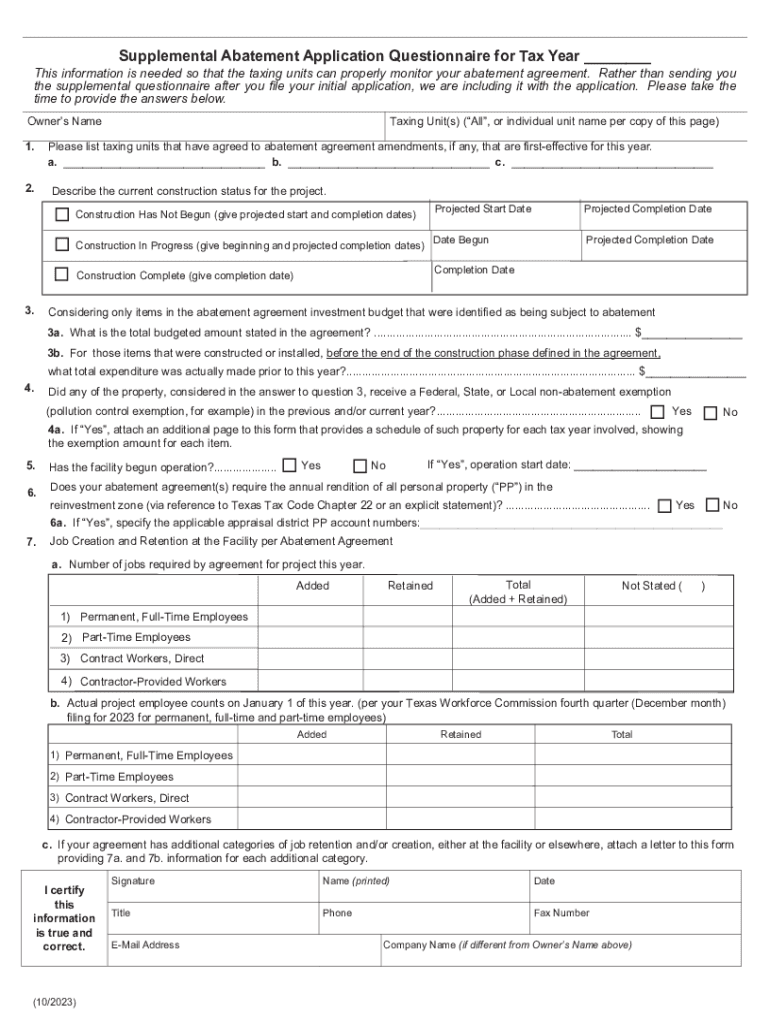







Understanding Tax Abatement Chapter 312
Tax Abatement Chapter 312 refers to a tax incentive program that allows local governments in Texas to attract business development by offering temporary property tax relief. Businesses that participate in this program often pledge to enhance economic growth by investing in property improvements and creating jobs. Understanding this framework is crucial for businesses seeking tax benefits under this provision.
- Eligibility: Businesses must typically agree to certain conditions, such as investing in property improvements or creating a specific number of jobs, to qualify for this program.
- Duration: The abatement period generally lasts up to 10 years, providing temporary relief from property taxes.
Step-by-Step Process for Approving a Tax Abatement
Approving a tax abatement under Chapter 312 involves a structured process to ensure compliance and transparency. Below are the six steps you need to follow to gain approval:
1. Initial Proposal Submission
The process begins with submitting a detailed proposal to the local governing body. This proposal should outline:
- Project Description: A clear explanation of the business activities and proposed improvements.
- Economic Impact: An analysis of how the project will benefit the local economy, including potential job creation figures.
- Financial Information: Detailed budget projections and funding sources.
2. Review and Evaluation
Local authorities will review the submitted proposal to ensure it aligns with community goals and regulatory requirements. This step might include:
- Public Hearings: Opportunities for community input and discussions about the potential impacts of the project.
- Cost-Benefit Analysis: An assessment to evaluate whether the economic benefits justify the tax abatement.
3. Negotiation of Terms
Once the proposal is deemed feasible, negotiations commence to finalize the terms of the agreement. Key components typically negotiated include:
- Abatement Percentage: The level of tax relief being offered, typically expressed as a percentage of the total property tax liability.
- Duration: Length of the abatement period, usually ranging from one to ten years.
- Performance Goals: Specific benchmarks tied to job creation, investment level, or other economic metrics.
4. Approval by Governing Body
The proposed agreement must be approved by the local government’s elected officials. This step generally involves:
- Formal Vote: The governing body votes to approve or deny the abatement agreement.
- Resolution Adoption: Upon approval, a formal resolution is adopted outlining the agreement's terms and conditions.
5. Implementation and Monitoring
Following approval, the tax abatement agreement is implemented, with continuous monitoring to ensure compliance with the terms:
- Compliance Checks: Regular evaluations to ensure the business meets its obligations, including job creation and investment thresholds.
- Annual Reporting: The business provides annual updates to the local government detailing progress and compliance status.
6. Final Assessment and Adjustments
Upon completion of the abatement term, authorities conduct a final review to evaluate the program's success:
- Final Economic Impact Report: Businesses submit a concluding report outlining the overall economic contributions.
- Review and Adjustments: The governing body analyzes what adjustments might be necessary for future abatement agreements based on the outcome.
Required Documentation and Deadlines
The approval process demands specific documentation and adherence to deadlines:
- Required Documents: Includes initial application forms, financial statements, community impact reports, and periodic compliance submissions.
- Deadlines: Strict timelines must be followed for each phase, from proposal submission to annual compliance reporting.
For seamless processing, businesses must be attentive to all submission requirements and deadlines to avoid penalties or delays.
Legal and Compliance Considerations
Businesses must be aware of the legal implications and compliance requirements associated with Chapter 312 tax abatements:
- Legal Obligations: Ensuring compliance with agreed-upon terms to avoid penalties or revocation of the abatement.
- Audit Trails: Maintaining detailed records of project progress and expenditures for potential audits by local authorities.
Sector and State-Specific Nuances
Certain business sectors may benefit more from Chapter 312 abatements, and variations can occur depending on local statutes:
- Business Type Impact: Manufacturing, technology, or renewable energy sectors may find more favorable terms.
- State Regulations: While Chapter 312 is specific to Texas, other states may have similar programs with varied requirements.
Understanding these nuances can optimize the strategic application of tax abatements for businesses aiming to expand or improve their operations in Texas.




