Definition and Purpose of the Criminal History Check Consent Form
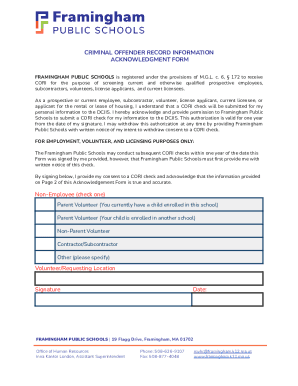
The Criminal History Check Consent Form is a critical document designed to authorize the screening of an individual’s criminal background. This is especially pertinent for those seeking to serve in roles that may involve contact with vulnerable populations, such as children or the elderly. In the context of the Inter-Tribal Council of Michigan, Inc., the form is used to ensure that Access to Recovery (ATR) providers have no history of serious criminal offenses. The primary purpose is to maintain a safe and secure environment by identifying any disqualifying criminal convictions before an individual is approved to work in sensitive service positions.
Steps to Complete the Criminal History Check Consent Form
Completing the Criminal History Check Consent Form involves several key steps to ensure accuracy and compliance:
- Read the Instructions: Begin by reviewing all instructions provided with the form to understand the requirements.
- Personal Information: Accurately fill out all necessary personal information, including full name, date of birth, and social security number.
- Consent Acknowledgment: Acknowledge consent for the criminal history check by signing and dating the appropriate section of the form.
- Disclosure Agreement: Agree to the disclosure of any relevant criminal records as stipulated in the form.
- Submission: Submit the completed form to the designated authority, typically the agency requesting the background check.
Who Uses the Criminal History Check Consent Form
The Criminal History Check Consent Form is typically utilized by organizations and institutions that need to verify the backgrounds of individuals in sensitive roles. It is commonly used by:
- Nonprofit Organizations: Ensuring volunteers or employees interacting with vulnerable groups do not pose a risk.
- Healthcare Providers: Screening employees or contractors working in health services.
- Education Institutions: Conducting background checks on potential teachers and staff members.
- Employers in Sensitive Industries: Verifying the credentials of job applicants where safety and trust are paramount.
Key Elements of the Criminal History Check Consent Form
The form includes several crucial elements that must be correctly addressed:
- Personal Information Section: Capturing detailed personal data for accurate identification.
- Consent Clause: Explicit permission granted by the individual for the background check.
- Disclosure Permissions: Details regarding the scope and nature of information that may be accessed.
- Signatures: Legal endorsement by the individual providing authorization for the check.
- Agency Details: Information about the organization undertaking the background check.
Legal Use and Compliance Requirements
The legal use of the Criminal History Check Consent Form is governed by federal and state laws protecting personal information and ensuring fair practices. Key compliance aspects include:
- Adhering to the Fair Credit Reporting Act (FCRA): Ensuring that individuals understand their rights concerning their background check.
- Secure Information Handling: Implementing necessary measures to safeguard personal data.
- Proper Consent: Obtaining documented and informed consent from individuals as part of the process.
- Limitations on Data Use: Using data strictly for the purposes outlined in the consent form.
State-Specific Rules and Variations
While the general purpose of the Criminal History Check Consent Form is consistent across states, some variations may exist based on local legislation. State-specific rules can affect:
- The scope of records accessed, tailored to comply with state laws.
- Disclosure requirements, including what constitutes a disqualifying offense.
- Data protection standards, informed by state privacy laws.
Importance of the Criminal History Check Consent Form
Conducting a criminal history check is essential for safeguarding organizational integrity and protecting vulnerable groups. The form's significance extends to:
- Risk Mitigation: Identifying potential risks involved in hiring or partnering with individuals having inappropriate criminal backgrounds.
- Public Safety: Contributing to a safer community by ensuring individuals in sensitive roles are thoroughly vetted.
- Compliance and Liability: Helping organizations meet their legal obligations and reducing the risk of litigation due to negligent hiring.
Differences Between Digital and Paper Versions
Digital and paper versions of the Criminal History Check Consent Form offer distinct advantages and considerations:
- Digital Version Pros: Easier to distribute and process, with enhanced data security features and less environmental impact.
- Paper Version Pros: More accessible for individuals without digital access and providing a tangible record.
Each version must ensure equal compliance with legal standards and data security measures.