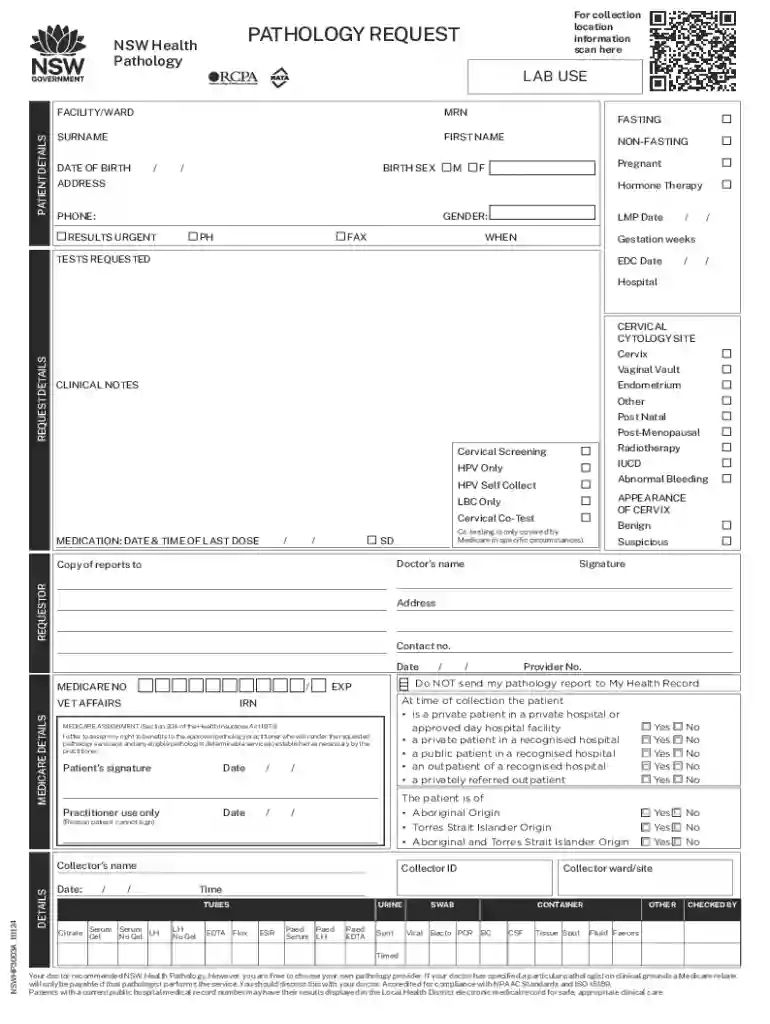
A Digital Single Statewide Pathology Test Catalogue 2026

Get Form
A Digital Single Statewide Pathology Test Catalogue Preview on Page 1

Here's how it works

01. Edit your form online
Type text, add images, blackout confidential details, add comments, highlights and more.

02. Sign it in a few clicks
Draw your signature, type it, upload its image, or use your mobile device as a signature pad.

03. Share your form with others
Send it via email, link, or fax. You can also download it, export it or print it out.

Definition and Meaning of a Digital Single Statewide Pathology Test Catalogue

A Digital Single Statewide Pathology Test Catalogue is a centralized digital resource that collates pathology test information to standardize and streamline the test ordering process across an entire state. This digital catalogue serves as an authoritative reference that consolidates all available pathology tests, ensuring consistency in test nomenclature, methodologies, and reporting, which enhances efficiencies in healthcare services. It is designed to enable healthcare providers to easily access comprehensive test information, thereby reducing errors and improving diagnostic outcomes.

  • Centralization: Provides a unified platform for all pathology tests within the state, eliminating discrepancies between different laboratories or medical facilities.
  • Accessibility: Ensures that healthcare providers have instantaneous access to updated test details.
  • Standardization: Facilitates uniformity in test ordering and interpretation, which is critical for quality patient care.

How to Use the Digital Catalogue

Using the Digital Single Statewide Pathology Test Catalogue effectively involves various steps that healthcare professionals need to follow to maximize its utility. Here is a step-by-step guide:

  1. Access the Catalogue: Log into the digital platform via a secure login process to maintain confidentiality and data protection.
  2. Browse or Search Tests: Utilize the search function to find specific tests based on test name, code, or system.
  3. Select Appropriate Tests: Choose the tests required by identifying their relevance to the patient's clinical needs.
  4. Review Test Details: Examine detailed information about the test, including the specimen type, collection techniques, and laboratory handling instructions.
  5. Order Tests: Follow the established protocol within the platform to order the selected tests for a patient.

Obtaining the Catalogue

Obtaining access to the Digital Single Statewide Pathology Test Catalogue requires registration through appropriate state health departments or affiliated agencies that manage the catalogue:

  • Eligibility Criteria: Ensure that you are a licensed healthcare provider to apply for access.
  • Registration Process: Fill out an application form provided by the managing agency, confirming your credentials and intent to use the catalogue.
  • Approval Timeline: Applications are typically processed within a preset time frame, after which access credentials are issued.

Completing the Catalogue

The process of completing a form within the Digital Single Statewide Pathology Test Catalogue involves multiple precise steps to ensure accuracy and compliance with healthcare standards:

  1. Enter Patient Data: Input accurate patient information to align with medical records.
  2. Choose Tests: Select all necessary pathology tests clearly outlined in the form.
  3. Provide Clinical Information: Supply relevant clinical details to facilitate appropriate test interpretations.
  4. Assign Collection Sites: Specify the designated location where samples will be collected.
  5. Verify for Completeness: Review all entries for completeness before submitting the form.

Benefits of Using the Catalogue

Using a Digital Single Statewide Pathology Test Catalogue provides various benefits that contribute significantly to the efficiency and accuracy of pathology testing:

  • Enhanced Coordination: Promotes coordination among different healthcare facilities to avoid duplication and redundancy.
  • Cost-Efficiency: Reduces costs associated with misordered or duplicate tests, contributing to better resource management.
  • Improved Patient Outcomes: Facilitates timely and accurate diagnosis, enhancing patient care and treatment plans.

Common Users of the Catalogue

The Digital Single Statewide Pathology Test Catalogue is typically used by a variety of professionals within the healthcare sector, including:


  • Healthcare Practitioners: Doctors, nurses, and medical technicians involved in patient diagnostics.
  • Laboratories: Diagnostic laboratories that process and report on pathology tests.
  • Healthcare Administrators: Individuals who oversee healthcare operations and ensure regulatory compliance.
decoration image ratings of Dochub

Important Terms in Pathology Testing

Understanding key terminology related to the Digital Single Statewide Pathology Test Catalogue is crucial for effective use:

  • Test Code: Unique identifier assigned to each test for easy reference.
  • Specimen Type: Specifies the nature of the sample required, such as blood, urine, or tissue.
  • Collection Protocols: Guidelines for obtaining samples to ensure quality and accuracy.

Legal Use and Compliance

Legal compliance is necessary when utilizing the Digital Single Statewide Pathology Test Catalogue:

  • Confidentiality Requirements: Adhere to data privacy laws to protect patient information.
  • Authorized Access: Ensure that only verified professionals have access to the catalogue.
  • Record Keeping: Maintain thorough records of all transactions and usage to comply with auditing processes.

Each of these sections provides an actionable, in-depth understanding of the Digital Single Statewide Pathology Test Catalogue, focusing on its relevance, application processes, and importance within the healthcare system.

be ready to get more

Complete this form in 5 minutes or less

Get form

Got questions?

We have answers to the most popular questions from our customers. If you can't find an answer to your question, please contact us.
Contact us
Pathology tests can help diagnose, detect and monitor conditions such as: cancer. diabetes. heart disease. hormone problems. infections. inflammatory conditions. kidney disease.
Pathology tests cover blood tests, and tests on , stools (faeces) and bodily tissues. A pathologist interprets the results of blood and pathology tests and looks for abnormalities that may point to disease, such as cancer and other chronic illnesses, or health risks, such as pre-diabetes.
The Complete Blood Count (CBC) is the most common pathology test performed in medical laboratories. This essential test measures various blood components, including red blood cells, white blood cells, and platelets.
Other common test preparations may include: Avoiding specific foods and drinks such as cooked meats, herbal tea, or alcohol. Making sure not to overeat the day before a test. Not smoking. Avoiding specific behaviors such as strenuous exercise or sexual activity. Avoiding certain medicines and/or supplements.
Digital pathology scanners are automated, Whole slide imaging scanner systems designed to capture high resolution images (WSIs) of histology and cytology samples prepared on glass slides.

Security and compliance

At DocHub, your data security is our priority. We follow HIPAA, SOC2, GDPR, and other standards, so you can work on your documents with confidence.

Learn more
ccpa2
pci-dss
gdpr-compliance
hipaa
soc-compliance