







Definition & Meaning
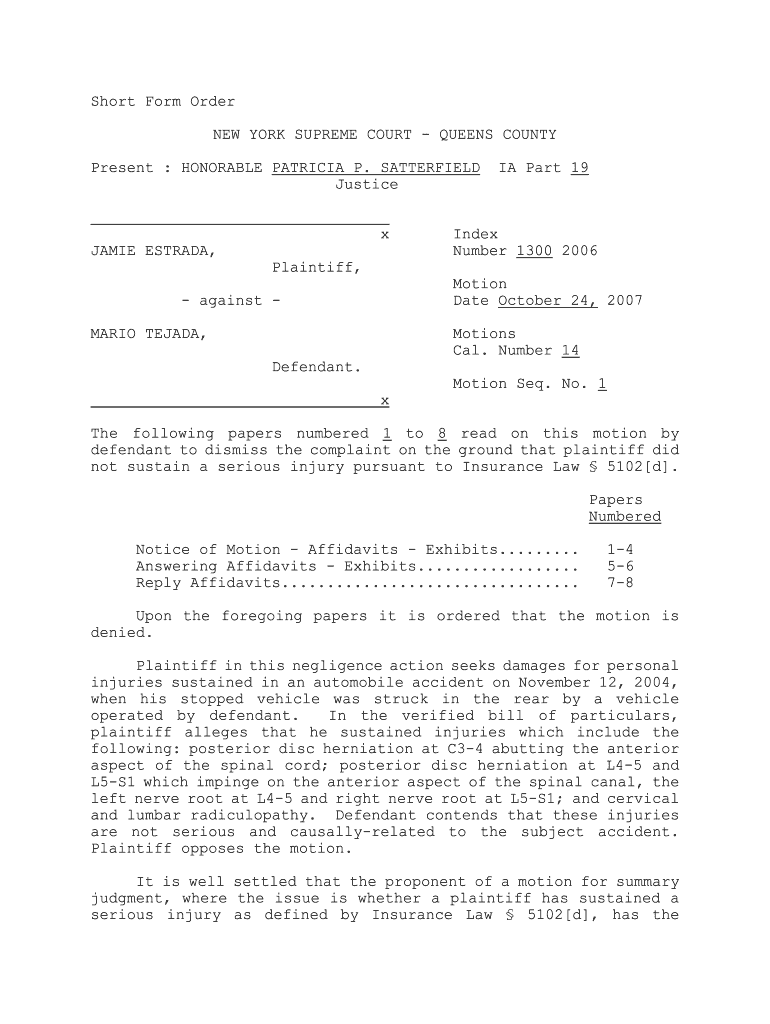
The "Short Form Order" of the New York Supreme Court, Queens County, issued by HONORABLE PATRICIA P, is a legal instrument used to convey the court's decision on a motion or matter. The order typically summarizes the court's findings and directives without extensive elaboration. This type of document is used to provide clarity on legal proceedings and is geared towards resolving specific motions presented during a case. In the context of the Queens County Court, this order can address a wide array of legal issues, from case dismissals to motions related to evidence.
How to Use the Short Form Order
For those involved in a case, understanding the application of a Short Form Order is crucial. This document must be carefully reviewed to comprehend the court's judgment and the implications it carries for all parties involved. The order often needs to be used as a reference point for subsequent legal actions, including compliance with the court's directives or preparing for further hearings. If you are the attorney or legal representative, you will need to ensure your client fully understands the terms and conditions set forth within this order and what actions need to be taken next.
Steps to Complete the Short Form Order
-
Receive and Review the Document: Upon the issuance of a Short Form Order, parties involved must first receive and understand the document. Reading through each section thoroughly will help clarify the court's decision and any directions provided.
-
Identify Key Elements: Recognize critical aspects such as case references, directives, and specific language used by the judge. This ensures that you can address or challenge any point within legal boundaries.
-
Implement Recommendations: If the order includes directions for actions, adhere strictly to them. This might include filing additional paperwork or adhering to deadlines set by the order.
-
Preparation for Next Steps: Use the details from the Short Form Order to prepare for any subsequent legal proceedings. This might involve gathering further evidence or strategizing for another hearing.
Who Typically Uses the Short Form Order
The Short Form Order is utilized by a variety of users within the legal system. Predominantly, judges issue them as part of case proceedings to communicate decisions rapidly and effectively. Attorneys and legal representatives use these orders to guide their actions in representing clients. For plaintiffs and defendants, the order provides necessary details that can influence the strategy and decisions in their ongoing legal matters.


Key Elements of the Short Form Order
- Judge’s Name and Credentials: Identifies the authority behind the order, ensuring that its legitimacy is clear.
- Case Information: Includes the case title and docket number for easy reference and follow-up within the judicial system.
- Legal Findings: Summarizes the court's reasoning and conclusions on the motion brought before it.
- Directives/Outcomes: Details the orders or steps to be fulfilled as a result of the court's decision.
Legal Use of the Short Form Order
Legally, the Short Form Order is binding and serves as a written record of the court's decision. It should be filed in accordance with court rules and may serve as a critical document in appeals or further litigation. For attorneys, referencing this order effectively can be integral in presenting arguments or defending positions in future proceedings related to the case.
Important Terms Related to Short Form Order
Understanding specific terms within a Short Form Order is essential for proper interpretation:
- Motion: A formal request made to the court for certain actions or decisions.
- Negligence Complaint: In the example given, it pertains to allegations of carelessness causing harm, requiring legal scrutiny.
- Serious Injury: As defined by legal standards, influences the court's ruling on transportation-related disputes.
State-Specific Rules for the Short Form Order
In New York, and specifically in Queens County, local procedural rules outline how Short Form Orders are issued, filed, and enforced. Adherence to these guidelines is essential to ensure the order’s validity and enforceability. Furthermore, understanding nuances specific to New York's legal system can assist in the broader context of using this order effectively.
Examples of Using the Short Form Order
- Case Dismissal: Issued when a defendant's motion to dismiss based on a lack of substantial evidence is denied, allowing the case to proceed.
- Evidence Adjudication: Utilized to rule on the admissibility of contentious evidence in ongoing litigation.
These examples demonstrate the order's functional use in clarifying and guiding legal processes.




