







Definition and Meaning
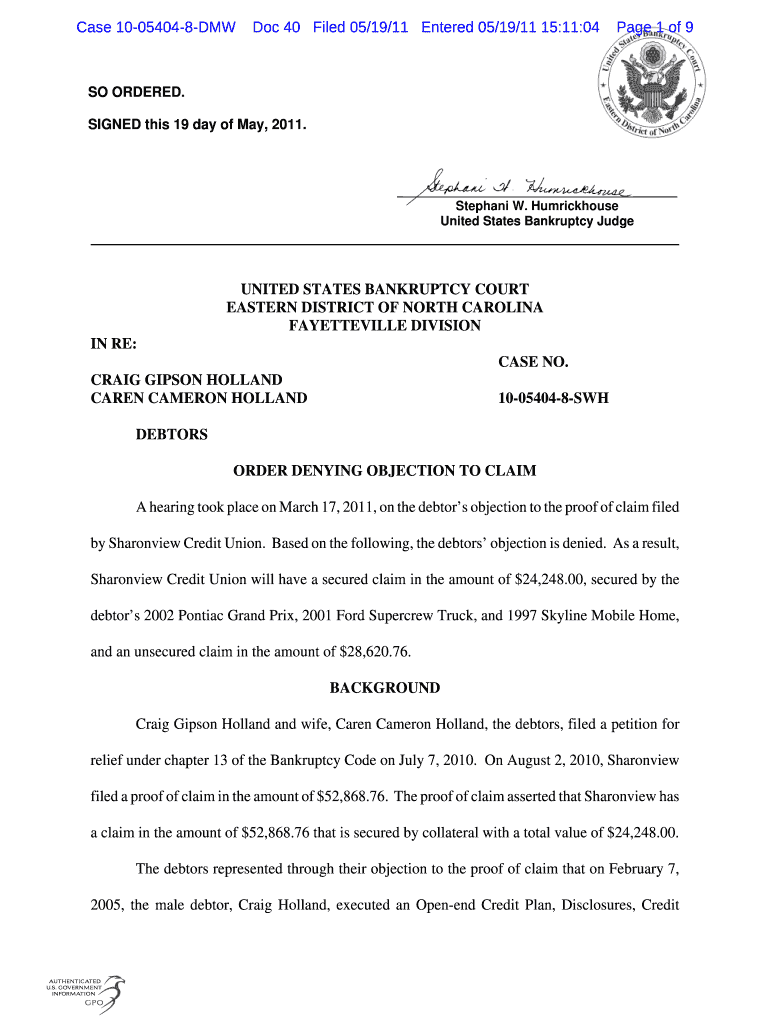
The "10-5404 - Craig Gipson Holland and Caren Cameron - gpo" is a form linked to a specific case within the United States Bankruptcy Court. It involves a court order which addresses a financial dispute concerning creditors and debtors. The form centers on a ruling that determines the legitimacy and classification of claims filed by creditors against debtors. Understanding the form's content is crucial for fully grasping the court's ruling and the implications for involved parties.
How to Use the Form
When using the 10-5404 form, stakeholders should focus on the details provided about the court's decision regarding financial claims. Key components include verifying the accuracy of the amounts specified and understanding the rationale behind the court's decisions. This form serves as a record of the legal proceedings and can be used by creditors, debtors, or legal representatives as a reference for further legal actions or appeals.
Steps to Complete the 10-5404
Completing the form involves ensuring all relevant sections are duly filled and updated. Below are basic steps to follow:
- Verify Information: Confirm the correctness of debtor and creditor information.
- Document Claims: Clearly list both secured and unsecured claims as outlined by the court.
- Review Collateral Details: Ensure that the specifics about collateral, such as vehicles or properties, are accurate.
- Submit Supporting Documents: Attach any required paperwork that supports the claims, such as financial statements or receipts.
- Signature and Date: Verify that all necessary signatures and dates are included for validation.
Adhering to these steps guarantees that the form accurately represents the court order and complies with legal standards.
Key Elements of the Form
This form contains several critical elements that impact its legal standing:
- Claim Details: Differentiation between secured and unsecured claims presented in the case.
- Collateral Description: Description of assets guaranteeing the secured claim.
- Judicial Interpretation: The form articulates how the Open-end Credit Plan and the Federal Truth in Lending Act apply to the case.
Understanding these elements helps in assessing the form's implications for creditors and debtors involved.
Legal Use of the Form
The 10-5404 form is a legal document that substantiates the court's decisions regarding debt disputes. Its completion and filing ensure the formal acknowledgment of the court's rulings in financial disputes. It serves as a binding document that both debtors and creditors must adhere to, ensuring clarity and legal compliance in the management of the debt.
Who Typically Uses the Form
This form is typically used by:
- Creditors: To understand their standing and obligations concerning their claims against debtors.
- Debtors: To gain clarity on the requirements they must fulfill following the court's ruling.
- Legal Representatives: Lawyers or legal advisors involved in the case to structure appeals or further actions based on the court's conclusions.
These users rely on the accuracy and clarity of the form to navigate the complexities of bankruptcy proceedings effectively.


Examples of Using the Form
Consider a scenario where Sharonview Credit Union, a creditor, files a secured claim backed by collateral such as vehicles. The form would be used to document the court’s validation of this claim, simplifying any future financial recovery efforts by the creditor. Conversely, debtors can use the form to recognize remaining unsecured claims to address as they seek financial rehabilitation.
Important Terms Related to the Form
Understanding terminology is vital for comprehending the form's context:
- Secured Claim: A debt or obligation backed by collateral.
- Unsecured Claim: A debt not tied to a specific asset.
- Open-end Credit Plan: Credit agreements allowing repeated borrowing up to a set limit without recurring loan applications.
- Collateral: Assets pledged as security for a loan or obligation.
Familiarity with these terms ensures a deeper understanding of the form's implications and nuances.
Filing Deadlines and Important Dates
Timeliness is crucial in handling this form. There may be deadlines by which responses or additional documents should be submitted following court procedures. Parties involved should take note of these timelines to ensure compliance and to avoid potential legal penalties or delays in decision enforcement.
These sections and content are structured to help stakeholders better understand and utilize the "10-5404 - Craig Gipson Holland and Caren Cameron - gpo" form effectively, ensuring both procedural compliance and informed decision-making.




