







Definition and Meaning
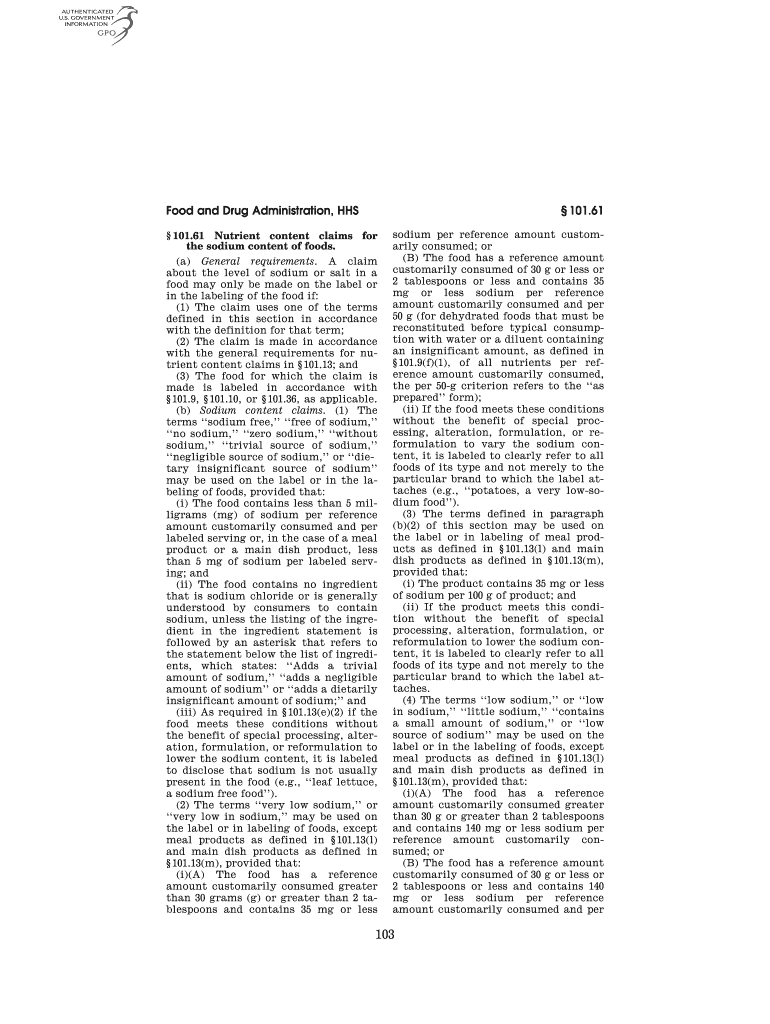
"Nutrient content claims" refer to statements made on food labels that describe the level of a nutrient in a product. These claims are regulated by the FDA and provide information that can help consumers make informed dietary choices. Common nutrient content claims include terms such as "low fat," "high fiber," "reduced sodium," and "sodium free." Each of these claims must adhere to specific standards and thresholds defined by regulatory authorities to ensure accuracy and prevent misleading consumers. Understanding the definition and regulations surrounding these claims is crucial for both manufacturers and consumers.
Key Elements of Nutrient Content Claims
When dealing with nutrient content claims, there are several key elements that must be considered. These include:
- Nutrient Thresholds: The FDA sets precise nutrient levels that products must meet to be eligible for certain claims.
- Claim Accuracy: Claims must reflect the actual nutrient composition of the product.
- Consistent Labeling: Nutrient claims should be consistent with other information on the label.
- Regulatory Compliance: Claims should comply with both federal and any relevant state regulations.
Each of these elements ensures that the claims made about a product are trustworthy and useful to consumers trying to manage their nutritional intake.
How to Use Nutrient Content Claims
To effectively use nutrient content claims, manufacturers should:
- Understand FDA Guidelines: Familiarize themselves with FDA regulations on nutrient content claims to ensure compliance.
- Submit Documentation: Prepare accurate product documentation that supports the claimed nutrient levels.
- Label Verification: Conduct regular checks to verify that labels consistently reflect the correct nutrient information.
- Consumer Education: Inform consumers through marketing and customer service about the significance of these claims.
By following these steps, manufacturers can use nutrient content claims as a tool to communicate valuable nutritional information to consumers.
Steps to Complete the Nutrient Content Claims
Completing a nutrient content claim involves a series of steps:
- Product Analysis: Conduct a detailed analysis of the nutrient content in your product.
- Determine Eligibility: Verify that the product meets the specific nutrient thresholds required for the desired claim.
- Prepare Documentation: Compile necessary documentation that supports your claim.
- Label Development: Design your label with the accurate claim and present it clearly to consumers.
- Compliance Review: Ensure the label and claim comply with all relevant regulations.
Completing these steps ensures that claims are robust and compliant with regulatory expectations.
Legal Use of Nutrient Content Claims
The legal use of nutrient content claims is strictly regulated to protect consumers and maintain market fairness. The FDA sets guidelines dictating how these claims can be used. Manufacturers must ensure that:
- Claims Are Factual: The claims on labels must be supported by scientific evidence and align with FDA standards.
- Adherence to Requirements: They conform to the defined thresholds and terminology.
- Truth in Advertising: Products marketed through these claims must not mislead consumers about the health benefits.
Legal compliance in the use of nutrient content claims builds consumer trust and minimizes the risk of legal repercussions.
Important Terms Related to Nutrient Content Claims
Understanding important terms associated with nutrient content claims enhances clarity. These terms include:
- “Reduced”: Indicates that a nutrient has been reduced by at least 25% compared to the original product.
- “Free”: For example, “sodium free” means the product contains less than 5 mg of sodium per serving.
- “Low”: Indicates a low amount of a specific nutrient. As in "low fat," which has no more than 3 grams of fat per serving.
- “Light”: Often used when a product has a lower number of calories or fat compared to the regular version.
Grasping these terms helps both labeling professionals and consumers interpret nutrient content claims accurately.
Examples of Using Nutrient Content Claims
Numerous real-world examples illustrate the application of nutrient content claims:
- Food Products: A cereal brand labels its product as "high fiber" if it contains at least 5 grams of fiber per serving.
- Beverages: A soda can claim to be "calorie free" if it has fewer than 5 calories per serving.
- Snacks: A snack may state "reduced sodium" if it has at least 25% less sodium than the standard version.
These examples demonstrate how companies can communicate key nutritional attributes of their products to consumers effectively.
Penalties for Non-Compliance
Failing to meet the regulations of nutrient content claims can lead to significant penalties:
- Fines: The FDA can impose monetary fines for each mislabeled product.
- Product Recalls: Non-compliant products may be recalled from the market.
- Legal Action: Companies could face lawsuits from consumers or regulatory agencies.
- Brand Damage: Misleading claims can negatively impact a company's reputation.
Ensuring compliance with the nutrient content claim regulations protects both consumers and manufacturers from these potential repercussions.




