







Definition & Meaning
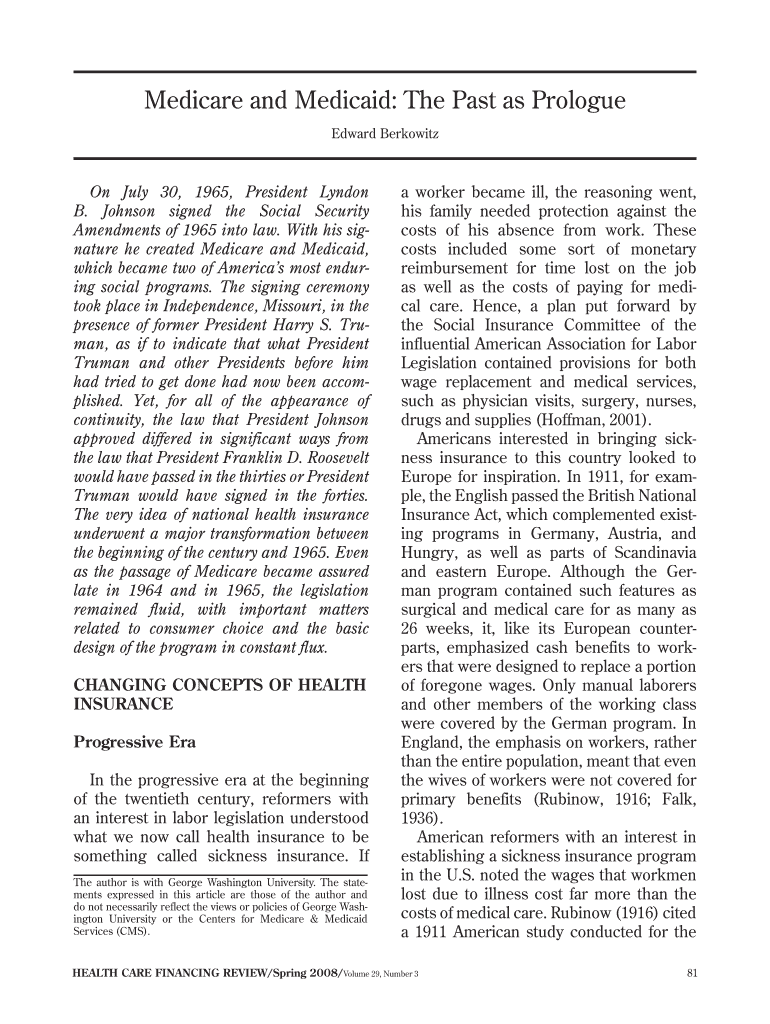
Medicare and Medicaid are two cornerstone programs of the U.S. social safety net, established under the Social Security Amendments of 1965. Medicare primarily provides health insurance for individuals aged 65 and older, focusing on hospital insurance (Part A), while also offering supplemental medical insurance (Parts B and D). Medicaid, on the other hand, assists low-income individuals and families, offering a comprehensive coverage approach through state and federal collaboration. These programs reflect significant governmental shifts towards federally managed health care solutions, which originally broke away from state-centric models.
Historical Development of Medicare and Medicaid
Medicare and Medicaid emerged from a historical tapestry involving multiple legislative efforts and health insurance concepts in the United States. The early 20th century saw budding health insurance ideas, gaining traction during the New Deal era. Influential figures and legislative endeavors championed health security, culminating in the establishment of these programs during the mid-1960s. As these programs unfolded, they evolved in response to political changes, demographic shifts, and societal needs, marking their presence as dynamic entities rather than static solutions in the health care landscape.
Application Process & Approval Time
The enrollment process for both Medicare and Medicaid involves specific steps tailored to each program. Medicare enrollment typically begins a few months before an individual’s 65th birthday, with automatic enrollment occurring if they are receiving Social Security benefits. Those not automatically enrolled must apply either online, by phone, or in person. Medicaid, in contrast, requires applicants to meet state-specific eligibility criteria, necessitating a submission of an application through state Medicaid agencies. The approval time varies, with Medicaid often involving a more detailed eligibility determination process compared to Medicare.
Key Elements of the Programs
Several critical components define Medicare and Medicaid, shaping their utility and impact. Medicare is segmented into several parts: Part A covers hospital insurance, Part B encompasses medical services, Part C (Medicare Advantage) provides an alternate way to receive Parts A and B, and Part D covers prescription drugs. Medicaid offers a wide range of health services and benefits, often more comprehensive than Medicare, as it includes mandatory benefits like hospital and physician services, as well as optional benefits such as prescription drugs and physical therapy, which states can choose to provide.
Eligibility Criteria and Requirements
Eligibility for Medicare typically involves the age threshold of 65, or specific disability qualifications for individuals under 65, in addition to U.S. citizenship or permanent residency. Conversely, Medicaid eligibility varies by state and generally requires individuals to have low income and limited resources. States may also consider factors like age, pregnancy status, disability, and family size in determining eligibility. Both programs require documentation to verify eligibility, including Social Security numbers, financial documents, and, in some cases, medical records.


State-Specific Rules for Medicaid
Medicaid programs are unique to each state, reflecting individual guidelines and coverage options. While the federal government establishes broad requirements, states have the flexibility to design their eligibility frameworks, benefits packages, and service delivery systems. This state autonomy can lead to differences in covered services, administrative procedures, and access to additional benefits, such as waivers for long-term services and supports. Therefore, understanding specific state Medicaid regulations is crucial for applicants and beneficiaries.
Examples of Program Usage
Real-world examples illustrate the functional impact of Medicare and Medicaid. Medicare beneficiaries often utilize the program during hospitalizations, gaining financial support for inpatient services through Part A. Meanwhile, Medicaid provides essential health services for low-income families, including prenatal care for pregnant women and pediatric services for children. Elderly individuals in nursing homes frequently rely on Medicaid coverage, reflecting the program’s critical role in long-term care. These scenarios highlight the reach and versatility of both programs in addressing diverse health care needs across populations.
Legal Use of the Programs
Legal considerations are pivotal in the administration of Medicare and Medicaid. These programs operate under stringent federal regulations to ensure compliance with health care laws, such as the Health Insurance Portability and Accountability Act (HIPAA), which protects patient privacy. The Centers for Medicare & Medicaid Services (CMS) oversees operational standards, ensuring proper usage and safeguarding against fraud. Participants must adhere to eligibility rules and provide accurate information, as misrepresentation can lead to penalties or loss of benefits, demonstrating the programs' foundational legal frameworks.




