







Definition and Purpose of the Foreign Trade Webinar Series
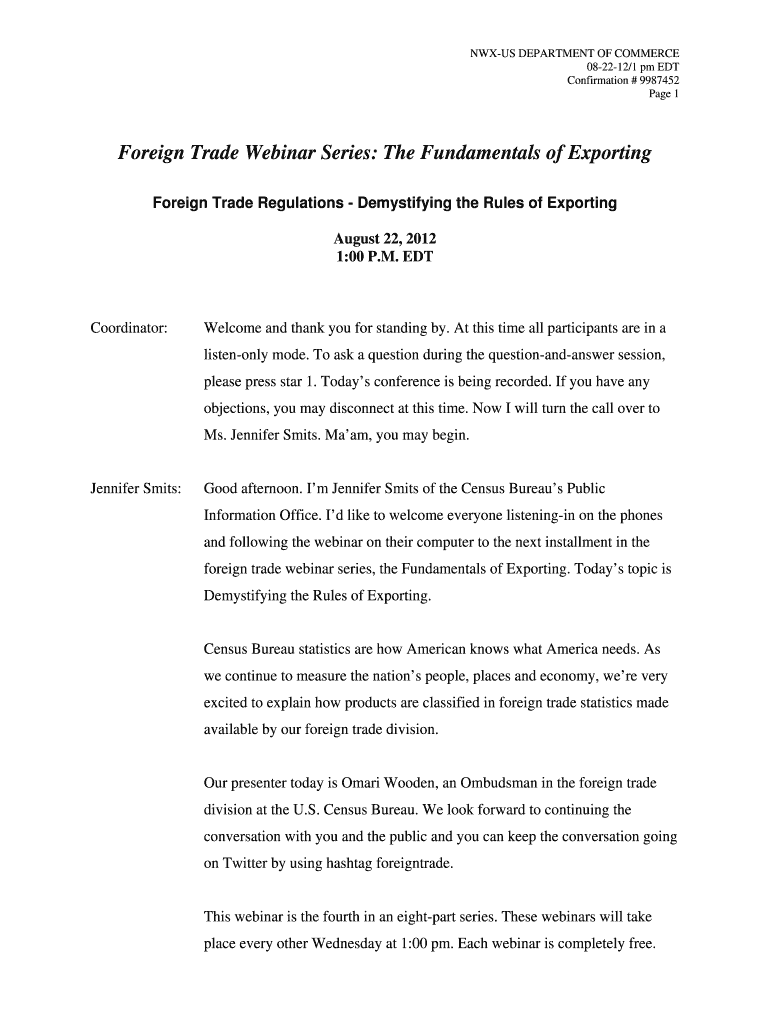
The Foreign Trade Webinar Series aims to provide in-depth knowledge about exporting and foreign trade regulations. It is a resource designed to clarify the fundamental concepts involved in export transactions. By attending the series, participants gain insights into compliance requirements, the role of the U.S. principal party in interest, and differentiating between standard and routed export transactions. It's geared towards educating organizations and individuals on how to efficiently navigate trade regulations.
How to Use the Foreign Trade Webinar Series
Participants can leverage this series to enhance their understanding of foreign trade processes. To make the most of the session:
- Registration: Sign up through the U.S. Census Bureau's website or via a direct invitation.
- Participation: Actively listen to discussions on trade regulations and compliance.
- Interaction: Engage by asking questions for clarity on specific topics during Q&A sessions.
- Resources: Utilize provided materials and references for further study and application in real-world scenarios.
Steps to Complete the Foreign Trade Webinar Series
Completing the webinar series requires a strategic approach to gain maximum benefit:
- Plan and Schedule: Allocate time to attend each session, as these might be spread across several days.
- Prepare in Advance: Review any preparatory materials or outlines provided before the sessions.
- Active Engagement: Participate actively during the sessions and note important details.
- Review and Implement: Go through the session recordings if available, and apply learned concepts to your trade operations.
Importance of the Foreign Trade Webinar Series
Understanding trade and compliance regulations is crucial for businesses involved in export activities. Key reasons to participate in the series include:
- Compliance: Avoid potential penalties by understanding the legal requirements.
- Efficiency: Learn best practices for efficient and error-free export transactions.
- Networking: Connect with other professionals in the field for insights and collaborative opportunities.
- Resources: Access valuable resources from the Census Bureau for ongoing support in trade activities.
Typical Users of the Foreign Trade Webinar Series
The series is tailored for:
- Business Executives: Who oversee international trade operations.
- Compliance Officers: Responsible for ensuring adherence to trade regulations.
- Export Managers: Who manage the logistics and legalities of shipping goods internationally.
- Small Business Owners: Looking to expand their business reach through exports.
Key Elements of the Webinar Series
The series comprises several critical elements that enhance the learning experience:
- Expert Speakers: Sessions are led by industry professionals and trade analysts.
- Interactive Sessions: Opportunities for real-time questions and clarifications.
- Case Studies: Practical examples illustrating successful compliance strategies.
- Take-home Resources: Access to presentations, guides, and checklists for practical implementation.
Legal Use and Compliance Through the Webinar Series
The Foreign Trade Webinar Series plays a significant role in promoting legal compliance by educating participants on:
- Trade Regulations: Detailed explanations of U.S. export laws.
- Transaction Documentation: Guidance on maintaining accurate and compliant export documentation.
- Penalties and Enforcement: Information on penalties for non-compliance and how to avoid them.
Penalties for Non-Compliance
Understanding the potential consequences of non-compliance highlights the necessity of attending the webinar series:
- Monetary Fines: Businesses can face heavy fines for failure to adhere to export regulations.
- Operational Delays: Non-compliance can result in seizure of goods, causing significant delays.
- Legal Consequences: Repeated violations might lead to legal action or revocation of export privileges.
Examples of Using the Foreign Trade Webinar Series
Real-world scenarios showcase the series' relevance:
- Case Study 1: A company learns through the series how to correct their export documentation, avoiding a potential $50,000 fine.
- Case Study 2: A small business owner successfully expands to international markets after understanding routing export transactions.
Required Documents and Preparations
Prior to participating, it is beneficial to have access to relevant documentation, such as:
- Company Export Documents: To understand how they measure against compliance requirements discussed in the series.
- Export Compliance Checklist: Provided by the webinar for assessing current trade practices.
Submission Methods for Q&A and Feedback
Engagement during the webinar series includes various submission methods for questions and feedback:
- Online Forms: Submit inquiries before or during the sessions.
- Email Submissions: Reach out directly to session speakers post-webinar.
- Interactive Portals: Use the platform’s built-in Q&A features during live sessions.




