




Understanding the Florida Safety Parenting Plan
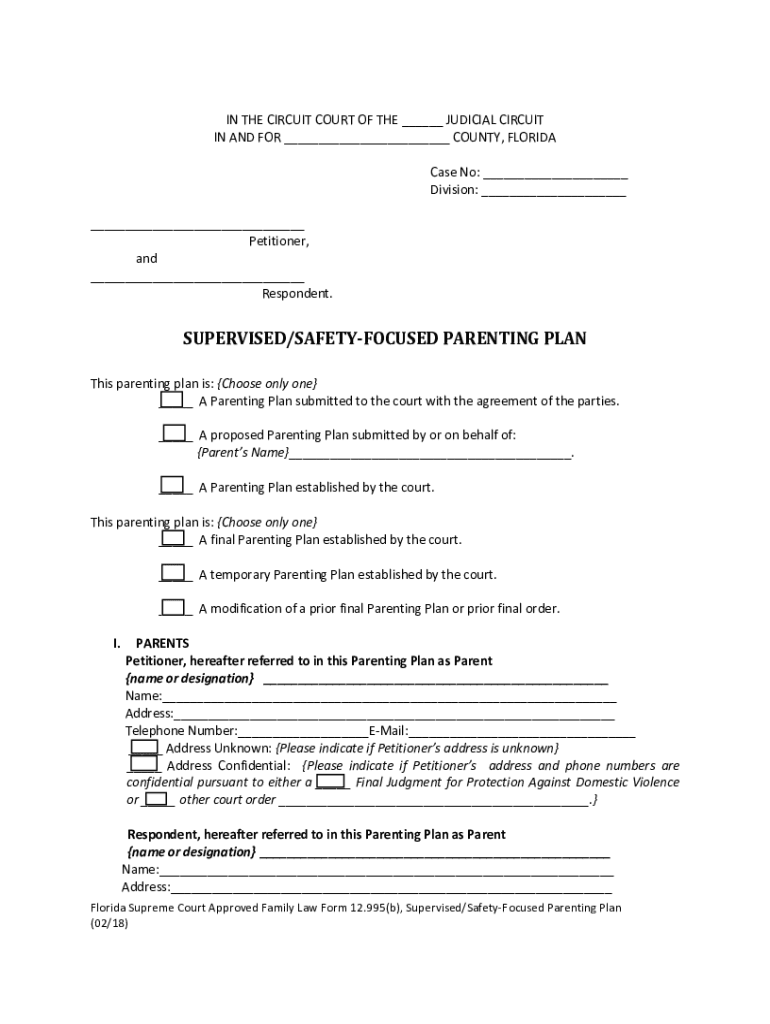
The Florida Safety Parenting Plan (Florida Family Law Form 12.995(b)) is specifically designed for situations where a child's safety is a primary concern. This document outlines the roles and responsibilities of parents when sharing custody or time with their child, while prioritizing the child's well-being. Understanding the features and requirements of this form is essential, especially for parents navigating high-conflict situations or instances requiring supervision during visitation.
Key Components of the Florida Safety Parenting Plan
The structure of the Florida Safety Parenting Plan emphasizes a detailed approach to parenting responsibilities and time-sharing arrangements. The following components are vital for creating an effective plan:
- Detailed Time-Sharing Schedule: Clearly outline when each parent will spend time with the child. This should be specific and include considerations for holidays, weekends, and school breaks.
- Communication Methods: Establish preferred communication channels between parents regarding the child’s needs. This may involve text messages, phone calls, or regular meetings.
- Safety Measures: Include provisions that ensure the child’s safety at all times, particularly in environments where potential conflicts could arise or if there are concerns about abuse or neglect.
- Parental Responsibilities: Clearly define each parent’s responsibilities, including decisions about education, healthcare, and other significant aspects of the child's life.
Steps to Complete the Florida Safety Parenting Plan
Completing the Florida Safety Parenting Plan requires careful attention to detail to ensure all aspects of the child's welfare are addressed. The following steps outline the process:
- Obtain the Form: Access the Florida Family Law Form 12.995(b) from a reliable source, such as the Florida court's website or community resources.
- Fill in Basic Information: Include personal information for both parents, such as names, addresses, and contact information.
- Detail the Time-Sharing Schedule: Use precise language to outline when the child will be with each parent. Consider including a calendar for clarity.
- Discuss Safety Provisions: Clearly articulate any necessary safety measures, such as supervised visitation or restrictions based on previous incidents.
- Review and Sign: Both parents should review the plan thoroughly, ensuring understanding and agreement before signing. Notarization may be required in some cases.
Important Considerations for High-Conflict Situations
In high-conflict environments, a Florida Safety Parenting Plan can help establish boundaries and promote positive interactions. Key considerations include:
- Supervised Visitation: In situations where safety is a concern, outline the specifics of supervised time-sharing, detailing who will supervise and under what circumstances.
- Conflict Resolution Protocols: Incorporate methods for resolving disputes about the plan, such as mediation or counseling, to encourage cooperative parenting.
- Communication Restrictions: If necessary, establish parameters for communication that prevent conflict escalation, including rules for how and when parents may communicate about the child.
Legal Filing and Compliance Requirements
Filing the Florida Safety Parenting Plan correctly is essential for legal compliance. Important points to note include:
- Electronic Filing: Florida courts often allow electronic submission of family law documents. Check local rules for specific filing procedures.
- Service of Documents: Parents must ensure that all involved parties receive copies of the filed plan, adhering to court requirements for service.
- Amendments to the Plan: If circumstances change, parents can petition the court to modify the parenting plan to reflect new needs and agreements.
Real-World Examples of Safety-Focused Plans
Considerations for a Florida Safety Parenting Plan can vary based on unique family dynamics. Some examples include:
- Example One: A plan that stipulates supervised visitations due to past incidents involving substance abuse by one parent.
- Example Two: A plan for parents living in different states, emphasizing safe transportation protocols and communication during travel.
Additional Resources for Parents
Parents preparing a Florida Safety Parenting Plan can benefit from various resources:
- Family Law Facilitators: Many counties offer services to help parents navigate the creation of parenting plans.
- Community Mediation Services: Engaging a mediator can be beneficial for parents experiencing significant conflict.
- Legal Assistance: Consulting with an attorney specialized in family law may be advisable to ensure all aspects of the parenting plan comply with Florida statutes.
Customizing the Florida Safety Parenting Plan for Your Needs
Every family's situation is unique, and customizing the Florida Safety Parenting Plan is crucial. Consider incorporating:
- Specific Needs of the Child: Address any special requirements or considerations, such as medical needs, educational plans, or emotional support.
- Cultural and Religious Practices: Include agreements on how to handle cultural or religious upbringing and considerations that affect the child's lifestyle.
- Flexibility Clauses: Allow for adjustments to the plan to accommodate changing circumstances while maintaining focus on the child's well-being.
Drafting a comprehensive and considerate Florida Safety Parenting Plan is essential for fostering a positive co-parenting environment. By focusing on safety, communication, and responsibility, parents can navigate complex situations while ensuring that their child's best interests remain at the forefront.