01. Edit your form online
Type text, add images, blackout confidential details, add comments, highlights and more.

Type text, add images, blackout confidential details, add comments, highlights and more.

Draw your signature, type it, upload its image, or use your mobile device as a signature pad.

Send it via email, link, or fax. You can also download it, export it or print it out.
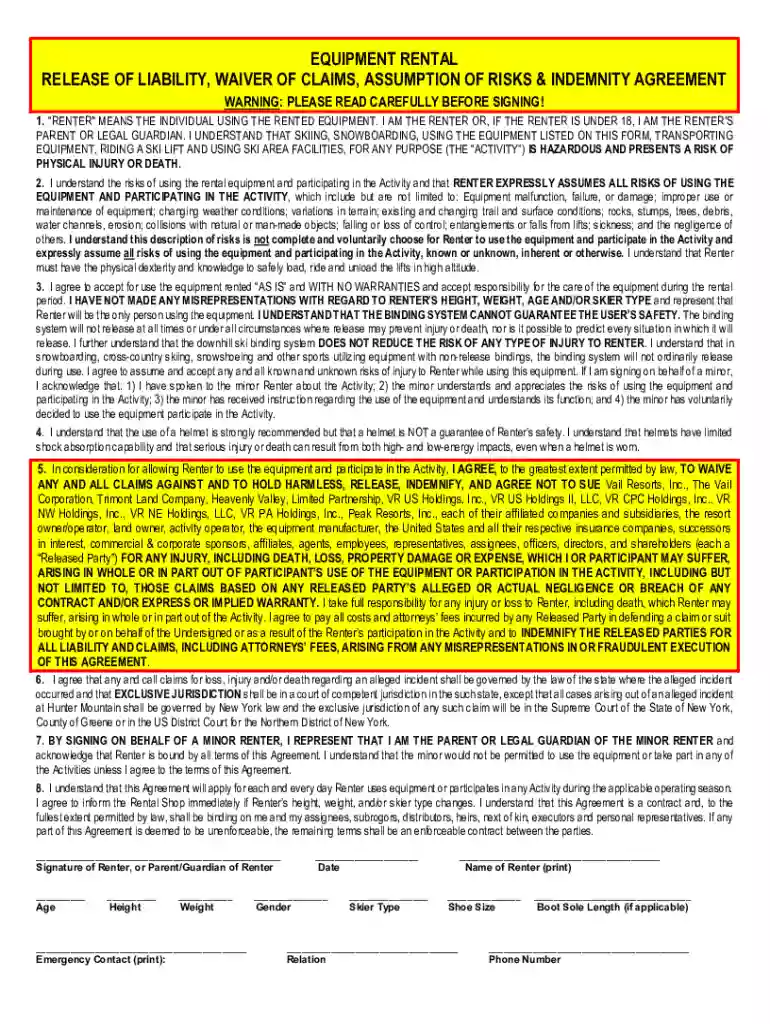
Equipment rental liability waivers are legal documents designed to protect rental companies from potential claims and liabilities arising during the use of their equipment. These waivers inform renters about the inherent risks associated with using the rented items and typically require them to waive any claims against the rental company for injuries, damages, or losses. The primary goal is to transfer the risk from the rental company to the renter, who acknowledges their understanding of the risks and agrees to use the equipment responsibly.
Using the equipment rental liability waiver involves several critical steps to ensure legality and compliance. First, the rental company must customize the waiver with appropriate details, including the types of equipment, rental terms, and specific risks involved. Once prepared, the waiver should be presented to the renter before they take possession of the equipment. The renter must read and understand the document, after which they sign it to indicate their agreement. It's essential for rental companies to retain signed copies for legal reference and to ensure that all liability waivers are up-to-date with current laws and regulations.
These waivers are crucial for both the rental companies and renters. For rental companies, they significantly reduce the likelihood of costly legal claims and provide a layer of protection against unforeseen incidents. Renters benefit by receiving a clear understanding of their responsibilities and the expectations associated with equipment use. Additionally, waivers facilitate open communication about safety and encourage responsible behavior among users.
Under U.S. law, for an equipment rental liability waiver to be enforceable, it must be clear, certain, and not violate public policy. The waiver should not include terms that are excessively broad or that attempt to relieve the rental company of liability for gross negligence or intentional misconduct. Each state may have specific requirements that affect the enforceability of waivers, making it crucial to adhere to local laws.
Various U.S. states have differing regulations regarding the validity and enforcement of liability waivers. States like California and New York are known for stricter consumer protection laws, which may impact the structure and language of waivers. Rental companies should seek legal advice to ensure compliance with the state-specific guidelines, maximizing the likelihood of enforceability across different jurisdictions.
Consider contexts like skiing or snowboarding equipment rentals. A waiver might detail risks such as falls due to uneven terrain or injuries from improper use. Similarly, renting heavy machinery like backhoes would require waivers outlining risks such as operator injury or property damage. By illustrating these scenarios, rental companies can clarify the importance of waivers and justify liability transfer agreements.
Alternative documents might be required for particular scenarios, such as group rentals, long-term leases, or highly technical equipment. These variants may include supplementary clauses tailored to specific activities or risks. Companies might also consider digital solutions that offer electronic signature options to streamline the waiver process while ensuring secure documentation.
More companies are gravitating toward digital waivers due to their convenience, cost-effectiveness, and enhanced storage capabilities. Electronic waivers allow for quick updates and easier tracking of signed documents. However, rental companies must ensure that these digital forms comply with electronic signature laws, such as the ESIGN Act, to be legally enforceable.
At DocHub, your data security is our priority. We follow HIPAA, SOC2, GDPR, and other standards, so you can work on your documents with confidence.