




01. Edit your form online
Type text, add images, blackout confidential details, add comments, highlights and more.

Type text, add images, blackout confidential details, add comments, highlights and more.

Draw your signature, type it, upload its image, or use your mobile device as a signature pad.

Send it via email, link, or fax. You can also download it, export it or print it out.
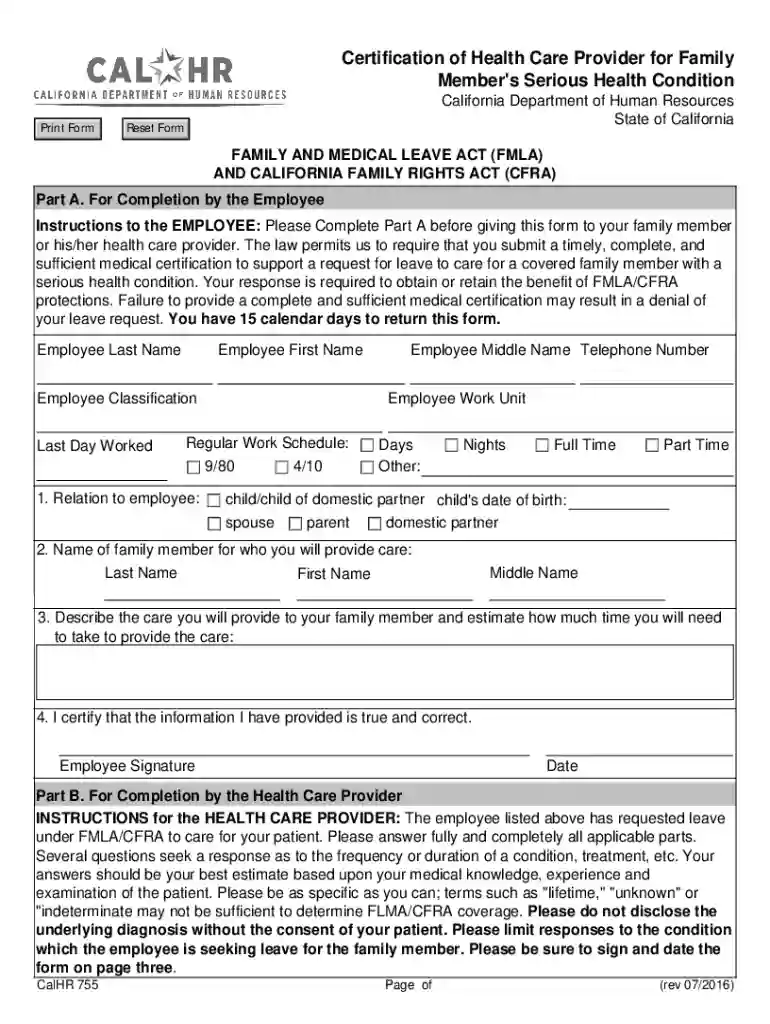
The "Certification of Health Care ProviderEmployee’s or Family" form is a critical element in the application process for employee leave under the Family and Medical Leave Act (FMLA) and the California Family Rights Act (CFRA). This document is designed for employees who seek leave due to serious health conditions affecting themselves or a family member. The form serves as a legal certification from a health care provider, verifying the medical necessity of the requested leave. By facilitating communication between the employee, employer, and health care provider, this certification ensures compliance with federal and state leave requirements.
Each section of the form serves a specific purpose, ensuring comprehensive documentation:
The form holds legal weight, ensuring the leave taken under FMLA and CFRA is justified. It acts as a safeguard for both employees and employers, providing a structured process to handle leave requests for medical reasons. The form ensures compliance with federal and state regulations, helping to avoid potential disputes or misunderstandings between parties.


Although the FMLA is federal, states like California have specific guidelines under CFRA. California law may offer broader protection or additional requirements in terms of eligibility and leave duration. It is crucial to be aware of these differences and ensure the form complies with both state and federal laws.

Failing to comply with FMLA or CFRA requirements can result in negative consequences for both employees and employers. Employees may face denial of leave or potential disciplinary action. Employers could face legal challenges, penalties, or fines if they incorrectly deny leave or fail to provide required notifications to employees.
We've got more versions of the Certification of Health Care ProviderEmployee's or Family form. Select the right Certification of Health Care ProviderEmployee's or Family version from the list and start editing it straight away!
At DocHub, your data security is our priority. We follow HIPAA, SOC2, GDPR, and other standards, so you can work on your documents with confidence.
The Family and Medical Leave Act (FMLA) provides that an employer may require an employee seeking FMLA leave to care for a family.Read more
Certificate in Nursing Family Nurse Practitioner; Post-Masters Certificate in Nursing Psychiatric Mental Health Nurse Practitioner. Get $8,000 detailsRead more


