




01. Edit your form online
Type text, add images, blackout confidential details, add comments, highlights and more.

Type text, add images, blackout confidential details, add comments, highlights and more.

Draw your signature, type it, upload its image, or use your mobile device as a signature pad.

Send it via email, link, or fax. You can also download it, export it or print it out.
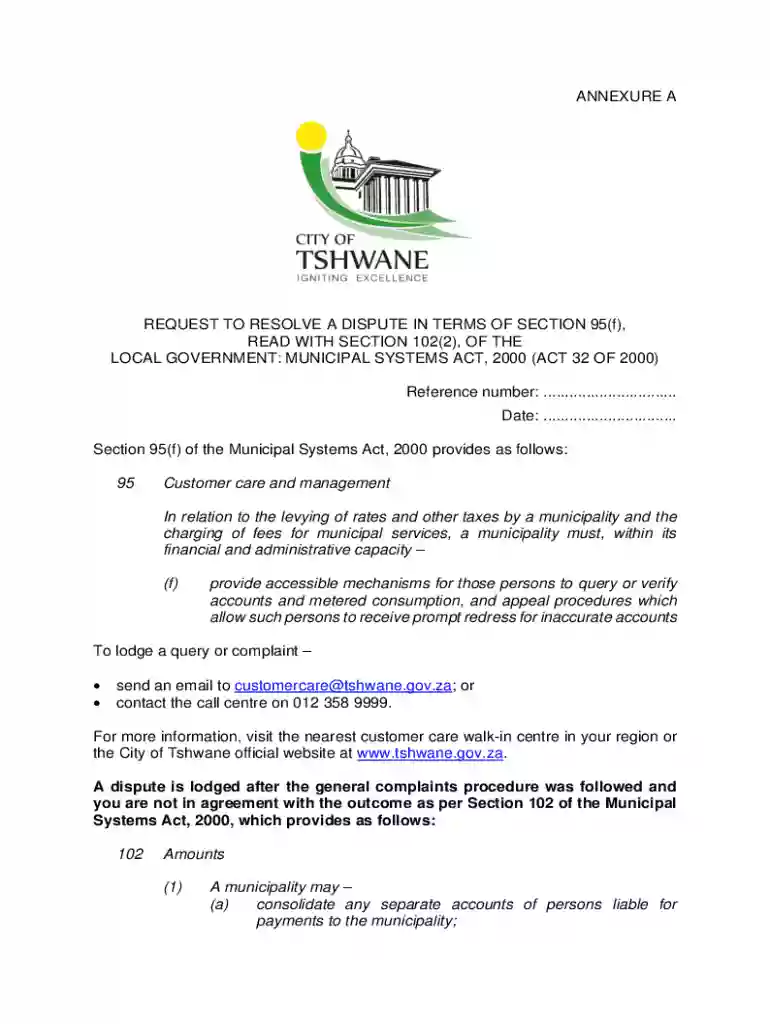
The Municipal Utility Dispute Form serves as a formal mechanism for individuals to lodge complaints or disputes regarding municipal utility services. This form typically comes into play when a resident believes there has been an error in their municipal utility bill or has encountered service issues that require municipal intervention. The form provides a structured way to communicate the dispute, ensuring that all necessary details are captured for the municipality to address the issue efficiently. This structured communication helps in resolving misunderstandings and offers a channel for citizens to exercise their rights under local governance frameworks.
To effectively use the Municipal Utility Dispute Form, individuals should follow a systematic approach:
Ensure that every section of the form is completed accurately to avoid delays in processing.
Completing the Municipal Utility Dispute Form involves several precise steps:
Ensure all fields are completed to prevent the request from being returned for further information.
Utilizing the Municipal Utility Dispute Form is crucial for various reasons:
The form is predominantly used by residents and businesses facing discrepancies in utility services. It caters to a variety of users:


Several key terms are associated with the Municipal Utility Dispute Form that users should understand:
Understanding these terms helps in clearly articulating the dispute on the form.
The form acts as a legal instrument under municipal law, allowing residents to formally dispute incorrect utility charges or service inconsistencies. It engages the municipal systems in place designed to ensure fair and equitable utility services, allowing disputes to be lodged without fear of retaliation or service discontinuation during the investigation process. Additionally, the submission of this form does not absolve individuals of paying the undisputed portion of their utility bills while the dispute is under review.
The Municipal Utility Dispute Form consists of several critical components:
Each element is essential for processing the dispute effectively.
Differences in state regulations may affect how disputes are handled:
Being aware of state-specific rules ensures compliance and improves the chances of a favorable outcome.
Several practical scenarios illustrate the use of this form:
These examples demonstrate the form’s application in diverse situations.
We've got more versions of the Navigating the Municipal utility maze: How dispute form. Select the right Navigating the Municipal utility maze: How dispute version from the list and start editing it straight away!
At DocHub, your data security is our priority. We follow HIPAA, SOC2, GDPR, and other standards, so you can work on your documents with confidence.
by J Ball 2026 This report reviews these key challenges and provides a phased framework for navigating the legal, municipal, and utility engagement required to move aRead more
There are a number of common legal disputes that occur in the following areas: not having comprehensive evaluations, having incomplete or inappropriate IEPs,


