




01. Edit your vision referral letter to parents online
Type text, add images, blackout confidential details, add comments, highlights and more.

Type text, add images, blackout confidential details, add comments, highlights and more.

Draw your signature, type it, upload its image, or use your mobile device as a signature pad.

Send it via email, link, or fax. You can also download it, export it or print it out.
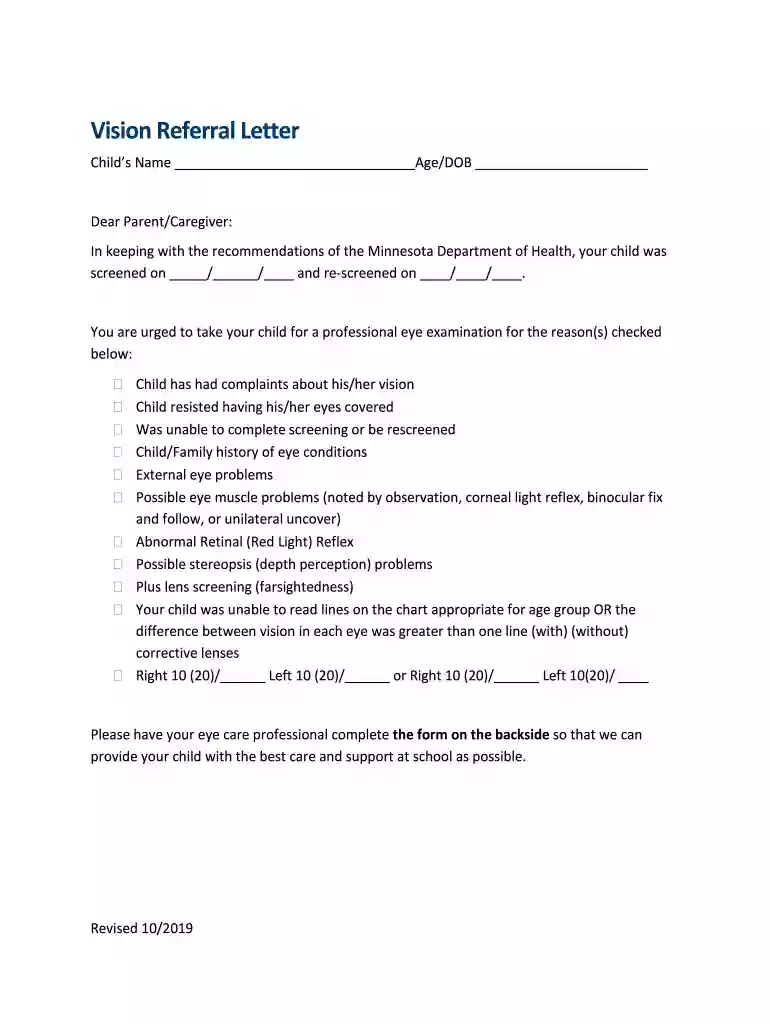
A Vision Referral Letter Vision Screening is a document typically used by schools, pediatricians, or other health professionals to recommend an eye examination for a child. This letter is based on specific screening outcomes or observations that suggest potential vision issues. It serves as a formal communication to parents or guardians, informing them of the need for an eye examination and often includes details about screening results, any observed symptoms, and possible conditions. The ultimate goal is to ensure timely professional eye care, contributing to the child's well-being and educational performance.
The Vision Referral Letter Vision Screening is used to facilitate communication between health professionals and parents. Upon receiving this letter, parents should:
This process aids in maintaining a child's eye health and addressing any issues impacting their daily activities or learning capabilities.
Parents can typically obtain a Vision Referral Letter Vision Screening through the following channels:
Understanding these sources can help parents navigate the health system effectively, ensuring timely intervention for their child's vision needs.
Completing a Vision Referral Letter Vision Screening involves several key steps. This ensures the process is thorough and addresses the child's needs:
By adhering to these steps, all parties can collaborate effectively to prioritize the child's vision health.
Using a Vision Referral Letter Vision Screening is essential for several reasons:
By acting upon this letter's recommendations, parents can ensure their child receives appropriate care, potentially preventing further vision complications.
The Vision Referral Letter Vision Screening is commonly used by:
These users ensure that children at risk of vision problems are appropriately referred for professional examination and treatment.


The Vision Referral Letter Vision Screening includes several critical components:
These elements ensure the letter serves its dual purpose of informing parents and guiding subsequent care.
Real-world scenarios demonstrate the utility of the Vision Referral Letter Vision Screening:
These examples highlight the letter's role in facilitating early detection and subsequent professional consultation.
We've got more versions of the vision referral letter to parents form. Select the right vision referral letter to parents version from the list and start editing it straight away!
At DocHub, your data security is our priority. We follow HIPAA, SOC2, GDPR, and other standards, so you can work on your documents with confidence.


