




01. Edit your non collusive bidding certification online
Type text, add images, blackout confidential details, add comments, highlights and more.

Type text, add images, blackout confidential details, add comments, highlights and more.

Draw your signature, type it, upload its image, or use your mobile device as a signature pad.

Send new york non collusive bidding via email, link, or fax. You can also download it, export it or print it out.
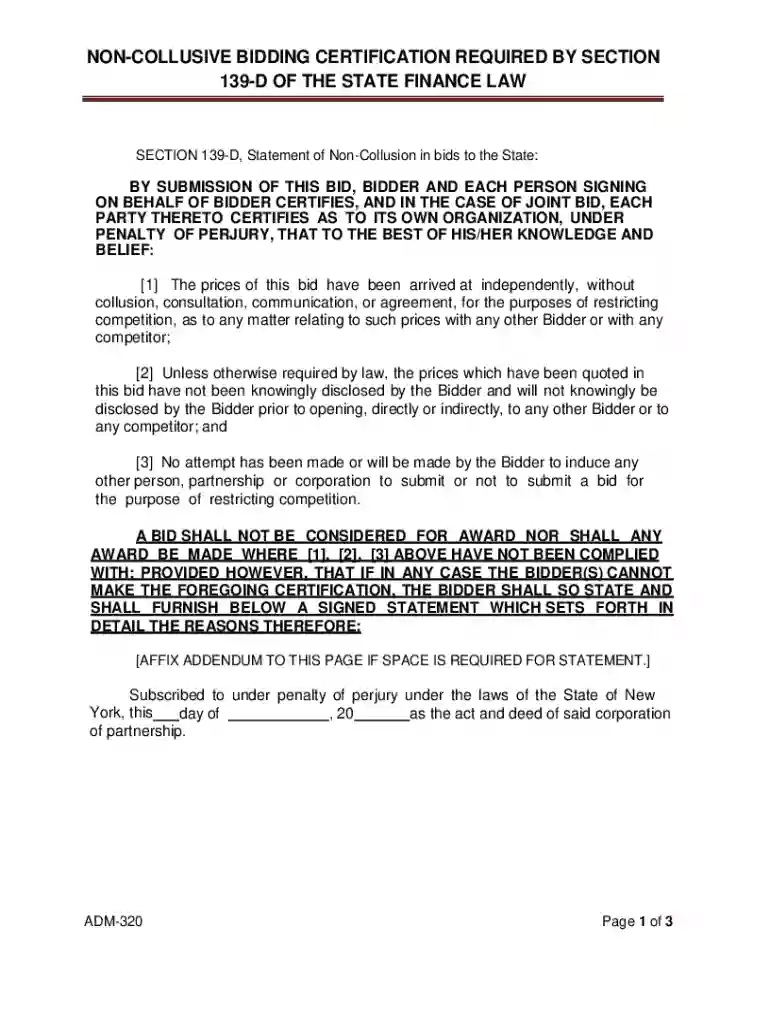
The Non-Collusive Bidding Certification required by Section 139-D of the State Finance Law is a legal document that ensures transparency and fairness in the bidding process for public contracts. This certification requires bidders to affirm, under penalty of perjury, that their bid submissions have been developed independently, without collusion or communication with competitors. The central aim is to prevent any manipulation of bid prices or clandestine agreements that compromise fair market competition. Understanding the scope and implications of this certification is pivotal for entities engaging in state procurement processes.
To properly utilize the Non-Collusive Bidding Certification, businesses and individuals must integrate it as an integral part of their bidding documentation whenever participating in state-led projects. This entails:
Successful integration of this certification into the bidding process not only aligns with legal obligations but also enhances the credibility of the submitting entity.
The Non-Collusive Bidding Certification is typically obtainable from state procurement offices or the entity issuing the bid solicitation. Steps to acquire the certification include:
Securing the correct version of this certification is vital to ensure compliance with state-specific mandates.
Completing the Non-Collusive Bidding Certification involves a meticulous approach to ensure accuracy and compliance:
Attention to detail during completion mitigates the risk of omissions that could render the bid non-compliant.
The Non-Collusive Bidding Certification is predominantly used by:
Understanding who utilizes this certification is crucial for entities aligning themselves with public sector opportunities.


From a legal perspective, the Non-Collusive Bidding Certification serves to instill accountability among bidders. Its use:
Legal adherence when using this certification is essential to prevent potential repercussions for fraudulent practices.
Several critical elements constitute the Non-Collusive Bidding Certification, including:
Recognizing these elements helps bidders navigate the requirements effectively while preparing their bid submissions.
Non-compliance with the Non-Collusive Bidding Certification can lead to significant repercussions, such as:
Understanding the penalties underscores the importance of strict adherence to non-collusive practices to safeguard business interests.
We've got more versions of the non collusive bidding certification form. Select the right non collusive bidding certification version from the list and start editing it straight away!
At DocHub, your data security is our priority. We follow HIPAA, SOC2, GDPR, and other standards, so you can work on your documents with confidence.


