
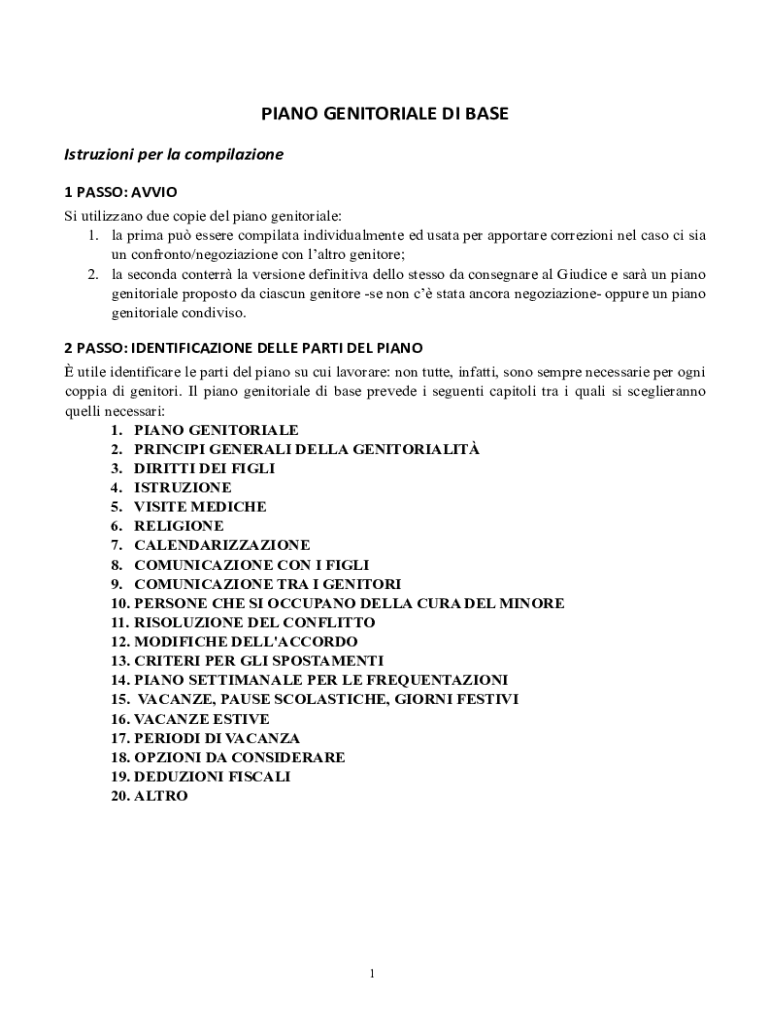







Overview of Il Piano Genitoriale
Il Piano Genitoriale is a structured document detailing how separated or divorcing parents will share responsibilities and custody of their children. The plan covers various aspects of parenting arrangements, focusing on the best interests of the child. It includes details such as custody schedules, visitation rights, communication between parents, education, and healthcare arrangements.
How to Use Il Piano Genitoriale
When using Il Piano Genitoriale, parents should collaboratively outline parenting arrangements that are practical and beneficial for the child. The document should clearly articulate roles and responsibilities, ensuring a consistent and reliable structure in childcare. Legal advisors can assist in drafting a comprehensive plan to prevent future conflicts or misunderstandings.
Key Elements of Il Piano Genitoriale
- Custody and Visitation Schedules: Precise timings for custody exchanges and visitation plans.
- Decision-Making Responsibilities: Clarification on who makes decisions regarding education, healthcare, and extracurricular activities.
- Communication Protocols: Guidelines for maintaining contact between parents, including methods and frequency.
- Financial Arrangements: Provisions concerning child support and expenses related to childcare.
- Dispute Resolution: Processes for resolving disagreements, ranging from mediation to court involvement.
Steps to Complete Il Piano Genitoriale
- Initial Consultation: Engage with a family law professional to understand legal requirements.
- Drafting the Plan: Collaborate with the other parent to define key custody and care elements.
- Review and Revise: Ensure both parties agree to all terms. Consult with legal counsel for a thorough review.
- Finalize the Document: Once agreed, sign the plan with both parents' signatures along with legal witnesses, if required.
Legal Use of Il Piano Genitoriale
Il Piano Genitoriale is legally binding once finalized and signed. It serves as a formal agreement on parenting roles post-divorce or separation. Courts may use the document to enforce parenting arrangements and resolve conflicts between parents, ensuring compliance with state-specific family laws.
State-Specific Rules for Il Piano Genitoriale
Every state in the U.S. may have varying requirements and rules regarding parental plans. Local court systems often provide specific guidelines, and it’s advised to consult these resources or a family attorney to ensure compliance with state regulations.
Digital vs. Paper Version
Il Piano Genitoriale can be prepared and submitted in both digital and paper formats. Digital versions offer convenience and ease of sharing, while paper versions may be required for court submissions. Using platforms like DocHub ensures secure and straightforward editing and storage, with capabilities for electronic signatures.
Who Typically Uses Il Piano Genitoriale
Separated or divorced parents primarily use Il Piano Genitoriale to manage shared custody arrangements. This document is also beneficial for unmarried couples who live apart but share parenting responsibilities. Legal and mediation professionals may also utilize the plan to assist in conflict resolution between parents.
Examples of Using Il Piano Genitoriale
In practice, Il Piano Genitoriale has been used to:
- Establish consistent parenting time during the week and weekends.
- Set terms for holidays and vacations, ensuring fair parental access.
- Define education-related responsibilities, such as which parent attends parent-teacher meetings.
- Resolve disputes by referring to pre-agreed arbitration processes outlined in the plan.
Important Terms Related to Il Piano Genitoriale
Understanding terms such as "custody", "visitation", "primary caregiver", and "joint decision-making" is essential when drafting or reviewing Il Piano Genitoriale. Clarifying these terms helps ensure all parties have a mutual understanding of the document's provisions and expectations.




