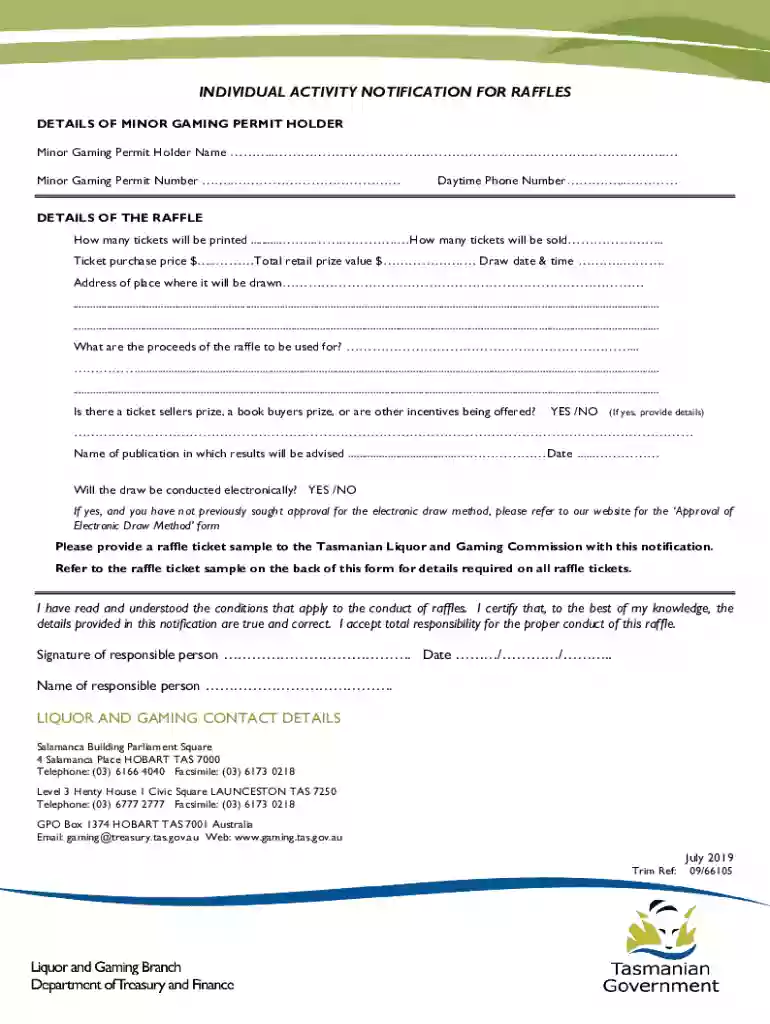
Raffles Rules and Conditions - ($ current) (updated PSQ) 2026

Get Form
Raffles Rules and Conditions - ($ current) (updated PSQ) Preview on Page 1

Here's how it works

01. Edit your form online
Type text, add images, blackout confidential details, add comments, highlights and more.

02. Sign it in a few clicks
Draw your signature, type it, upload its image, or use your mobile device as a signature pad.

03. Share your form with others
Send it via email, link, or fax. You can also download it, export it or print it out.

Definition & Meaning

Raffles Rules and Conditions - ($ current) (updated PSQ) set forth the guidelines and legal parameters that must be adhered to when conducting a raffle. These rules are vital for maintaining the integrity of the process, ensuring compliance with state and federal regulations, and protecting the interests of participants. The document typically outlines the responsibilities of the raffle organizers, eligibility criteria for participants, guidelines for ticket sales, and procedures for prize distribution. This ensures fairness and transparency, thus safeguarding all parties involved.

Practical Examples

  • Charitable Fundraisers: Many nonprofit organizations use raffles as a fundraising tool. Understanding the rules ensures that the proceeds are allocated appropriately, and the event complies with legal standards.
  • Corporate Events: Companies might conduct raffles to engage employees or clients, making it crucial to apply the rules correctly to enhance the experience and avoid potential disputes.

How to Use the Raffles Rules and Conditions

Using the "Raffles Rules and Conditions" involves understanding each section of the document in detail. This ensures compliance with applicable regulations and successful execution of the raffle. Essential steps include:

  1. Thorough Review: Begin by reading the entire document to understand the terms, conditions, and obligations required.
  2. Eligibility Verification: Ensure that both the raffle organizers and participants meet the eligibility criteria.
  3. Follow Ticketing Guidelines: Adhere to specified techniques for printing, distributing, and selling tickets.
  4. Prize Management: Accurately document and manage prizes according to the stated conditions.

Step-by-Step Process

  • Step 1: Identify the objective of your raffle and how it aligns with the rules.
  • Step 2: Draft a plan that includes all components mentioned in the document.
  • Step 3: Implement protocols for compliance and risk management, ensuring all participants understand the terms.

Key Elements of the Raffles Rules and Conditions

The "Raffles Rules and Conditions" document is composed of various sections, each detailing specific protocols and requirements. Key elements include:

  • Participant Eligibility: Outlines who can participate, including age requirements and other qualifiers.
  • Ticket Sales: Describes the process for selling tickets, including pricing, limitations on quantity, and how tickets are issued.
  • Prize Details: Provides comprehensive information on available prizes, including value, type, and distribution method.
  • Draw Process: Specifies how and when the raffle winners will be determined and announced.

Edge Cases and Considerations

  • Discrepancies in Ticket Numbers: Procedures for addressing mismatches or errors in ticket issuance.
  • Prize Claims: Protocols for unclaimed prizes and timeframes for winners to claim their rewards.

Steps to Complete the Raffles Rules and Conditions

Completing the "Raffles Rules and Conditions" involves several methodical steps to ensure full compliance and proper execution. Key steps include:

  1. Documentation: Gather all required materials, such as permits and proof of compliance with regulations.
  2. Filling Out Forms: Accurately complete the necessary sections of the document, ensuring no information is omitted.
  3. Submission: Depending on the jurisdiction, submit completed documents through the designated channel, whether online, by mail, or in-person.

Detailed Breakdown

  • Online Submission: Usually involves uploading scanned copies and filling electronic forms.
  • Mail Submission: Requires printing and mailing hard copies to the specified address.
  • In-Person Submission: Directly deliver the document to the issuing authority for a more personalized review process.

Legal Use of the Raffles Rules and Conditions

The "Raffles Rules and Conditions" ensures that all aspects of running a raffle comply with legal stipulations. This not only prevents potential penalties but also protects the interests of organizers and participants. Understanding federal and state-specific laws is crucial for legal compliance.

State-Specific Rules

While overarching guidelines exist, certain states may impose additional rules or requirements. For example, some states mandate specific registration procedures before conducting a raffle, while others may have strict prize valuation limits.

Examples of Using the Raffles Rules and Conditions

Understanding practical scenarios where the "Raffles Rules and Conditions" apply can enhance comprehension and utility. Various examples illustrate potential implementations and considerations:

  • Community Events: Small community organizations may conduct raffles for local causes, following rules to ensure transparency and legality.
  • Educational Fundraisers: Schools often use raffles as a method to raise funds for projects or trips, requiring adherence to specified guidelines.

Real-World Scenarios

  • Case Study: A nonprofit organization conducted a raffle without fully understanding the rules, leading to fines and reputational damage. This highlights the importance of reviewing and implementing the rules effectively.

IRS Guidelines

Understanding the IRS guidelines relating to raffles is crucial for ensuring compliance with tax obligations. These guidelines detail how raffle proceeds should be reported and what tax liabilities may arise from conducting such events.

Key Considerations

  • Reporting Requirements: Any income generated from raffles may be taxable.
  • Tax Documentation: Ensures that all necessary tax forms are completed and filed on time.

Penalties for Non-Compliance

Failure to adhere to the "Raffles Rules and Conditions" can result in significant penalties. These penalties range from fines and legal action to the loss of permits and licenses. Non-compliance can also damage an organization’s reputation, diminishing trust among participants.

Common Penalties

  • Fines: Monetary penalties imposed for breaches in compliance.
  • Permit Revocation: Loss of permission to conduct future raffles or similar events.

Important Terms Related to Raffles Rules and Conditions

Several important terms are frequently used in the context of raffle rules and conditions. Understanding these terms is vital for accurate interpretation and effective communication.

Definition of Key Terms

  • Permit Holder: The individual or organization authorized to conduct the raffle.
  • Prize Pool: The total value and types of prizes offered in the raffle.
  • Draw Date: The specific date when the raffle winner(s) will be selected.

By thoroughly understanding and applying the Raffles Rules and Conditions, organizers can conduct successful and legally compliant raffles, thus achieving their fundraising or promotional objectives efficiently.

be ready to get more

Complete this form in 5 minutes or less

Get form

Got questions?

We have answers to the most popular questions from our customers. If you can't find an answer to your question, please contact us.
Contact us
The Basics. A raffle involves purchasing tickets to win prizes, while a prize draw is free to enter.
Raffles are regulated by state and local laws, and typically, proceeds must benefit a charitable or nonprofit organization. Due to the nature of raffles, US raffle laws by state and 501c3 raffle rules must be strictly followed to ensure legality.
(a) Tickets for entry into a raffle shall be sold or issued separately and each ticket shall constitute a separate and equal chance to win with other tickets sold or issued. A person may not be required to obtain more than one ticket, or to pay for anything other than the ticket, to enter a raffle.
Random selection: the classic approach This is the simplest and most commonly used method. All participants are entered into a pool, and a winner is chosen randomly. You can do this manually by drawing names from a hat or use an online randomizer tool (more on this later).
Regular Gambling Withholding: An organization that pays raffle prizes must withhold 25% from the winnings and report this amount to the IRS on Form W-2G. This regular gambling withholding applies to winnings of more than $5,000. If the organization fails to withhold correctly, it is liable for the tax.

Security and compliance

At DocHub, your data security is our priority. We follow HIPAA, SOC2, GDPR, and other standards, so you can work on your documents with confidence.

Learn more
ccpa2
pci-dss
gdpr-compliance
hipaa
soc-compliance

People also ask

Some states simply dont allow raffles for fundraising purposes: Alabama: All raffles considered illegal lotteries with no exceptions for nonprofits. Hawaii: Raffles prohibited unless participation is completely free with voluntary donations. Utah: All raffles considered gambling and completely prohibited.
Individuals and for-profit businesses cannot run Raffles for personal causes but can do so on behalf of a 501(c)(3) nonprofit with a special setup process to ensure legal compliance.
Basic Raffle Ticket Requirements A full description stating the nature and retail value of each prize. The permit number obtained from your state authority (if required) The beneficiary and purpose of the raffle. A sequential number. Any conditions attached to the prizes. The date, time and location of the draw.

Related links