







Definition and Meaning of the Wyoming Social Checklist
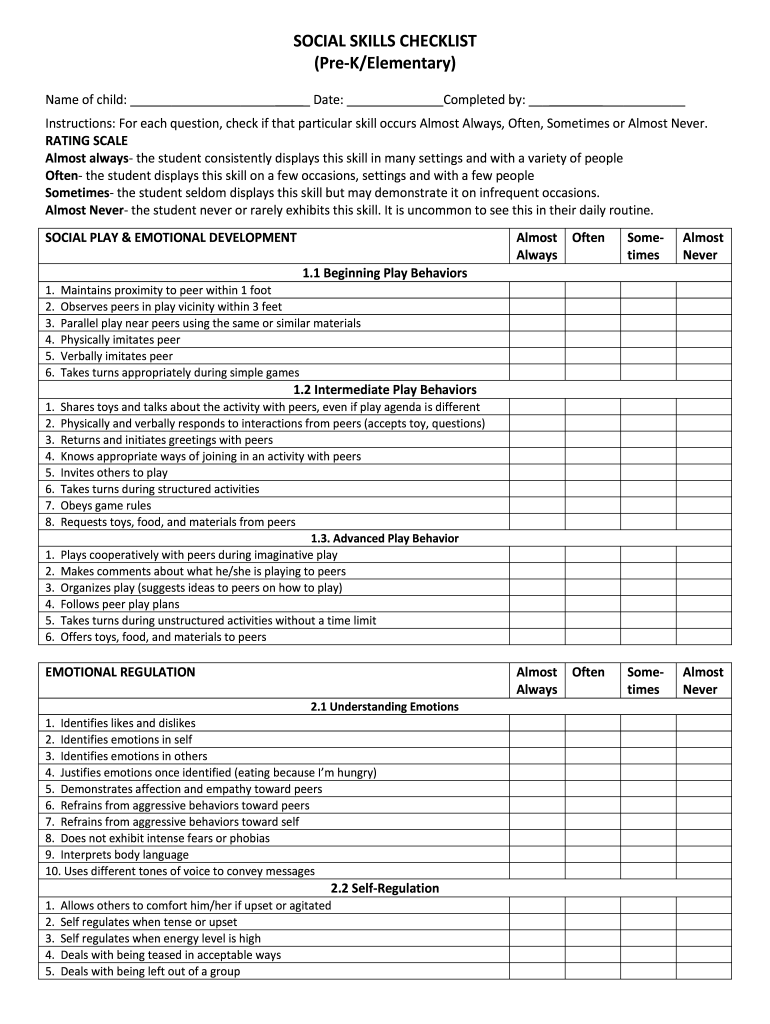
The Wyoming social checklist is a structured assessment tool designed to evaluate various social skills and emotional development among individuals, particularly in educational settings. This checklist is instrumental for educators, caregivers, and social workers in tracking progress and identifying areas where further support may be necessary. The term encompasses a set of criteria aimed at monitoring essential skills, such as communication abilities, emotional regulation, and interpersonal interactions. By utilizing this checklist, individuals can systematically evaluate how well a child or an individual can navigate social environments, which is crucial for their overall development.
How to Use the Wyoming Social Checklist
Effectively using the Wyoming social checklist involves a series of clear steps that ensure accurate assessment and valuable insights into social capabilities.
- Preparation: Ensure you have the correct checklist version tailored for the specific age range or target group.
- Observation: Spend time observing the individual in various settings — both structured environments like classrooms and unstructured ones like playgrounds.
- Rating: Utilize the provided rating scale to assess observed behaviors regarding social skills such as cooperation, empathy, and problem-solving.
- Documentation: Record the findings systematically to create a comprehensive profile of the individual’s social skills.
- Review and Adjust: Periodically reassess using the checklist to adapt strategies to support ongoing development.
This methodical approach helps clarify the subject's strengths and weaknesses in social interactions, providing a solid foundation for intervention plans.
Key Elements of the Wyoming Social Checklist
The checklist is composed of various essential elements, each serving a specific purpose in assessing social competencies. Key components include:
- Behavioral Categories: The checklist is divided into categories such as emotional regulation, communication skills, and interaction with peers, allowing for targeted assessments.
- Rating Scale: A numerical or descriptive scale that enables raters to indicate the frequency or quality of observed behaviors.
- Comments Section: Areas where observers can provide situational context or specific examples, enriching the qualitative assessment.
- Follow-up Recommendations: Suggestions for next steps based on the findings, whether through targeted interventions or continued monitoring.
These elements collaborate to create a robust framework for evaluating social skills effectively.
Important Terms Related to the Wyoming Social Checklist
Understanding key terminology is crucial for accurately interpreting the results of the Wyoming social checklist. Important terms include:
- Social Skills: A range of abilities that facilitate positive interactions and effective communication.
- Emotional Regulation: The ability to manage and respond to one's own emotional experiences appropriately.
- Developmental Milestones: Recognized stages in a child's physical, emotional, social, or cognitive growth that are expected within specific age ranges.
- Qualitative Assessment: Evaluative measures focusing on the quality of behaviors rather than solely numerical scoring.
Familiarity with these terms enhances comprehension of the checklist's purpose and application.
Examples of Using the Wyoming Social Checklist
Utilizing the Wyoming social checklist can manifest in various contexts:
- In Schools: Teachers may conduct assessments during group activities to identify children who struggle with collaborative play. They can then develop support strategies tailored to individual needs.
- In Therapy Sessions: A social worker may utilize the checklist to monitor the progress of clients undergoing emotional regulation therapy, observing how social interactions improve over time.
- Home Environments: Parents can use the checklist to track their child's social behavior during playdates, helping them understand which skills need reinforcement.
These examples illustrate the checklist's versatility and applicability across different settings and populations.
State-Specific Rules for the Wyoming Social Checklist
While the Wyoming social checklist serves as a standardized tool, educators and practitioners must be cognizant of state-specific regulations and adaptations. Wyoming's educational guidelines may influence how and when the checklist is used, including:
- Mandatory Reporting: Requirements for documenting findings and actions taken based on assessments, especially when issues of concern arise.
- Funding Opportunities: Potential programs that may provide resources for implementing strategies derived from checklist findings.
- Alignment with State Education Standards: Ensuring that evaluation methods are in accordance with local educational policies and frameworks to maximize effectiveness.
Awareness of these rules ensures that users implement the checklist within the relevant legal context, enhancing both compliance and effectiveness in social skill development initiatives.




