




01. Edit your form online
Type text, add images, blackout confidential details, add comments, highlights and more.

Type text, add images, blackout confidential details, add comments, highlights and more.

Draw your signature, type it, upload its image, or use your mobile device as a signature pad.

Send it via email, link, or fax. You can also download it, export it or print it out.
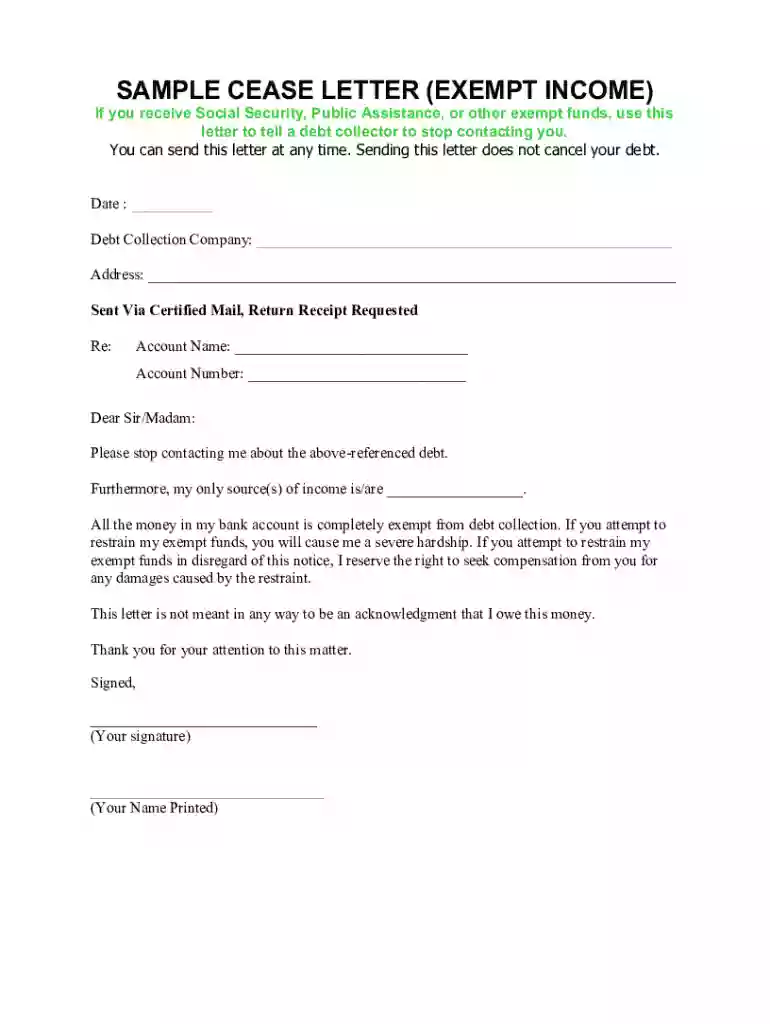
A sample letter to a debt collector typically includes several critical sections to ensure it serves its intended purpose. The primary goal is to communicate with the debt collector regarding the nature of the debt and the debtor's rights under applicable laws. Key elements include:
Identification Information: Begin with your name, address, and contact details. Include the date at the top of the letter. This information is crucial for the debt collector to identify your account correctly.
Debt Details: Clearly state the debt in question. Mention the account number or reference number associated with the debt. This ensures that all parties understand which debt the letter corresponds to.
Request for Verification: Utilize the letter to request a verification of the debt as stipulated under the Fair Debt Collection Practices Act (FDCPA). This section asks the debt collector to provide evidence that the debt is legitimate.
Exemption Notice: If applicable, inform the debt collector that your income is exempt from garnishment. This could include income from Social Security or other governmental assistance programs. Be specific about the source of the income to prevent misunderstandings.
Cessation of Communication Request: Include a clear and formal statement requesting that the debt collector cease all communication if they cannot verify the debt. This is also in accordance with your rights under the FDCPA.
Legal Consequences: Warn the debt collector of potential legal action should they fail to adhere to your request or illegally restrain exempt funds. Mention any legal statutes pertinent to your situation.
Signature: Conclude the letter with your signature. If submitting via mail, consider using certified mail to track the correspondence.
Creating an effective letter requires careful attention to detail. Follow these steps to ensure completeness:
Gather Information: Collect all relevant details about the debt, including original creditor information and any correspondence from the debt collector.
Draft the Letter: Use the key elements outlined above to create your letter. Make sure each section is precise and includes all necessary legal terminology.
Review for Accuracy: Verify that all information is correct and that your requests are clearly stated. Check for potential errors that could weaken your position.
Finalize and Sign: Upon confirming accuracy, print the letter, sign it, and make copies for your records.
Send the Letter: Choose a secure method of delivery. Certified mail with a return receipt requested is recommended to have proof of delivery.
Follow Up: Keep track of the response period. Debt collectors are required to respond within a reasonable timeframe if debt verification is requested.
Using this type of letter involves understanding the legal framework governing debt collection:
Fair Debt Collection Practices Act (FDCPA): This U.S. law protects consumers from abusive debt collection practices. It sets guidelines for how debt collectors may interact with debtors.
Right to Verification: The FDCPA grants you the right to request verification of the debt within 30 days of the first communication. Failure of the collector to provide proof can lead to the cessation of collections.
Cease and Desist: Under the FDCPA, if you notify a debt collector in writing to stop communication, they must comply, except to notify you of specific actions.
Knowing these legal rights helps you to assert your position effectively and protect yourself from potential exploitation.
There are various scenarios where this letter proves essential. Some include:
Disputed Debt: When you believe there has been a mistake, use the letter to request verification or dispute the debt altogether.
Exempt Income: Employed if your income comes from sources protected against garnishment, like disability benefits.
Harassment Stoppage: Useful when constant communication from debt collectors is intrusive or harassing, prompting you to request a halt.
These instances highlight the letter's importance in maintaining your rights and managing your financial obligations more effectively.
Understanding specific terms enhances comprehension:
Verification: The process of confirming the validity of a debt.
Garnishment: A court order allowing a creditor to take funds directly from your wage or account.
Cease Communication: A formal request to stop the debt collector from contacting you further about the debt.
Familiarity with these terms ensures you understand your rights and the pertinent actions during your engagement with debt collectors.
Each state may have additional laws affecting debt collection:
California: Known for robust consumer protection laws, including additional restrictions on calling times.
Texas: Offers specific provisions for the homestead exemption and protects certain amounts of personal property from seizure.
New York: Requires debt collectors to provide clear language notices about your rights in the initial communication.
Ensure your letter complies not only with federal law but also with any additional state-specific requirements.
This tool is regularly employed by:
Individuals with Debt Disputes: Those seeking to contest the accuracy of their debt reports.
Consumers Receiving Protected Income: Beneficiaries of non-garnishable income types ensuring their protection.
Those Seeking Relief from Harassment: Individuals experiencing undue pressure or harassment from collectors.
Using the letter aligns with the needs of individuals seeking clarity and relief within the debt collection process.


Consider the pros and cons of each format:
Paper Version: Provides tangible evidence of your correspondence and is necessary if opting for certified mail delivery.
Digital Format: Offers convenience, can be distributed quickly via email, and is easy to store electronically. However, authenticity and tracking can be issues if not handled with care.
Choosing the most appropriate version depends on your preferred method of communication and the need for litigation-proof documentation.
At DocHub, your data security is our priority. We follow HIPAA, SOC2, GDPR, and other standards, so you can work on your documents with confidence.
Jul 31, 2017 You can use this sample letter template to inquire about the name and address of the original creditor, the amount you owe, and proof the debtRead more
Oct 7, 2025 you can use these sample letters to communicate with them: I do not owe this debt. I need more information about this debt. I want the debt
Sep 3, 1998 All of us who have dealt with the evaluation and diagnosis of perturbation to our aquatic resources owe an immeasurable debt of gratitude to Dr.Read more


