







Definition and Meaning of CG 5549
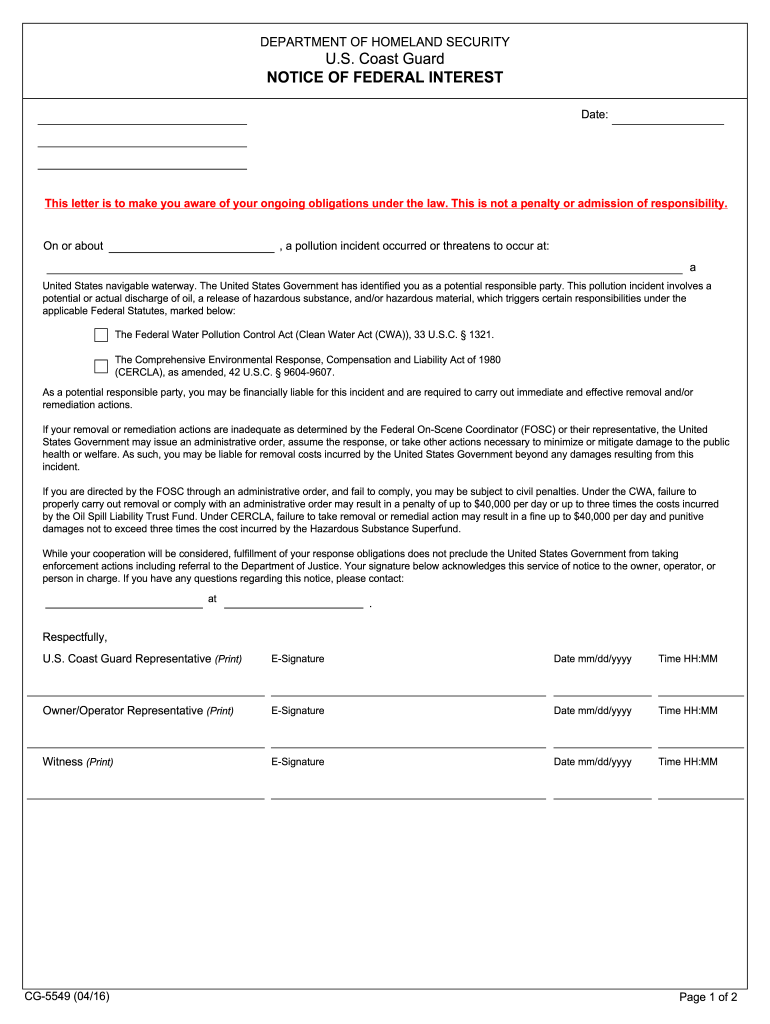
The "CG 5549," or the Notice of Federal Interest form, is an official document issued by the U.S. Coast Guard. This form informs potentially responsible parties about their obligations under federal statutes concerning pollution incidents in U.S. navigable waters. Understanding the definition and purpose of this document is crucial for entities that may be deemed responsible for environmental remediation.
The primary aim of CG 5549 is to notify the responsible party of their legal duties under the Federal Water Pollution Control Act and the Comprehensive Environmental Response, Compensation and Liability Act. These laws require proactive measures to manage pollution and prevent further environmental damage. The form serves as a formal recognition by the U.S. Coast Guard that the agency has identified a potential pollution issue and is alerting the responsible party to their obligations.
Key Elements of CG 5549
- Legal Obligations: The form outlines legal responsibilities and liabilities pertaining to environmental harm.
- Notification: It acts as a formal communication to inform parties of actions needed to mitigate pollution.
- Potential Penalties: The document emphasizes the consequences of non-compliance, which can include civil penalties.
- Remedial Actions: It encourages immediate remediation actions to address environmental impacts.
How to Use the CG 5549
Utilizing the CG 5549 effectively involves understanding its contents and the actions required upon receiving the form. Here are the steps to ensure compliance and proper utilization of this notice.
Immediate Actions Following Receipt
- Review the Document: Carefully read the CG 5549 to understand the federal interest and duties it imposes.
- Assess Responsibility: Determine if your organization or entity is the claimed responsible party.
- Consult Legal Counsel: Seek advice from a legal professional specializing in environmental law to interpret the implications of the notice accurately.
Complying with the Notice
- Develop a Response Strategy: Based on legal counsel advice, outline a plan to address the pollution issue, including necessary remediation steps.
- Document All Actions: Keep thorough records of all communications and actions taken in response to the CG 5549.
- Engage with Regulatory Agencies: Communicate with the Coast Guard and other relevant authorities to facilitate compliance and express intent to remedy the situation.
Steps to Complete the CG 5549
Completing actions in response to the CG 5549 requires a structured approach. Below are the sequential steps essential for compliance and effective remediation.
- Document Review: Thoroughly examine the contents of the CG 5549 for specific allegations or claims regarding pollution.
- Develop a Remediation Plan: Create a detailed plan outlining the steps your organization will take to address pollution, which may include cleanup efforts, environmental assessments, and stakeholder engagement.
- Obtain Necessary Permits: If applicable, ensure all relevant environmental permits are acquired before proceeding with cleanup operations.
- Implement the Remediation Plan: Execute the plan while maintaining clear communication with involved parties and agencies.
- Report Progress: Regularly update the Coast Guard and other regulatory bodies on the status of remediation efforts.
Important Terms Related to CG 5549
Understanding terminology associated with the CG 5549 is critical for navigating legal obligations. Here are some key terms:
- Potentially Responsible Party (PRP): An individual or entity identified as responsible for pollution contributing to environmental harm.
- Federal Water Pollution Control Act: A federal statute aimed at regulating pollutant discharges into U.S. waters and establishing quality standards for surface waters.
- Comprehensive Environmental Response, Compensation, and Liability Act (CERCLA): A federal law designed to clean up sites contaminated with hazardous substances and pollutants.
Who Typically Uses the CG 5549
The CG 5549 targets a specific audience often involving various stakeholders in environmental management and compliance. Typical users include:
- Businesses and Corporations: Companies potentially responsible for pollution incidents in navigable waters.
- Government Agencies: Federal, state, and local agencies involved in environmental regulation and enforcement.
- Environmental Consultants: Specialists hired to conduct assessments and remediation efforts in response to federal interest notifications.
- Legal Professionals: Attorneys advising clients on compliance with federal environmental regulations.


Legal Use of the CG 5549
The legal implications of the CG 5549 cannot be understated. It serves both as a notice and a warning, establishing the groundwork for potential legal action. Here are the critical legal considerations:
- Compliance Obligations: Failure to comply with the remediation directives outlined in the CG 5549 can result in civil penalties and legal liability.
- Documentation: It is essential to maintain comprehensive records of all actions taken in response to the notice to demonstrate due diligence.
- Liability: The form can create a basis for legal action against the identified responsible parties should they fail to address the pollution issue.
Conclusion
The CG 5549 is a vital legal document that highlights the responsibilities of potentially responsible parties concerning pollution incidents in U.S. navigable waters. Understanding its definition, usage, compliance steps, and legal implications is essential for entities that receive this notice. Proper engagement and action can help mitigate environmental impacts and ensure compliance with federal laws.




