




01. Edit your form online
Type text, add images, blackout confidential details, add comments, highlights and more.

Type text, add images, blackout confidential details, add comments, highlights and more.

Draw your signature, type it, upload its image, or use your mobile device as a signature pad.

Send it via email, link, or fax. You can also download it, export it or print it out.
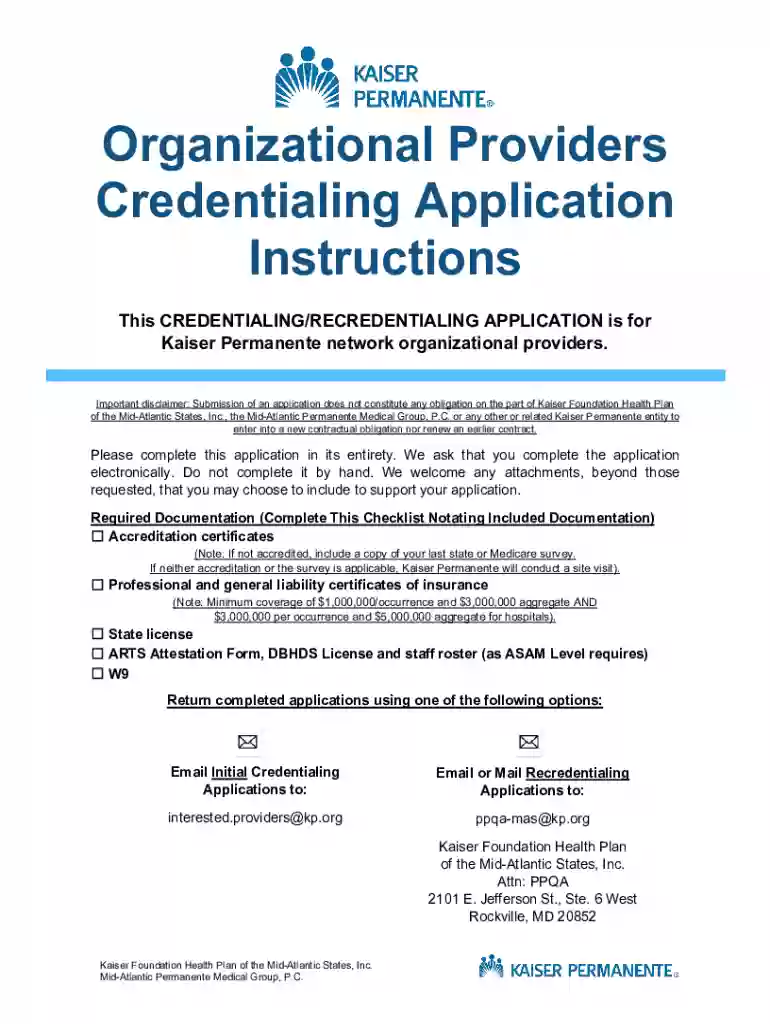
The "healthy kaiserpermanente contentdamOrganizational Providers Credentialing Application Instructions" refer to the document outlining the procedures for organizational providers seeking to become credentialed with Kaiser Permanente. This involves submitting detailed information to meet the standards for joining Kaiser Permanente's network, focusing on healthcare quality and compliance with industry regulations. The form is pivotal for ensuring that organizational providers maintain proper accreditation, insurance, and licensing to deliver healthcare services within the network.
To successfully complete the credentialing process with Kaiser Permanente, providers must gather and submit various documents. These typically include:
Providing these documents helps Kaiser Permanente maintain a high standard of care within its network, ensuring only qualified providers are approved.
Completing the organizational provider credentialing application involves several critical steps:
Gather Required Documents: Compile all necessary documentation, including accreditation, licenses, and insurance certificates.
Review Application Instructions: Thoroughly read the application instructions to understand the submission requirements and procedures.
Fill Out the Application: Ensure all forms are accurately completed, with special attention to mandatory fields and sections.
Submit the Application: Use the designated submission method, which can be online, through mail, or in person, depending on the specific instructions provided by Kaiser Permanente.
Follow Up: After submission, monitor the application status and respond to any requests for additional information promptly.
This step-by-step process ensures that applications are complete and processed efficiently, minimizing delays in credentialing.
The application includes several integral components that providers must address:
Each element is crucial for Kaiser Permanente to assess the provider's capabilities and compatibility with their healthcare network.
The credentialing application serves as a binding legal document that states the provider’s qualifications and intent to comply with all relevant regulations. Accurate completion of this form is essential, as misrepresentation or errors could lead to:
Providers should ensure all submitted information is precise and truthful to uphold legal and healthcare standards.
The eligibility to apply for credentialing with Kaiser Permanente includes:
Meeting these criteria is fundamental to gaining access to Kaiser Permanente’s network, thus ensuring that only qualified providers are credentialed.


The application process is comprehensive and can vary in duration based on multiple factors:
Understanding this timeline helps providers plan effectively for potential onboarding into the network.
Kaiser Permanente offers several form submission methods, allowing flexibility for applicants:
Choice of method depends on provider preference and urgency, with online submission generally encouraged for efficiency.
Healthcare organizations and businesses that stand to gain the most from completing this credentialing process include:
Credentialing positions these businesses for growth and extended reach through association with a reputed healthcare network.
We've got more versions of the healthy kaiserpermanente contentdamOrganizational Providers Credentialing Application Instructions form. Select the right healthy kaiserpermanente contentdamOrganizational Providers Credentialing Application Instructions version from the list and start editing it straight away!
At DocHub, your data security is our priority. We follow HIPAA, SOC2, GDPR, and other standards, so you can work on your documents with confidence.


