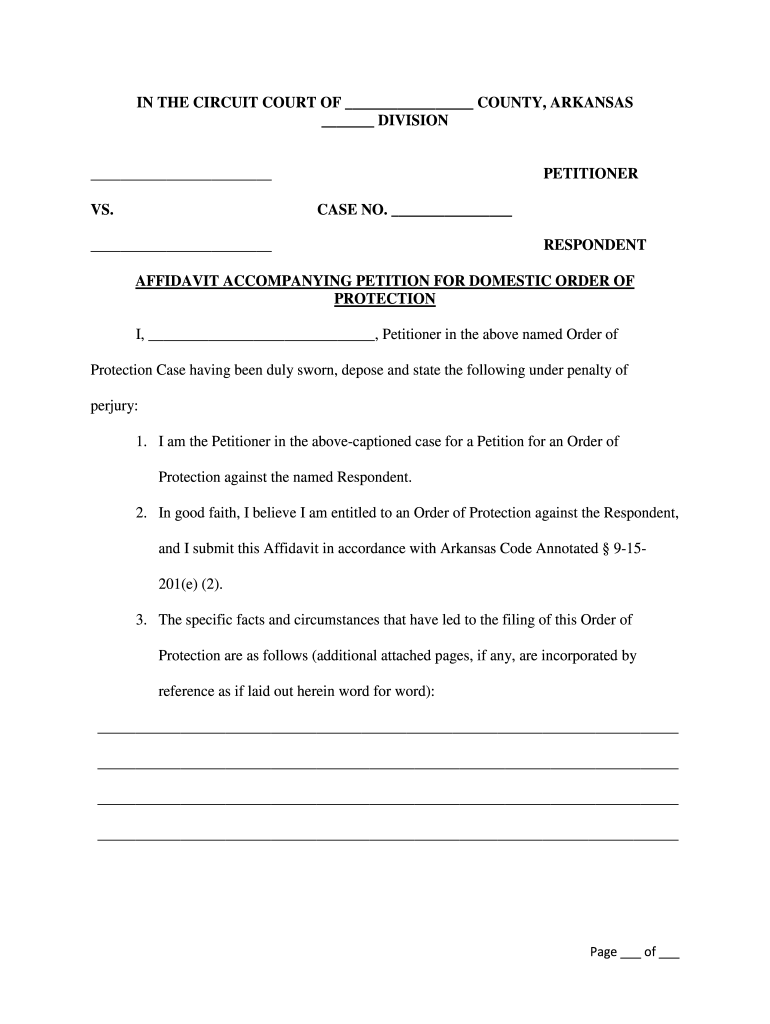







Definition and Meaning of the Arkansas Affidavit for Order of Protection
An Arkansas affidavit for an order of protection is a legal document submitted with a petition seeking protection from further harm or harassment. This document outlines the petitioner's belief in the necessity of protection from the respondent, detailing past incidents or threats that have led to this request. The affidavit serves as a sworn statement to the court, reinforcing the validity of the allegations made and the need for immediate legal relief.
- An affidavit must be signed under oath, providing a factual basis for the claims.
- It typically includes personal information about both the petitioner and the respondent, alongside a narrative of events justifying the request for an order of protection.
This affidavit is integral to the legal process, as it supports requests for both Ex-Parte Temporary Orders and Final Orders of Protection.
Steps to Complete the Arkansas Affidavit for Order of Protection
Filing an affidavit for an order of protection in Arkansas involves several key steps that must be meticulously followed to ensure the application is properly submitted and considered by the court.
- Gather Necessary Information: Compile essential details about the respondent, including their full name, address, and any known aliases.
- Document Incidents: Clearly describe the incidents of harassment or abuse, providing dates, locations, and any witnesses, if applicable.
- Complete the Affidavit Form: Fill out the required affidavit form accurately. Ensure all details are correct and align with the information provided in the accompanying petition.
- Sign the Affidavit: Sign the affidavit before a notary public or court clerk to validate that the statements made are true to the best of your knowledge.
- File with the Court: Submit the completed affidavit and petition to the appropriate court in the jurisdiction where the respondent resides or where the incidents occurred.
By following these steps, the petitioner can effectively present their case for protection.
Important Terms Related to the Arkansas Affidavit for Order of Protection
Understanding key terminology is vital when navigating the process of obtaining an order of protection in Arkansas. Familiarity with these terms will enhance comprehension of the legal proceedings.
- Petitioner: The individual requesting the order of protection. This person believes they are at risk of harm from the respondent.
- Respondent: The person against whom the order is sought. This individual is alleged to have committed acts of abuse or harassment.
- Ex-Parte Temporary Order: A temporary order granted without the respondent present, designed to provide immediate protection until a hearing can occur.
- Final Order of Protection: A court-ordered protection that remains in effect for a specified period after a hearing that involves both parties.
- Violation of Order: Any breach of the established terms in the order of protection by the respondent, potentially resulting in legal consequences.
Clarifying these terms ensures that petitioners are informed and prepared as they progress through the legal process.
Legal Use of the Arkansas Affidavit for Order of Protection
The affidavit for an order of protection is legally recognized in Arkansas and serves a critical function in domestic violence and harassment cases. By submitting this affidavit, petitioners can demonstrate to the court that there is a reasonable basis for their fears regarding safety and well-being.
- Legal Ground for Petition: The affidavit is the foundation for seeking various types of protection, highlighting the severity of the situation.
- Admissibility in Court: As a sworn statement, the affidavit carries weight in legal proceedings, often being accepted as evidence of the claims made.
- Consequences for False Claims: Intentionally providing misleading information in an affidavit can lead to legal repercussions, including charges of perjury.
Understanding the legal implications ensures that petitioners engage with the affidavit sincerely and responsibly.
Steps to Obtain an Order of Protection in Arkansas
Acquiring an order of protection involves a structured process that may vary slightly depending on individual circumstances. Generally, this process can be broken down into several critical steps:
- Filing a Petition: Complete and file the appropriate petition form alongside the affidavit at the local court.
- Receiving Temporary Relief: If urgent, request an Ex-Parte Temporary Order, which may be granted to offer immediate protection while awaiting a hearing.
- Service of Process: The respondent must be formally notified about the petition. This is generally done through law enforcement or a designated process server.
- Hearing: Attend the scheduled court hearing, where both the petitioner and respondent will present their cases. The judge will assess the evidence and make a determination.
- Final Order Issuance: If the court finds sufficient grounds for protection, a Final Order of Protection will be issued, delineating specific restrictions on the respondent.
Following these steps meticulously enhances the likelihood of successfully obtaining the desired protection order.
Who Typically Uses the Arkansas Affidavit for Order of Protection
The Arkansas affidavit for an order of protection is utilized primarily by individuals who feel threatened, harassed, or abused. However, it is essential to understand the diverse circumstances under which various individuals may seek this form of legal remedy:
- Survivors of Domestic Violence: Those experiencing ongoing or acute threats from an intimate partner or family member.
- Victims of Stalking: Individuals facing harassment from someone they do not know, which includes threats and intimidation.
- Individuals in High-Conflict Situations: Parents involved in contentious custody disputes may seek protection from an ex-partner exhibiting violent or abusive behavior.
- Individuals Collaborating in Dangerous Work Environments: Employees subjected to harassment or threats in their workplace settings may utilize this affidavit to seek protection.
Recognizing the broad applicability of this affidavit aids in understanding its critical role in providing legal safeguards for vulnerable individuals across various situations.