
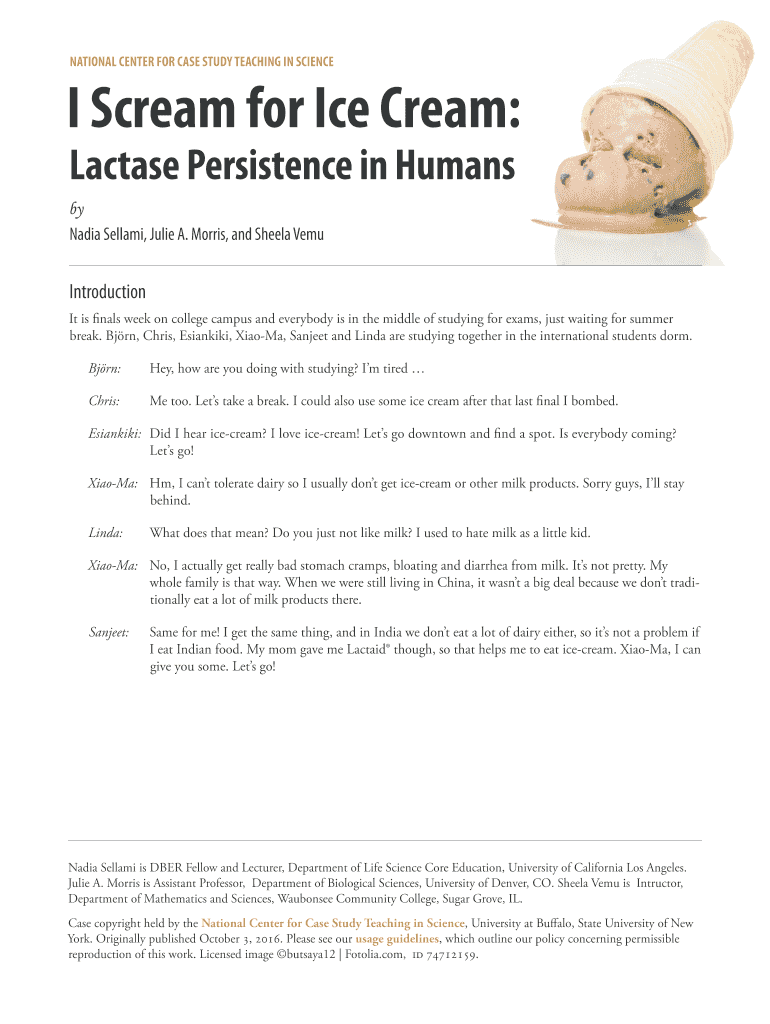







Definition & Meaning
"I Scream for Ice Cream: Lactase Persistence in Humans" refers to a document or study that explores the genetic and evolutionary aspects of lactase persistence in humans, particularly how some populations have developed the ability to digest lactose beyond infancy. Lactase persistence allows certain adults to continue producing the enzyme lactase, which breaks down lactose, the sugar found in milk and dairy products. This phenomenon is contrasted with lactose intolerance, where individuals experience digestive discomfort due to the absence of lactase production after childhood.
Key Elements of the Study
The document emphasizes the following core elements:
- Genetic Variation: It explores how genetic mutations enable lactase persistence, particularly beneficial in populations with a long history of dairy consumption.
- Geographical Differences: Details how lactase persistence rates vary across different regions and demographics, often influenced by historical dietary habits.
- Cultural Impact: Discusses how the ability or inability to digest lactose has affected dietary practices and cultural evolution.
How to Use the Study
Understanding "I Scream for Ice Cream: Lactase Persistence in Humans" can be crucial for:
- Educational Purposes: As a resource in biology and anthropology courses to illustrate human evolution and genetic adaptation.
- Medical Insight: For healthcare providers to better understand and diagnose lactose intolerance and related dietary needs.
- Cultural Studies: To explore how dietary choices and capabilities have shaped human societies.
Steps to Complete a Comprehensive Review
When reviewing the study, consider these steps for a thorough analysis:
- Genetic Analysis: Evaluate sections discussing genetic markers and evolutionary biology.
- Case Studies: Focus on real-world examples within the text, such as blood glucose testing or gene regulation techniques.
- Comparative Review: Compare findings with existing literature on lactose intolerance and lactase persistence.
Why Review the Study
Reviewing this study is beneficial because:
- Scientific Discovery: It provides insights into how human genetics have adapted for survival.
- Health Implications: Offers knowledge that can improve dietary recommendations for individuals with lactose intolerance.
- Societal Understanding: Enhances comprehension of cultural and dietary diversity linked to genetic factors.
Typical Audience for the Study
The primary audience includes:
- Students and Academics: Particularly in fields such as genetics, anthropology, and nutrition science.
- Healthcare Professionals: Doctors, dietitians, and nutritionists interested in patient dietary management.
- Cultural Historians: Researchers exploring the relationship between diet and cultural evolution.
Important Terms Related to the Study
- Lactase Enzyme: A crucial enzyme for breaking down lactose in milk.
- Lactose Intolerance: A condition where individuals cannot effectively digest lactose, causing discomfort.
- Genetic Mutations: Changes in DNA that allow for lactase persistence in certain populations.
Examples from Within the Study
Within "I Scream for Ice Cream: Lactase Persistence in Humans," the study gives examples like:
- Diverse College Students: Illustrating the varying degrees of lactase persistence across different backgrounds.
- Blood Tests: Used to demonstrate physiological responses to lactose intake and enzyme activity.
- Personal Narratives: Participants’ familial and regional histories that influence lactase persistence.
Digital vs. Paper Versions
The study is accessible in both digital and paper formats, providing:
- Convenience: Digital versions allow for easy access and sharing among researchers and students.
- Accessibility: Paper versions can be useful in areas with limited internet access or for those who prefer physical documentation.




