







Definition & Meaning
The Body Donor Program at Washington University in St. Louis is a critical initiative that facilitates the donation of bodies for medical education and research. It allows individuals to contribute significantly to the advancement of medical knowledge and training by offering their bodies for study after death. This program ensures that medical students, educators, and researchers have access to real-life anatomical specimens to enhance their learning and investigative capabilities. Donating one's body to this program is a generous act that plays an essential role in medical advancements, helping students to better understand human anatomy and assisting researchers in seeking new medical insights.
How to Use the Body Donor Program - Washington University in St. Louis
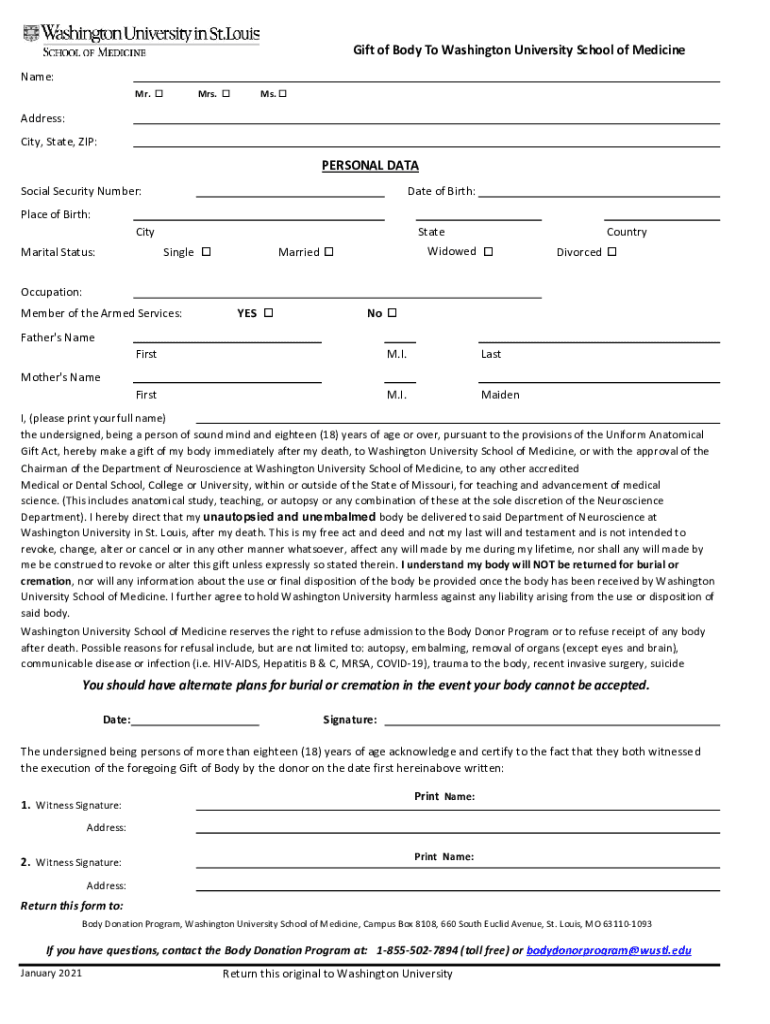
Participating in the Body Donor Program involves a few crucial steps. First, interested individuals should thoroughly review the program's guidelines and discuss their intentions with family and legal representatives to ensure everyone is informed and aligned. The next step is to complete the official donor form, which includes providing medical history and relevant personal information. It is important to discuss and clarify any specific conditions or stipulations tied to the donation with program officials to ensure compliance with the program rules.
How to Obtain the Body Donor Program - Washington University in St. Louis
Prospective donors can acquire the necessary forms and information about the Body Donor Program by visiting the Washington University School of Medicine's official website or contacting the program's office directly. The institution typically provides comprehensive literature that outlines the program's objectives, requirements, and procedures. Moreover, potential donors may be able to request these documents via mail or email to review and complete them at their convenience.
Steps to Complete the Body Donor Program - Washington University in St. Louis
- Review Information: Familiarize yourself with the program details and discuss with family or next-of-kin.
- Obtain the Donor Forms: Acquire the necessary paperwork through the institution's website or by contacting the administration.
- Complete the Donor Form: Fill out the form with required personal and medical information, ensuring accuracy and completeness.
- Consult with Legal Advisors: If needed, seek advice from legal representatives to address any concerns or legal implications.
- Submit the Forms: Return the completed documents to the program office, following any specific submission guidelines provided.
Why Should You Participate in the Body Donor Program
Participating in the Body Donor Program at Washington University offers a unique opportunity to contribute to the future of healthcare. By becoming a donor, individuals provide invaluable resources that are crucial for the training of competent healthcare professionals and the progression of medical research. It is an altruistic act that leaves a legacy of scientific contribution, aiding in the discovery of medical treatments and improving overall public health outcomes.
Key Elements of the Body Donor Program - Washington University in St. Louis
- No Fees for Donation: There are no charges associated with the donation process itself, making it accessible to anyone who wishes to participate.
- Post-Cremation Policy: Donor bodies are cremated after the educational or research purposes are fulfilled, and remains are not returned to families.
- Refusal Conditions: Certain health conditions or situations may disqualify the donor, such as contagious diseases or severe trauma.
Eligibility Criteria for the Body Donor Program
The program is open to individuals who meet specific health and legal criteria. Generally, anyone aged eighteen or older can register to become a donor, assuming they possess the legal capacity to make such decisions. However, there are health-related restrictions; individuals with certain communicable diseases or other medical conditions may be ineligible to ensure the safety and applicability of the body for medical education and research purposes.


Application Process & Approval Time
Upon submitting the completed donor form, the application is reviewed by program administrators. They ensure that all conditions of the program are adhered to, and the approval process might involve additional consultations or clarifications. While the decision timelines can vary, straightforward applications may be processed faster. Donors are encouraged to contact the program directly for updates on their application status should there be any delays or questions.
State-Specific Rules for the Body Donor Program
Regulations governing body donation can vary by state, primarily concerning legal documentation and consent requirements. In Missouri, where Washington University is located, the state mandates that consent forms are executed according to local laws. Prospective donors should ensure compliance with these state-specific rules, possibly consulting legal counsel if there are any uncertainties, to guarantee that their contribution is duly recognized and processed without complications.
Important Terms Related to the Body Donor Program
- Anatomical Donation: The act of bequeathing one's body after death to an institution for educational and research purposes.
- Cremation: The process of converting the body's remains to ash after use in medical or educational contexts.
- Donor Form: A legal document expressing an individual's consent to donate their body posthumously for scientific purposes.




